

What factors should be considered when selecting powder coat colours for aluminium components that must meet both aesthetic standards and sustainability requirements?
Selecting powder coat colours for aluminium components requires balancing the required appearance and finish with colour stability, durability, environmental exposure and the coating’s environmental credentials. Specify a suitable, durable powder system in a colour and gloss level that meets the design brief while supporting long service life, efficient material use and responsible end-of-life recycling.
The right powder coat colour for an aluminium component is selected by assessing the complete specification rather than choosing a shade in isolation. The decision should cover the required colour reference, gloss and texture, the aluminium substrate and pretreatment, the intended use, the coating system’s environmental profile, and what will happen to the component at the end of its service life.
Start with a precise visual specification. A RAL reference can define the basic shade, but it does not fully describe the finished appearance. Two coatings with the same nominal colour may look different if one is smooth and high gloss while the other is matt, fine-textured or slightly metallic. Specify the gloss level, surface texture, metallic effect and acceptable colour tolerance alongside the colour reference. If the aluminium will be viewed beside glass, painted steel, masonry or existing coated parts, compare physical samples in representative lighting rather than relying only on a screen or printed colour chart.
Lighting can materially affect the perceived result. Strong daylight, shaded conditions and artificial indoor lighting may reveal differences in hue or brightness. Metallic and pearlescent finishes can be particularly sensitive to viewing angle and application direction. Where several aluminium parts are intended to appear as one assembly, confirm that the same powder system, application method and approved sample will be used across the batch.
Consider the aluminium substrate and component design. Extrusions, sheet, castings and fabricated sections can have different surface characteristics. Alloy composition, porosity, welds, sharp edges, recesses and areas that retain pretreatment chemicals may influence the final appearance. The coating specification should therefore be reviewed against the actual component, not just a representative flat panel. Complex profiles may also need an agreed inspection position, because small variations can be more visible on broad faces than on concealed or recessed areas.
Preparation is part of colour selection because a visually consistent colour depends on a consistent base. Cleaning, etching or other pretreatment removes contamination and supports adhesion before the powder is applied. The selected process should be compatible with the aluminium alloy and with any requirements for reduced-hazard or chromium-free pretreatment. A coating applicator can advise whether the proposed colour and finish are suitable for the component’s geometry and preparation route.
Match the finish to the intended setting. A matt or textured surface may reduce the visibility of minor handling marks and reflections, whereas a high-gloss surface gives a sharper, more reflective appearance but can make surface irregularities easier to notice. Fine textures can alter how a colour is perceived and may collect dirt differently from smooth finishes. The decision should take account of whether the parts are architectural, enclosed, industrial, exposed to frequent handling or used within a controlled interior environment.
Colour can also affect practical design considerations. Dark surfaces generally absorb more solar radiation than pale surfaces, which may be relevant to exposed components, dimensional movement and the temperature of adjacent materials. Light or highly reflective finishes may be preferred where the design brief requires a cooler-looking surface, but the complete assembly and its operating conditions still need to be assessed.
Assess the sustainability of the whole coating system. Powder coating is applied as a dry powder rather than a solvent-based liquid, so the formulation and application process should be reviewed for solvent content, overspray management and material efficiency. Reclaiming unused powder may be possible in some application systems, although the feasibility depends on the colour, finish, equipment and quality requirements. Mixing colours or recovering material without suitable controls can affect consistency, so environmental benefits should not be assumed without checking the proposed process.
The powder formulation, curing requirements and pretreatment chemicals all contribute to the environmental profile. Ask for relevant technical and environmental information, including the product data sheet, safety documentation and any project-specific declarations. Where a scheme has formal sustainability criteria, confirm that the proposed coating system provides the evidence required by the project rather than relying on a general claim about powder coating.
Prioritise service life as a sustainability measure. A finish that remains usable for longer can reduce the need for stripping, recoating, replacement manufacture and transport. The colour specification should therefore be linked to the exposure conditions, cleaning regime and expected handling. Select a system tested or classified for the intended environment, and make sure the stated performance applies to the complete preparation and application process rather than to the powder alone.
Maintenance requirements should be considered before approval. Smooth surfaces may be simpler to wash, while textured finishes can require more attention in areas where airborne contaminants collect. Use a cleaning method compatible with the coating and avoid unapproved abrasive or aggressive chemicals. A colour that remains acceptable under the planned maintenance regime is more sustainable than one that requires frequent corrective work.
Check production and supply implications. For repeat manufacture, record the approved colour panel, gloss range, texture, powder reference and inspection conditions. Batch-to-batch variation can be more noticeable with metallic, bright or deep colours, so confirm how colour matching will be controlled before production begins. If components are coated by different applicators or at different times, establish whether the same specification and comparison method will be used.
Also consider availability of the selected colour and the consequences of a later repair or extension to the project. A widely recognised colour reference may simplify future matching, but it does not remove the need to retain an approved physical sample. Non-standard finishes may require additional technical checks or separate production planning; these points should be resolved before the colour is fixed in the design.
Include end-of-life requirements. Aluminium has established recycling value, but the presence of a coating, pretreatment residues and other attached materials can affect how scrap is processed. Design assemblies so coated aluminium can be identified and separated where practical, and avoid unnecessary combinations of materials that complicate dismantling. Confirm end-of-life expectations with the relevant recycler or project team, particularly where the specification requires documented material recovery.
A practical selection process is to approve a physical sample, verify the colour and finish under relevant lighting, confirm substrate and pretreatment compatibility, review environmental and technical documentation, and record the final specification for production. This approach links the visual objective to measurable process controls and lifecycle considerations, helping the chosen powder coat colour support both the appearance of the aluminium component and the project’s sustainability requirements.
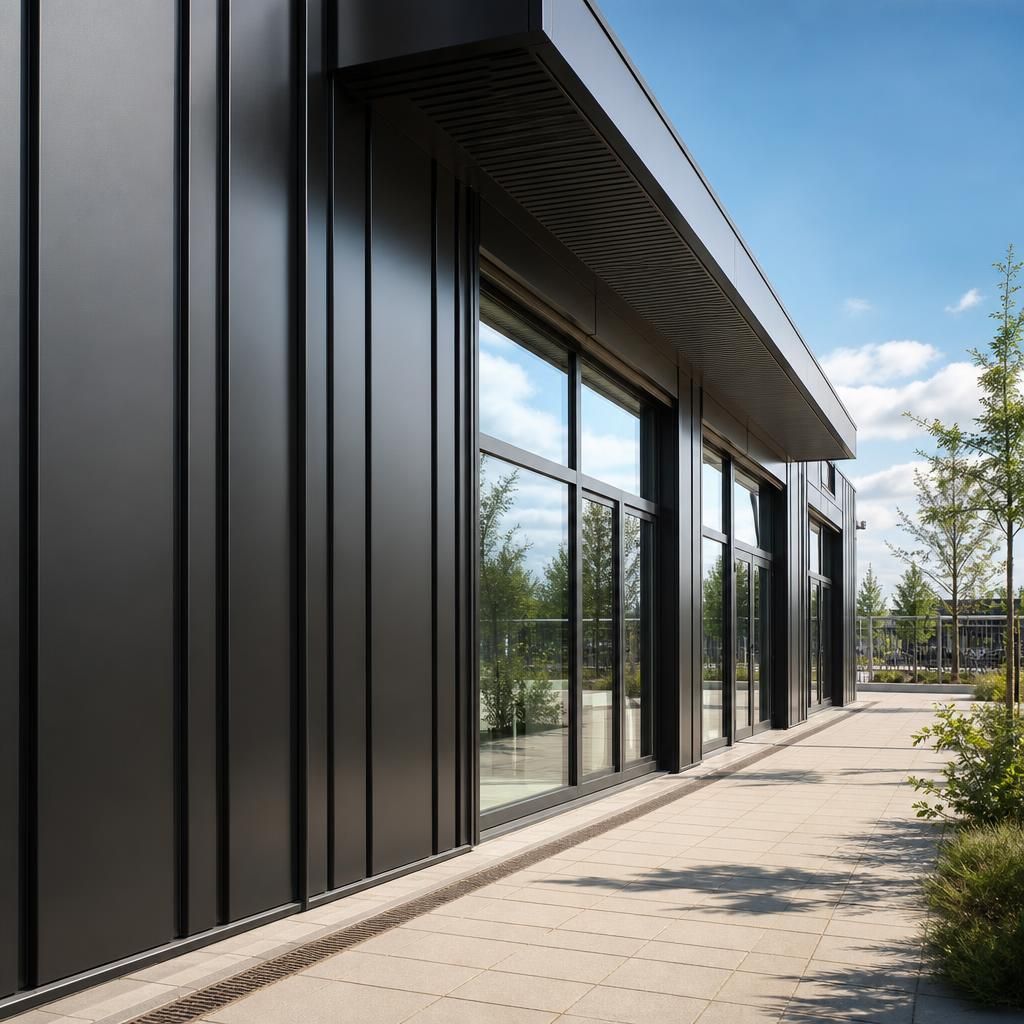
Colour appearance alone does not determine how much solar energy an aluminium component absorbs. Two coatings that appear similarly dark can behave differently if their pigments reflect different amounts of near-infrared radiation. Where components are exposed to strong sunlight, ask whether the proposed colour system has relevant solar reflectance or thermal-performance data, rather than assuming that a pale shade is the only suitable option.
This distinction can help reconcile an architectural colour brief with thermal and sustainability objectives. The information should be assessed alongside the component’s orientation, ventilation, adjacent materials and operating temperature. Any performance claim must relate to the complete applied coating system and the intended substrate, not simply to a colour name or digital image.
Discuss your sustainable aluminium colour specification
If you are specifying powder coat colours for aluminium components, discuss the proposed colour, finish, exposure conditions and sustainability criteria with a powder coating specialist before approval. Sharing drawings, samples and project requirements can help establish a suitable coating specification for production.