

What are the long-term environmental benefits of choosing powder coatings over traditional liquid coatings for aluminium surfaces?
Powder coatings can reduce the long-term environmental impact of finishing aluminium by avoiding most solvent-related emissions, producing less coating waste and allowing suitable overspray to be recovered. Their durable, corrosion-resistant finish can also extend the service life of aluminium components, reducing the material, energy and waste associated with frequent recoating or replacement.
Over the full life of a suitable aluminium component, powder coating can offer environmental advantages because it combines efficient material use with a hard-wearing finish and a relatively simple coating process. The benefit is not limited to the application stage: the most meaningful gains may come from reducing the resources needed to maintain, refurbish and replace coated aluminium throughout its working life.
It can reduce the need for solvent-based maintenance. Powder-coated aluminium is generally cleaned with appropriate mild detergents and water rather than aggressive solvent products. This can reduce the use, storage and disposal of maintenance chemicals, provided the finish is cleaned according to its specification. The correct cleaning method remains important, since harsh chemicals can damage the coating and shorten its usable life.
It avoids some practical inefficiencies associated with liquid coating systems. Powder is supplied as a dry coating material, so it does not require the addition of liquid solvents to achieve the application viscosity. It also does not develop the same type of wet, mixed coating residue associated with liquid products that have been prepared but not used. This can simplify material control and reduce the environmental management required for certain coating operations, although unused powder still needs to be handled responsibly.
It can help preserve the value of aluminium as a recyclable material. Aluminium retains significant value at the end of a component’s service life, and a powder-coated finish does not automatically make the metal unsuitable for recycling. Actual recycling arrangements depend on the fabricator, waste contractor and remelting process. Components should therefore be identified and segregated correctly, with any coating, fixings or other attached materials considered as part of the end-of-life assessment.
It may support more resource-efficient refurbishment. Where an existing aluminium part can be correctly prepared and recoated, refurbishment may avoid the need to manufacture a completely new component. This is only an environmental advantage when the substrate remains suitable, the old finish can be removed or prepared appropriately, and the new coating meets the required performance specification. Recoating a component that is structurally unsound would not be a responsible substitute for replacement.
The environmental result depends on the whole coating system rather than the powder alone. Relevant factors include:
- the energy source and temperature required for curing;
- the distance and method used to transport aluminium components;
- the preparation process, including cleaning, blasting or chemical pretreatment;
- the powder formulation, film thickness and expected service conditions;
- how rejected, contaminated or unused material is managed; and
- whether the finished component can be repaired, reused or recycled at the end of its life.
For example, a powder coating may have a favourable application profile but deliver limited overall benefit if components require excessive heating, repeated rework or an unsuitable pretreatment system. Conversely, selecting a coating that is appropriate for the exposure conditions can help avoid premature failure and the additional processing associated with stripping and refinishing.
For a more reliable comparison with traditional liquid coatings, businesses should assess the complete life cycle rather than focusing only on VOC content. Useful questions include whether the coating is suitable for the intended indoor or outdoor environment, whether the specified cure can be achieved efficiently, what preparation chemicals are required, and what evidence supports any recycled-content or environmental claim. Product technical data, safety information and, where available, life-cycle or environmental product data provide a stronger basis for comparison than a general claim that one coating method is always greener.
For aluminium used in manufacturing, construction and automotive applications, the most defensible long-term benefit is therefore a combination of efficient application, manageable maintenance and compatibility with responsible end-of-life recovery. Powder coating can contribute to that outcome, but the specification, preparation, curing process and subsequent handling must all be considered together.
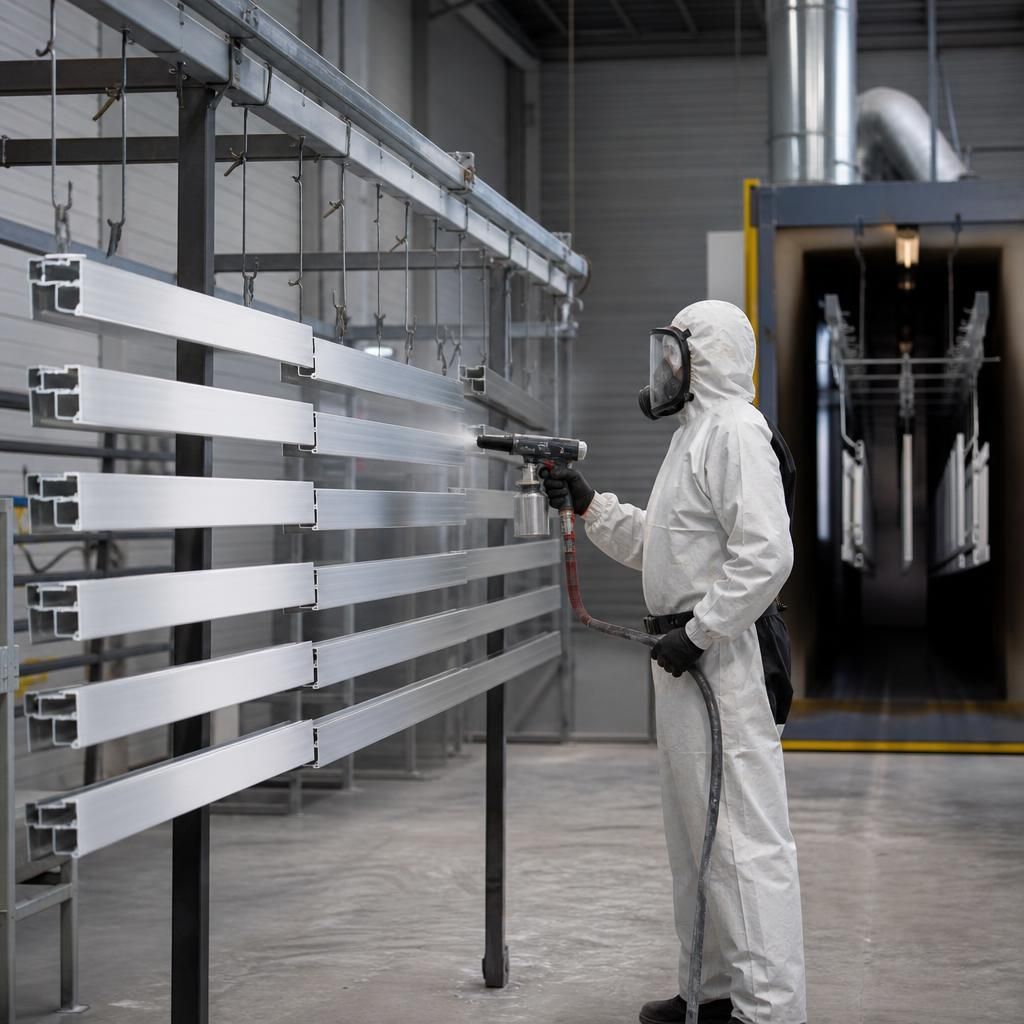
A further environmental consideration is the reduced need to manage solvent-contaminated cleaning materials during application. Powder coating equipment does not use liquid solvent to keep the coating fluid, so routine colour changes and equipment cleaning can avoid some solvent-soaked cloths, containers and residues associated with liquid coating systems. This does not make powder waste harmless: collected powder, contaminated filters and preparation residues still require controlled handling in line with the relevant safety and waste requirements.
For aluminium finishing, this distinction is useful when comparing the practical environmental burden of complete coating operations rather than comparing coating materials in isolation. The assessment should include application equipment, cleaning procedures, waste segregation and any emissions-control measures needed for the chosen system.
Discuss the environmental specification for your aluminium coating
Discuss your aluminium coating specification with our team to assess the finish, preparation and process requirements relevant to your environmental objectives. Share your component details and intended use so the options can be reviewed against the full service-life needs of the project.