

What are the advantages of using protective powder coatings for aluminium components in industrial applications?
Protective powder coatings shield aluminium components from corrosion, abrasion, weathering and chemical exposure, helping them retain their structural integrity and appearance in demanding industrial environments. The cured finish also provides a consistent, durable surface that can reduce maintenance requirements and support longer component service life.
Protective powder coatings offer aluminium components a bonded, specification-led finish that combines surface protection with consistent appearance and functional performance. For industrial applications, their main advantages are strong adhesion, repeatable coverage, resistance to everyday handling, design flexibility and an efficient curing process.
Improved adhesion through pre-treatment
Aluminium requires suitable preparation because its surface oxide layer can affect coating adhesion. A professional powder-coating process normally includes cleaning and an appropriate pre-treatment before the powder is applied. This creates a better foundation for the coating, reduces the risk of lifting or flaking and helps the finish remain attached during handling, assembly and use.
Consistent coverage on complex components
Powder is applied as a dry, electrostatically charged material before being cured to form a continuous film. This allows a controlled coating thickness across profiles, panels, brackets, housings and other fabricated parts. Correct application is particularly valuable where components include visible faces, returns or recessed areas that must have a uniform appearance. Parts should still be designed and positioned carefully, as deep recesses, sharp internal corners and enclosed areas can affect powder deposition.
Suitable for demanding handling and assembly
A cured powder finish gives aluminium a hard, cohesive surface that can withstand routine contact during transport, installation and use. This is useful for fabricated items that are handled repeatedly or installed in environments where an untreated surface could become marked. The selected coating system should match the expected level of impact, movement and exposure rather than being chosen on colour alone.
Greater design flexibility
Powder coatings are available in a wide range of colours, gloss levels and surface effects. Industrial users can therefore specify a finish that supports product identification, architectural coordination, corporate styling or a particular visual requirement. Matt, satin, gloss and textured finishes also alter how strongly surface imperfections are seen, so the finish should be selected alongside the required level of pre-finish preparation.
Repeatability for batch production
For manufacturers and fabricators, powder coating can provide a repeatable finish across batches when the aluminium grade, preparation, powder specification, application settings and curing conditions are controlled. Consistency is important where multiple components form one assembly or where replacement parts need to match earlier production. A clear specification should include the colour reference, finish level, coating requirements, masking points and any areas that must remain uncoated.
Efficient application with less liquid handling
Powder is applied without the liquid carrier used in conventional wet-paint systems. Overspray can often be collected within a suitable application system, while unused powder may be recoverable depending on the equipment and process. This can help make material use more controlled, although the environmental performance of a coating process still depends on preparation chemicals, energy consumption, transport and waste management.
Practical considerations before specification
- Confirm that the powder system is suitable for aluminium and the intended industrial environment.
- Define the required appearance, including colour, gloss, texture and acceptable visual variation.
- Identify masking requirements for threads, contact points, bearing faces, holes and assembly interfaces.
- Allow for coating thickness where components must fit together or meet tight dimensional tolerances.
- Discuss welded areas, sharp edges, cast surfaces and other features that may require additional preparation.
- Check that the curing process is compatible with the aluminium alloy, component size and any heat-sensitive inserts.
Protective powder coating is therefore most effective when treated as part of the component specification rather than as a final decorative step. Matching the preparation, powder type, finish and curing process to the component’s geometry and working conditions helps aluminium parts achieve a reliable, repeatable industrial finish.
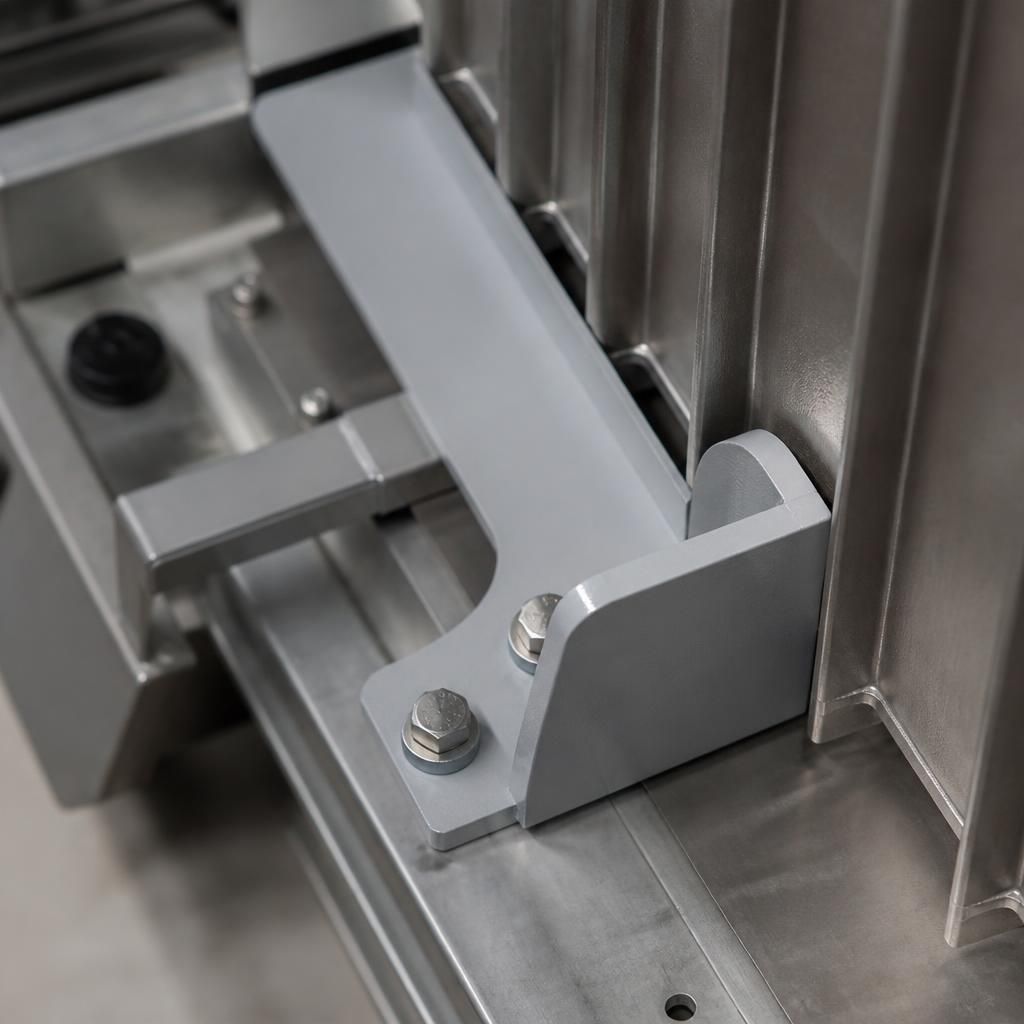
Protective powder coating can help reduce direct contact between aluminium and dissimilar metals, limiting the conditions that contribute to galvanic corrosion. This is relevant where coated aluminium components are assembled with steel fixings, brackets or other metal parts in environments where moisture may be present.
The coating is not a substitute for suitable fasteners, joint design or sealing. Edges, drilled holes, threads and areas damaged during installation may still require specific protection. For this reason, the coating specification should identify contact surfaces and assembly interfaces, so the finish supports the component design rather than interfering with fit or electrical requirements.
Discuss protective powder coatings for your aluminium components
Discuss your aluminium components with the powder-coating team to review the operating environment, component geometry, preparation requirements and finish specification. This helps establish a suitable protective coating system before production or refurbishment begins.