

What are the environmental considerations of using RAL 9023 aluminium powder coatings compared to alternative finishes?
RAL 9023 aluminium powder coating can have a lower environmental impact than solvent-based liquid paint because it contains no solvent emissions during application, and unused powder may be recoverable rather than becoming coating waste. Its durability can also reduce recoating, although the overall impact depends on curing energy, surface preparation, overspray management and how the finished aluminium is handled at end of life.
The environmental impact of a RAL 9023 aluminium powder coating depends on the complete finishing system rather than the colour designation alone. RAL 9023 identifies the grey aluminium effect, while the coating formulation, aluminium preparation, curing method, application efficiency, service life and end-of-life route determine how it compares with liquid paint, anodising and other finishes.
Material use and application waste: Powder coating is applied as a dry film, so it does not require the carrier solvents used by many conventional liquid paints. This can reduce the amount of volatile organic compound emissions associated with application. Powder that does not adhere to the component may also be collected and managed for potential reuse, subject to the equipment, colour consistency and coating specification. By contrast, liquid systems can generate waste through unused mixed paint, contaminated containers, cleaning solvents and overspray that is difficult to recover.
These benefits depend on good process control. Excessive film thickness uses more material, and contaminated or mixed powder may no longer be suitable for the required finish. A responsible assessment should therefore consider how the applicator controls coating thickness, separates recoverable material and disposes of residues in accordance with applicable waste requirements.
Energy consumption: Powder coating normally requires an oven cure, so the energy source and oven efficiency form an important part of its environmental profile. A liquid finish that air-dries may use less direct curing energy, although some liquid systems also require heated curing. The comparison should include the whole process: oven loading, heat losses, extraction, component mass and whether parts can be coated in efficient batches. Efficient curing at the specified temperature is preferable to over-curing, which can waste energy and affect finish quality.
Surface preparation: Aluminium usually needs cleaning and, where specified, chemical conversion or another pretreatment to remove contamination and support adhesion. These stages can involve water, detergents, acids or other treatment chemicals. Their environmental effects include water consumption, wastewater treatment and the handling of chemical residues. The preparation method should be selected for the alloy, condition of the surface and intended service environment, rather than applying more aggressive treatment than necessary.
Comparison with alternative finishes:
- Liquid paint: solvent-based liquid coatings may have greater solvent-related emissions and can create liquid paint and cleaning waste. Water-based products can reduce solvent content but still require careful management of wastewater, containers and overspray. Their environmental performance depends on the specific resin and application process.
- Anodising: anodising creates an electrochemical oxide layer rather than applying a polymer powder film. It can provide a durable finish, but the process uses electrical power, water and chemical baths, with spent solutions and rinse water requiring controlled treatment. Its suitability also depends on the aluminium alloy, desired appearance and exposure conditions.
- Plated or specialist protective finishes: these may involve several process stages and chemical baths. They can be appropriate for particular technical requirements, but their environmental assessment must account for bath chemistry, rinsing, wastewater treatment and the management of process residues.
Service life and maintenance: A finish that remains intact for the intended application can reduce the need for stripping, reprocessing, replacement components and repeated transport. RAL 9023 powder coating should therefore be specified with the correct resin system, pretreatment and film performance for the exposure conditions. A coating chosen only for appearance may have a poorer overall outcome if it is unsuitable for the level of weathering, abrasion or chemical contact involved.
Maintenance also affects the comparison. Routine cleaning with an appropriate mild method can help preserve the finish without introducing additional coating materials. Harsh cleaners, abrasive methods or incompatible chemicals may damage the surface and lead to premature refurbishment. The environmental advantage of a durable finish is reduced if poor cleaning practices shorten its usable life.
End-of-life considerations: Aluminium remains a valuable recyclable material, and a powder-coated component can enter an established aluminium recycling route where local facilities accept it. The coating does not need to be treated as though it were bare aluminium, however: the recycler’s process must accommodate the organic coating and any attached materials. Avoiding unnecessary inserts, mixed materials and difficult-to-separate assemblies can make recovery more straightforward. For components that are likely to be removed from service, designers should consider disassembly and material identification at the specification stage.
There is no universal environmental winner between RAL 9023 powder coating and every alternative finish. The most meaningful comparison uses the same aluminium component, expected service life and performance requirement, then reviews coating chemistry, pretreatment, energy source, waste handling, transport, maintenance and recycling arrangements. RAL 9023 itself does not create a distinct environmental benefit simply because of its colour; the benefit comes from selecting an appropriate powder-coating system and managing the full finishing process responsibly.
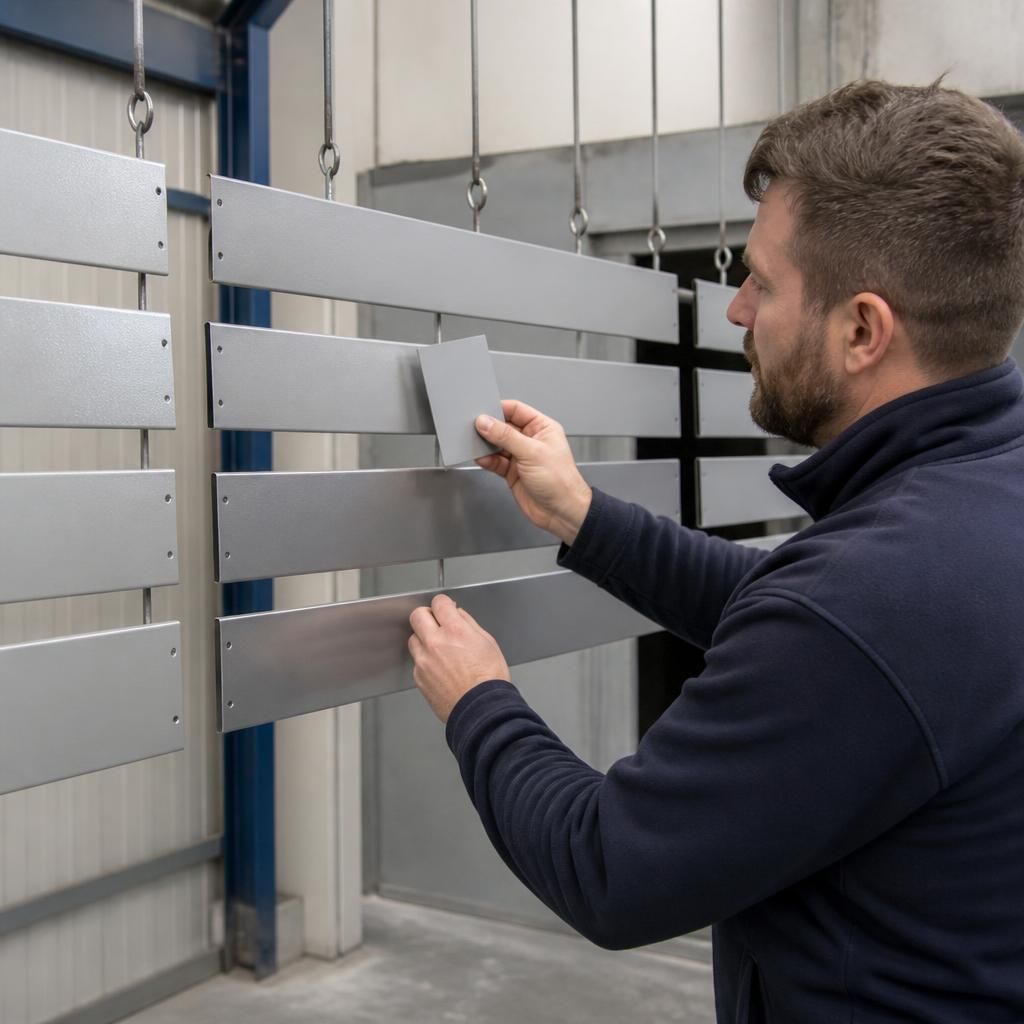
For RAL 9023, appearance consistency is an environmental consideration because aluminium-effect finishes can show variation between batches or application conditions. If components are rejected for an inconsistent visual effect, they may require stripping and recoating, adding material use, curing energy and transport to the overall impact.
Agreeing an approved reference sample and specifying how reclaimed powder, film thickness and application settings are managed can help reduce avoidable rework. This is particularly relevant where coated parts from separate production runs must appear uniform when assembled together.
Discuss your RAL 9023 aluminium powder coating requirements
Discuss your RAL 9023 aluminium powder coating requirements with the team, including the component’s use, exposure conditions and finish specification, so the appropriate coating process can be considered. Provide your part details and batch requirements for an informed assessment.