

How does the RAL 9023 aluminium powder coating process protect against corrosion?
RAL 9023 aluminium powder coating protects against corrosion by forming a continuous, cured barrier that separates the aluminium surface from moisture, oxygen and contaminants. Proper cleaning, surface preparation and curing are essential because they promote adhesion and prevent defects through which corrosion could begin.
RAL 9023 aluminium powder coating protects against corrosion through a combination of chemical surface treatment, mechanical adhesion and the cured powder film itself. The RAL 9023 designation identifies the colour and finish; it does not, by itself, determine corrosion performance. Resistance depends on the complete coating system, including the aluminium alloy, preparation method, powder formulation, application quality and curing conditions.
Aluminium naturally forms a thin oxide layer when exposed to air. This layer provides some protection, but it can be disrupted by moisture, salts, acidic or alkaline deposits and contact with dissimilar metals. Once exposed areas remain wet or contaminated, localised corrosion can develop. A correctly applied powder coating reduces this risk by isolating the aluminium from the conditions that drive the corrosion process.
The main protective mechanisms are:
- Electrical isolation: the cured coating reduces direct contact between the aluminium and conductive moisture or salts. This limits the electrochemical reactions that allow corrosion to progress.
- Resistance to water and contaminants: the polymer film helps prevent pollutants, de-icing salts, industrial residues and other corrosive substances from reaching the substrate.
- Adhesive support at the interface: suitable pretreatment creates a more stable bond between the aluminium and the powder film. This is important because corrosion can spread beneath a poorly bonded coating after moisture enters at a damaged area.
- Protection of the surface geometry: the coating covers broad faces, profiles and suitably treated edges, reducing the number of exposed areas where corrosion can start.
Surface conversion treatment is particularly important on aluminium. It modifies the outer surface so that the coating can bond more reliably than it would to untreated oxide, grease or fabrication residue. The precise treatment should be selected for the alloy, component design and intended environment. Parts may also need careful attention to machining oils, marking products, weld contamination and embedded debris, as these can create weak points even when the visible surface appears clean.
Corrosion protection is also influenced by component design. Water trapped in recesses, unsealed joints or horizontal features can keep the coating wet for extended periods. Sharp edges may receive less effective powder coverage than flatter areas, while drilled holes, cut ends and handling damage can expose the underlying metal. Designing for drainage, avoiding unnecessary crevices and specifying suitable treatment for exposed edges all help the RAL 9023 system perform more consistently.
Where the component will face particularly demanding conditions, a primer or multi-coat system may be considered instead of relying on a single decorative powder layer. This can provide additional protection at vulnerable interfaces and improve resistance to underfilm corrosion, but the materials must be compatible and cured according to the system requirements. A thicker coating is not automatically a better coating; poor flow, trapped contamination or incomplete cure can undermine performance.
Curing converts the applied powder into a continuous thermoset film. If the metal does not reach the required curing conditions for the required time, the film may have reduced chemical resistance, adhesion or flexibility. Excessive curing can also affect appearance and coating properties. For this reason, curing needs to be controlled according to the powder manufacturer’s technical specification and the actual metal temperature, rather than relying only on the oven air temperature.
During inspection, attention should be given to coverage, edge condition, colour and gloss consistency, visible damage, inclusions and signs of incomplete flow. Any scratches, impact marks or areas exposed during assembly should be assessed and repaired using a compatible method where appropriate. The coating is a protective system, not a substitute for good storage, transport, fabrication and installation practices.
In practical terms, RAL 9023 powder coating helps prevent corrosion by controlling the aluminium’s exposure and maintaining separation from its environment. Its effectiveness is greatest when the coating specification matches the service conditions and is supported by sound pretreatment, component design, controlled application, correct curing and sensible inspection after installation.
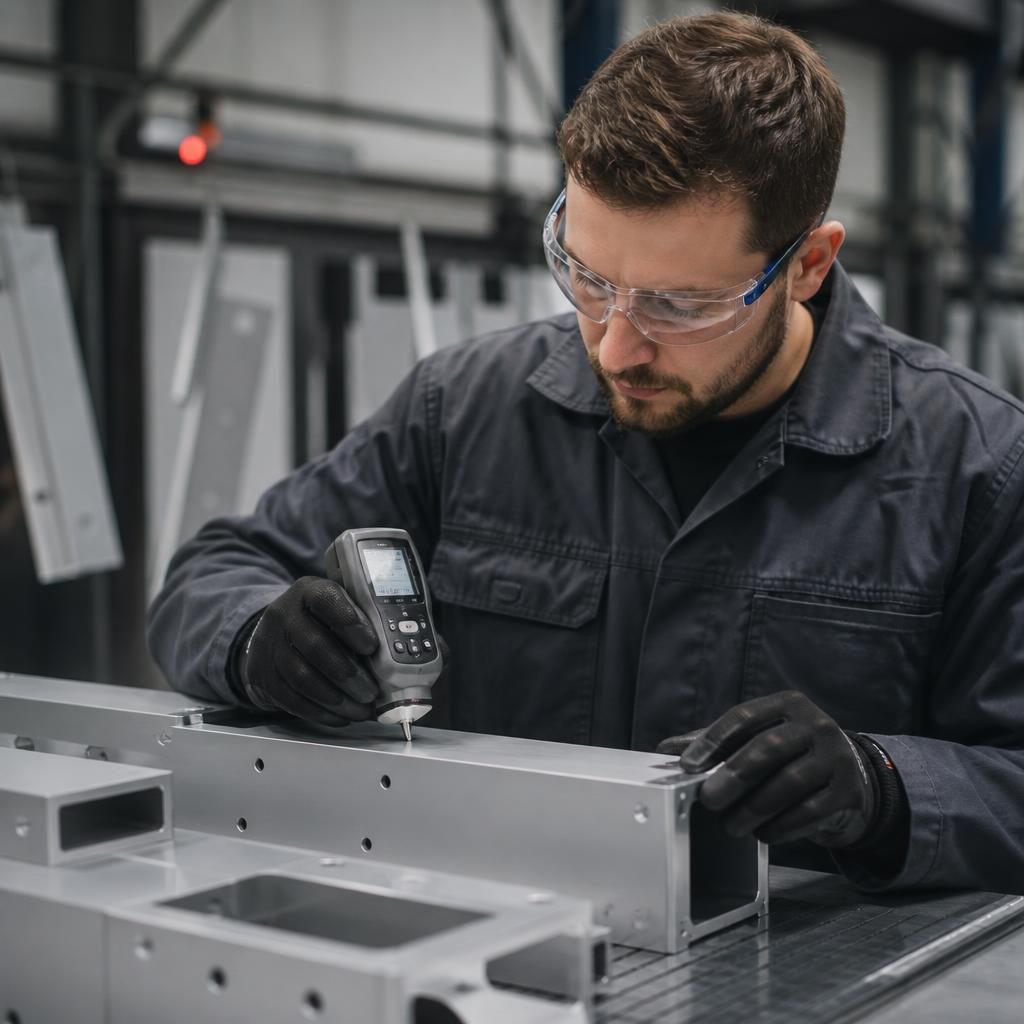
Corrosion protection from RAL 9023 aluminium powder coating is verified by checking the finished coating system, not by colour identification alone. Inspection can include film-thickness measurement, visual assessment of coverage and adhesion testing on representative areas. These checks help identify thin coverage, poor bonding or surface defects that may allow moisture to reach the aluminium.
Where components will be exposed to salts, industrial pollutants or persistent humidity, performance testing may also be used to assess resistance to moisture and corrosion under defined conditions. Such testing supports the coating specification, but it does not replace suitable pretreatment, application control or correct curing. The results are meaningful only when the test method reflects the component’s intended environment and the complete aluminium coating system.
Discuss your RAL 9023 corrosion protection requirements
If you are specifying RAL 9023 aluminium powder coating for components exposed to moisture, salts or industrial contaminants, discuss the alloy, component design and service environment with our team. We can help identify a suitable coating specification and preparation approach for your requirements.