

How does RAL 9023 aluminium powder coating compare to other finishes in terms of durability and maintenance requirements?
RAL 9023 aluminium powder coating typically provides a tougher, more uniform and lower-maintenance finish than conventional liquid paint, while offering different performance characteristics from anodising and bare aluminium. Its durability depends on surface preparation, coating specification and exposure conditions, but routine maintenance generally consists of gentle cleaning and inspection rather than regular repainting.
RAL 9023 aluminium powder coating generally offers a strong balance of surface protection, appearance and manageable maintenance, but the colour code alone does not determine durability. Performance is governed by the powder resin system, aluminium pretreatment, coating thickness, curing, component design and the conditions to which the finished part will be exposed. A correctly specified coating can be highly suitable for architectural, industrial and fabricated aluminium components, while an unsuitable specification may deteriorate prematurely even if the colour is RAL 9023.
It is useful to separate durability into several characteristics rather than treating it as a single property:
- Adhesion: how well the coating remains bonded to the aluminium, particularly around edges, recesses, joints and drilled areas.
- Weathering resistance: how effectively the finish retains its colour and gloss under sunlight, moisture and temperature changes.
- Mechanical resistance: its ability to withstand handling, impact, rubbing and scratching.
- Chemical resistance: its response to oils, detergents, salts, solvents and process contaminants.
- Corrosion protection: how well the complete coating system limits access of moisture and contaminants to the aluminium substrate.
RAL 9023 identifies the shade and visual appearance; it does not, by itself, specify whether the coating is intended for interior use, exterior exposure, high chemical contact or heavy abrasion. For that reason, the finish should be selected by service environment as well as colour. A suitable exterior-grade powder system, applied to properly prepared aluminium and fully cured, will normally provide more dependable long-term protection than choosing a colour without defining the required performance class.
Compared with liquid paint, powder coating forms a dry, continuous film during curing rather than relying on solvent evaporation. This can provide a more consistent finish across production batches and reduces the risk of runs, sags and visible brush or spray marks. Powder-coated aluminium is also less dependent on repeated decorative recoating during ordinary service. Liquid systems can nevertheless be advantageous where a component needs on-site application, complex colour matching or local repair without removing the part from service. Their practical life depends heavily on the paint formulation, application conditions, number of coats and the quality of the underlying preparation.
Repairability is an important difference. A small defect in a liquid-painted surface can often be blended with a compatible repair product, although the repaired area may remain visible. Powder coating can also be repaired, but a local touch-up is not identical to the original factory-cured film. If damage exposes the aluminium, it should be cleaned, treated and repaired with a compatible system rather than simply covered with an unrelated paint. Areas subject to repeated impact may require a different coating specification or a design change instead of relying on cosmetic touch-up work.
Compared with anodising, powder coating provides a broader choice of opaque colours and can conceal minor visual variation in the aluminium more effectively. Anodising creates an electrochemical oxide layer that becomes part of the aluminium surface. It can offer a hard, wear-resistant finish and a distinctive metallic appearance, but colour consistency can be affected by alloy, batch and processing conditions. Once anodised aluminium is damaged, achieving an invisible repair can be difficult. Powder coating is generally easier to specify when a consistent RAL shade is a priority, although the coating itself remains a separate film and can be chipped by severe impact.
Anodised surfaces are not maintenance-free: deposits, atmospheric pollutants and unsuitable cleaning products can still mark the finish. Powder-coated surfaces should likewise be cleaned with water and a mild, non-abrasive detergent, using soft cloths or brushes. Abrasive pads, aggressive solvents, strongly alkaline or acidic cleaners and high-pressure washing at close range can damage the film or force contaminants into edges and joints. After cleaning, the surface should be rinsed thoroughly and dried where water can collect.
Compared with bare aluminium, a powder-coated surface gives greater control over appearance and creates a barrier between the metal and its surroundings. Bare aluminium develops a natural oxide layer, but that does not prevent every form of staining, pitting or localised corrosion. It can also show handling marks and deposits more readily, particularly in polluted, coastal or chemically contaminated locations. Uncoated aluminium may require less attention where appearance is unimportant, but it is not automatically the lower-risk option for a visible or exposed component.
Other protective finishes may be preferable in specific conditions. For example, components exposed to continuous abrasion, concentrated chemicals or severe heat should be assessed against the coating manufacturer’s technical data rather than selected by colour alone. Powder coating can resist ordinary industrial service, but no finish should be treated as impervious to sharp impact, prolonged chemical attack or poor drainage. The design should avoid water traps, protect vulnerable edges where possible and allow coated faces to be handled without scraping them against hard surfaces.
Maintenance requirements are usually determined more by the environment than by the RAL 9023 shade. A sensible maintenance regime includes:
- removing dust, salts, grease and airborne deposits before they accumulate;
- checking edges, fixings, joints, recesses and contact points for chips or abrasion;
- looking for blistering, lifting, chalking, unusual colour change or corrosion staining;
- cleaning promptly after contact with cement residue, metal swarf, oils or chemical deposits;
- repairing exposed substrate and damaged coating before moisture can spread beneath the film.
For manufactured batches, consistency also depends on keeping coated parts separated during transport, storage and assembly. Protective packaging should not retain moisture against the finish, and components should not be dragged across one another. These handling controls are particularly relevant where the coating will be visible and where later repairs would be difficult.
In practical terms, RAL 9023 powder-coated aluminium is often a suitable choice when a uniform coloured finish, protection from normal environmental exposure and straightforward cleaning are required. Anodising may be more appropriate where a hard metallic surface and a natural aluminium appearance are central requirements; liquid paint may suit site application or repair-led work; and bare aluminium may be acceptable where appearance and additional barrier protection are not priorities. The correct comparison therefore depends on exposure, expected contact, appearance requirements and the consequences of local damage, not on colour alone.
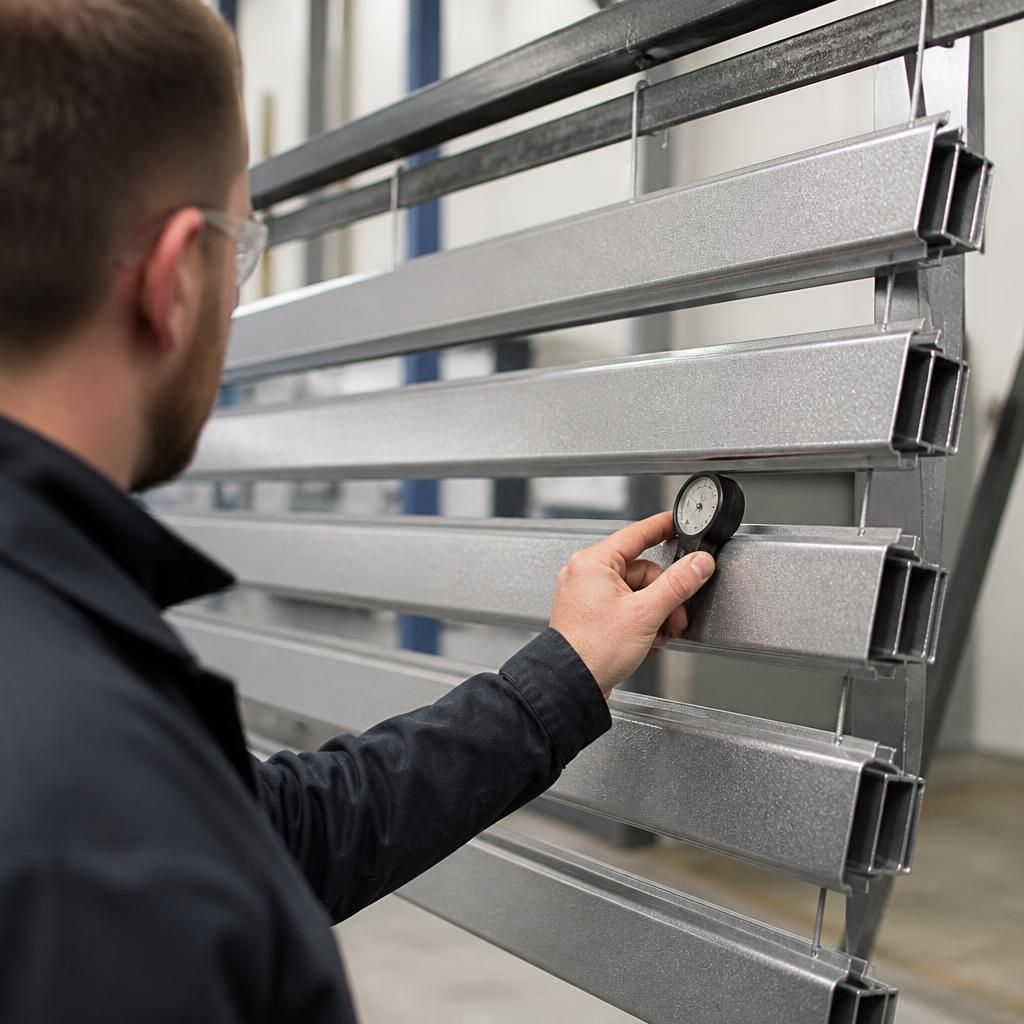
When comparing RAL 9023 aluminium powder coating with other finishes, distinguish cosmetic ageing from loss of protection. A gradual change in gloss or colour may affect appearance without indicating that the aluminium is no longer protected, whereas blistering, lifting, exposed substrate or corrosion staining requires investigation and corrective work.
This distinction helps define a proportionate maintenance plan. Visible areas may need periodic assessment for appearance, while components in concealed, damp or contaminated locations should be checked for defects that could allow moisture beneath the coating. Records of the coating specification and application system are also valuable, because any repair must be compatible with the original finish rather than selected solely by colour.
- Cosmetic change: assess whether cleaning or an approved refurbishment approach is sufficient.
- Localised damage: identify the cause, remove contamination and repair before the defect spreads.
- Widespread failure: review the exposure, preparation and coating specification before recoating.
Discuss Your RAL 9023 Aluminium Powder Coating Requirements
Discuss your RAL 9023 aluminium powder coating requirements with our team, including the component’s exposure, expected wear and maintenance needs. We can help assess whether the proposed finish is suitable for the intended service conditions.