

What maintenance is required for aluminium components with RAL 9007 powder coating?
Aluminium components with RAL 9007 powder coating require routine cleaning with water, a mild detergent and a soft cloth, together with periodic inspections for dirt build-up, scratches, chips or signs of corrosion. Avoid abrasive tools and harsh solvents, and address any coating damage promptly to help preserve the finish and the aluminium beneath it.
Maintenance for aluminium components with RAL 9007 powder coating is mainly preventive: control how the parts are handled, keep water and contaminants from collecting, and deal with coating damage before it spreads. The coating forms a protective barrier, but its service life also depends on the component’s design, installation environment and exposure to impact, chemicals, moisture and pollution.
Check the surrounding design and installation. Aluminium items should be positioned so that water can drain away rather than remain against horizontal surfaces, joints or recessed areas. During maintenance, check that drainage paths have not become blocked and that seals, gaskets and fixings remain correctly positioned. Dirt trapped around fasteners or interfaces can retain moisture and create localised deterioration beneath or beside the coating.
Pay particular attention to high-risk areas. Edges, corners, drilled points, cut-outs, folded sections and contact areas are more likely to suffer damage than broad, exposed faces. Components used in manufacturing, construction or automotive settings may also be exposed to repeated contact with tools, packaging, machinery or other metal parts. Handling should therefore avoid dragging coated surfaces across benches, racks or floors. Use clean, non-abrasive separators where components are stacked or transported.
Control exposure to chemicals. Powder-coated aluminium should not be treated as resistant to every substance it may encounter. Oils, hydraulic fluids, solvents, cement residues, road contaminants, de-icing materials and process chemicals should be removed in accordance with the coating supplier’s care guidance. If a substance is spilled, identify it before selecting a cleaning agent; an apparently suitable solvent can soften, stain or dull the finish. Test any unfamiliar product on an inconspicuous area or seek technical advice before applying it across the component.
Do not use the coating as a working surface. Where parts are likely to experience abrasion, impact or sliding contact, consider whether guards, liners or changes to the handling method are needed. Repeated mechanical wear can expose the aluminium even when the surrounding finish still appears sound. Avoid attaching labels, tapes or protective materials that leave adhesive residues unless their compatibility with the finish is known.
Repair damage using a controlled process. A small chip or scratch should be assessed for its depth, size and cause. Remove any loose material without widening the affected area, ensure the surface is clean and dry, and use a repair product compatible with powder-coated aluminium. A local repair may improve protection and appearance, but it will not always reproduce the texture or metallic character of RAL 9007 exactly. Larger defects, peeling, repeated damage or deterioration around joints should be referred for a suitable refurbishment or recoating assessment rather than covered with an unsuitable paint.
Keep maintenance records. For business-critical components, record the inspection date, location, observed defect, likely cause and action taken. Photographs can help distinguish gradual deterioration from new impact damage and can identify recurring problems with storage, installation or nearby processes. Review the maintenance approach if the same area repeatedly fails; changing the handling method or removing the source of contamination is usually more effective than repeatedly repairing the finish.
The appropriate inspection interval depends on the component’s exposure and use. Parts in sheltered, low-contamination settings may need less attention than those exposed to industrial deposits, coastal air, heavy traffic or frequent handling. The coating specification, installation guidance and any applicable site procedures should take precedence where they provide more specific requirements.
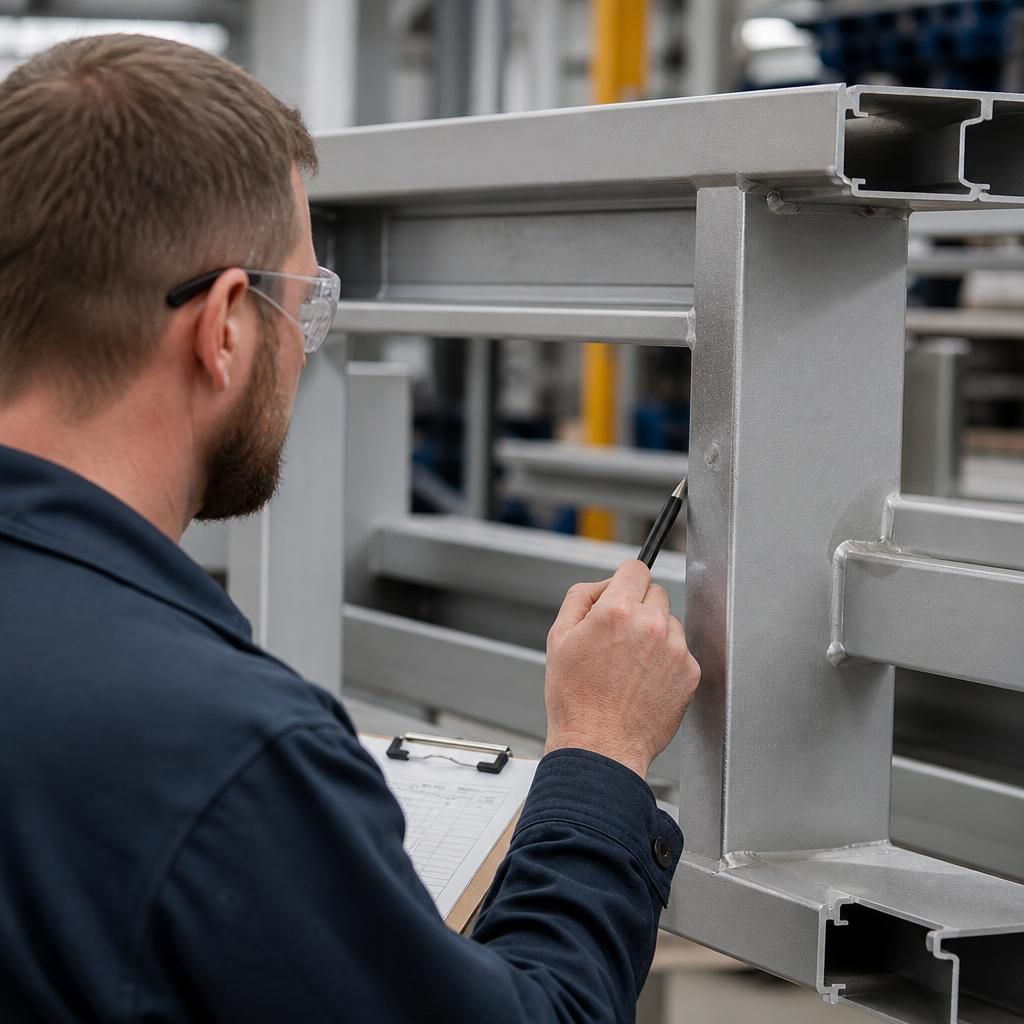
During inspection, look beyond visible dirt or impact damage for changes in the coating itself. Chalking, loss of gloss, colour variation, blistering or lifting can indicate that the finish is deteriorating rather than simply needing cleaning. These signs are particularly important where aluminium components are exposed to sunlight, moisture, industrial deposits or repeated chemical contact.
Record the location and extent of any change, then compare it with adjacent areas and previous inspection photographs. Surface deterioration that is widespread, recurring or associated with lifting should be assessed before cleaning or overcoating, as the underlying cause may need to be addressed to prevent further loss of adhesion and protection.
Discuss maintenance for your RAL 9007 aluminium components
If your RAL 9007 powder-coated aluminium components need assessment, refurbishment or recoating, discuss their condition, exposure and intended use with Powder-coatings.co.uk. The team can help identify a suitable approach for your metal components.