

What distinguishes RAL 9007 powder coating for aluminium from other RAL colour options in terms of durability and aesthetic appeal?
RAL 9007 powder coating gives aluminium a durable protective finish with a distinctive metallic grey appearance, combining practical resistance to everyday wear with a refined architectural look. Its durability is determined mainly by the powder system, surface preparation and curing rather than the RAL shade itself, while its metallic effect distinguishes it aesthetically from standard solid colours.
RAL 9007 is distinguished more by its metallic appearance and application requirements than by inherently greater durability than other RAL colours. When the same suitable powder system, aluminium preparation and curing conditions are used, RAL 9007 can provide a comparable level of resistance to weathering, abrasion and handling as other colours in that system. The meaningful difference is that its metallic formulation affects visual consistency, repairability and the way surface quality is perceived.
Durability is primarily a specification issue. The selected resin technology, coating thickness, pre-treatment and oven curing all influence adhesion and long-term performance. For aluminium used externally, the powder system should be appropriate for the exposure conditions and the component’s intended use. A RAL number identifies colour, not a guaranteed performance class, so comparing RAL 9007 with a solid colour is only useful when the coatings are otherwise equivalent.
- Resistance to everyday use: correctly applied RAL 9007 can withstand normal handling, contact and general service conditions. Scratching or premature failure is more likely to result from inadequate preparation, poor curing, mechanical impact or unsuitable service conditions than from the colour designation itself.
- Weathering performance: outdoor stability depends on the powder formulation and the level of ultraviolet and atmospheric exposure. A higher-performance exterior-grade system may be appropriate for demanding locations, regardless of whether the chosen shade is RAL 9007 or another RAL option.
- Edge and detail coverage: aluminium profiles, folded parts, apertures and sharp edges require suitable preparation and controlled application. These factors have a greater effect on protection than choosing one grey shade over another.
The main aesthetic distinction is the metallic effect. RAL 9007 contains a visual aluminium-like character that creates more variation in tone and reflection than a conventional solid grey. Depending on viewing angle, lighting and the orientation of the coated part, the surface may appear subtly lighter or darker. This gives architectural frames, panels, fabricated components and other visible aluminium parts a more dimensional finish than a flat solid colour.
Compared with standard solid RAL colours, RAL 9007 generally offers:
- A more reflective, layered appearance: the metallic effect can make broad surfaces look less uniform and can highlight changes in profile or form.
- A neutral architectural character: its grey tone can sit between lighter silver shades and darker charcoal colours, making it suitable where a technical or contemporary appearance is required without using a highly dark finish.
- Greater sensitivity to application direction: metallic particles can align or distribute differently during spraying. Inconsistent application may produce visible shade or effect variation, particularly across adjoining panels or parts coated in separate batches.
- More demanding visual matching: samples should be assessed under relevant lighting and, where appearance is critical, parts should be processed together using consistent settings and the same powder specification.
These characteristics do not make RAL 9007 less durable, but they can make defects more noticeable. Uneven film build, contamination, poor pretreatment or incomplete curing may be visible through changes in gloss, mottling or metallic orientation. Solid colours can sometimes appear more forgiving because their appearance is less dependent on reflected light and particle distribution.
Repairs and later additions also require care. A small repaired area may not reproduce the original metallic effect exactly, even when the nominal RAL reference is the same. Differences in powder batch, application method, film thickness, substrate preparation and viewing angle can affect the result. For this reason, RAL 9007 is best selected with an agreed physical sample or approved reference where components must match existing aluminium work.
Surface cleanliness also affects perceived appearance. Dust, handling marks and deposits can interrupt the reflection from a metallic coating, while a textured or matt alternative may disguise minor surface variation more effectively. Cleaning should therefore follow the coating supplier’s guidance and use non-abrasive methods; harsh chemicals or aggressive tools can damage the finish irrespective of its colour.
For a practical comparison, RAL 9007 is a strong choice when the specification calls for a durable powder-coated aluminium surface with a subtle metallic, architectural appearance. It is not automatically more resistant than another RAL colour, and it is not automatically less resistant either. The deciding factors are the powder system, pre-treatment, application control, curing and expected environment. Its particular advantage is visual: it provides depth and metallic character, while requiring tighter control of batch consistency and finishing quality than a straightforward solid colour.
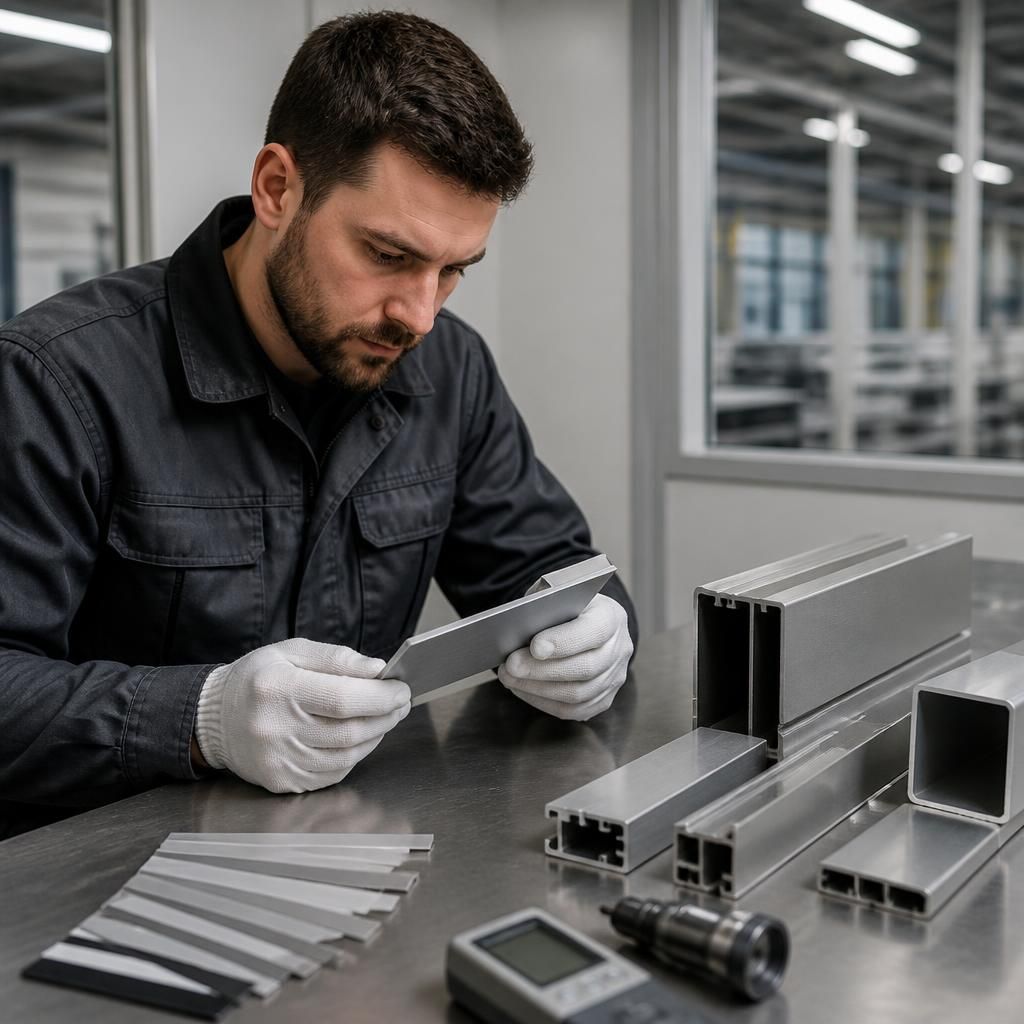
For specification and quality inspection, RAL 9007 should be treated as a colour reference rather than a complete finish description. The final appearance also depends on gloss level, surface texture, powder formulation and the aluminium profile itself. Two products carrying the RAL 9007 reference can therefore have noticeably different visual character even when both are correctly applied.
This is particularly important for visible architectural work. A suitable specification should identify the required RAL shade alongside the agreed gloss and texture, and should define an acceptable reference sample for inspection. That separates legitimate differences in finish type from defects such as contamination, pinholing or poor coverage. In practical terms, RAL 9007 offers a more controlled and distinctive result when the colour reference is assessed as part of the complete coating specification, rather than selected on its RAL number alone.