

How does RAL 9007 powder coating improve the longevity of aluminium components?
RAL 9007 powder coating extends the service life of aluminium components by forming a hard, continuous barrier against moisture, corrosion, UV exposure and everyday wear. When the aluminium is correctly prepared and the coating is properly cured, it helps preserve the metal’s appearance and performance in demanding industrial and external environments.
RAL 9007 powder coating improves the longevity of aluminium components by adding a carefully bonded, chemically resistant finish that helps the substrate withstand service conditions. The RAL 9007 designation identifies the metallic grey colour; the long-term protection comes from the powder-coating system, including aluminium preparation, pretreatment, powder formulation, application and curing. A correctly specified system can help components retain their functional condition and acceptable appearance for longer than uncoated aluminium in many industrial applications.
Aluminium naturally forms a thin oxide layer, but that layer is not always sufficient for components exposed to handling, pollutants, cleaning chemicals, abrasion or changing outdoor conditions. Powder coating adds a continuous polymer film over the prepared surface. This reduces direct contact between the aluminium and contaminants that could otherwise mark the surface, promote localised deterioration or make cleaning more difficult.
- Reduced surface degradation: the coating separates the aluminium from moisture, salts, airborne pollutants and other contaminants, helping limit the conditions that contribute to corrosion-related surface defects.
- Improved resistance to handling and abrasion: a properly cured film is more resistant to scuffing, scratching and general mechanical contact than an untreated decorative surface.
- Better retention of appearance: the finish helps maintain a consistent metallic grey surface, which is important where components form part of visible equipment, architectural metalwork or assembled products.
- Protection of profiles and formed parts: coating can cover broad faces, edges and shaped sections, provided the component design and application process allow adequate coverage.
The preparation stage has a direct effect on service life. Aluminium must be clean and free from oil, dirt, oxide contamination and residues that could interfere with adhesion. Suitable pretreatment promotes a stable bond between the metal and the coating. Without that bond, moisture or contamination can work beneath damaged areas, causing lifting, flaking or progressive loss of protection. Surface preparation is therefore part of the durability specification rather than a cosmetic preliminary.
Curing is equally important. Powder particles must reach the required condition throughout the coating, not just at the visible surface. Under-cured material may have inadequate hardness, adhesion or chemical resistance, while excessive heat or an unsuitable cure can affect the finish and the substrate. The correct cure depends on the powder system, component mass and oven conditions, so process control is essential for consistent performance across a batch.
Component design and handling also influence longevity. Sharp edges, narrow recesses, trapped contaminants and inaccessible faces can make it difficult to achieve an even coating. Parts should be designed or prepared so that the powder can reach the required surfaces and so that water or chemicals do not remain trapped against the finish. After coating, lifting and assembly should be managed carefully to avoid impact damage, especially around edges, fixing points and contact areas.
RAL 9007 itself should not be treated as a separate durability grade. Colour, gloss and appearance can vary according to the selected powder system, and metallic finishes may require particular control during application to maintain a uniform visual effect. The appropriate specification should therefore consider the environment, expected handling, cleaning regime, required appearance and the level of exposure, rather than choosing a colour alone.
For aluminium components in industrial or external use, longevity is best assessed as a system outcome. A suitable powder, compatible pretreatment, even application, complete cure and sensible component design work together to reduce premature coating failure. Regular cleaning with methods and products compatible with the finish can then remove accumulated contaminants before they affect the coating or obscure early signs of damage.
Powder coating does not make aluminium immune to impact, chemical attack or poor installation. Deep scratches, cut edges, damaged fixing areas and unsuitable cleaning agents can expose the substrate or weaken the finish. Inspecting components periodically and repairing damage using a compatible method helps prevent a small defect from developing into wider coating failure. For this reason, the expected service environment should be discussed before the coating system is selected.
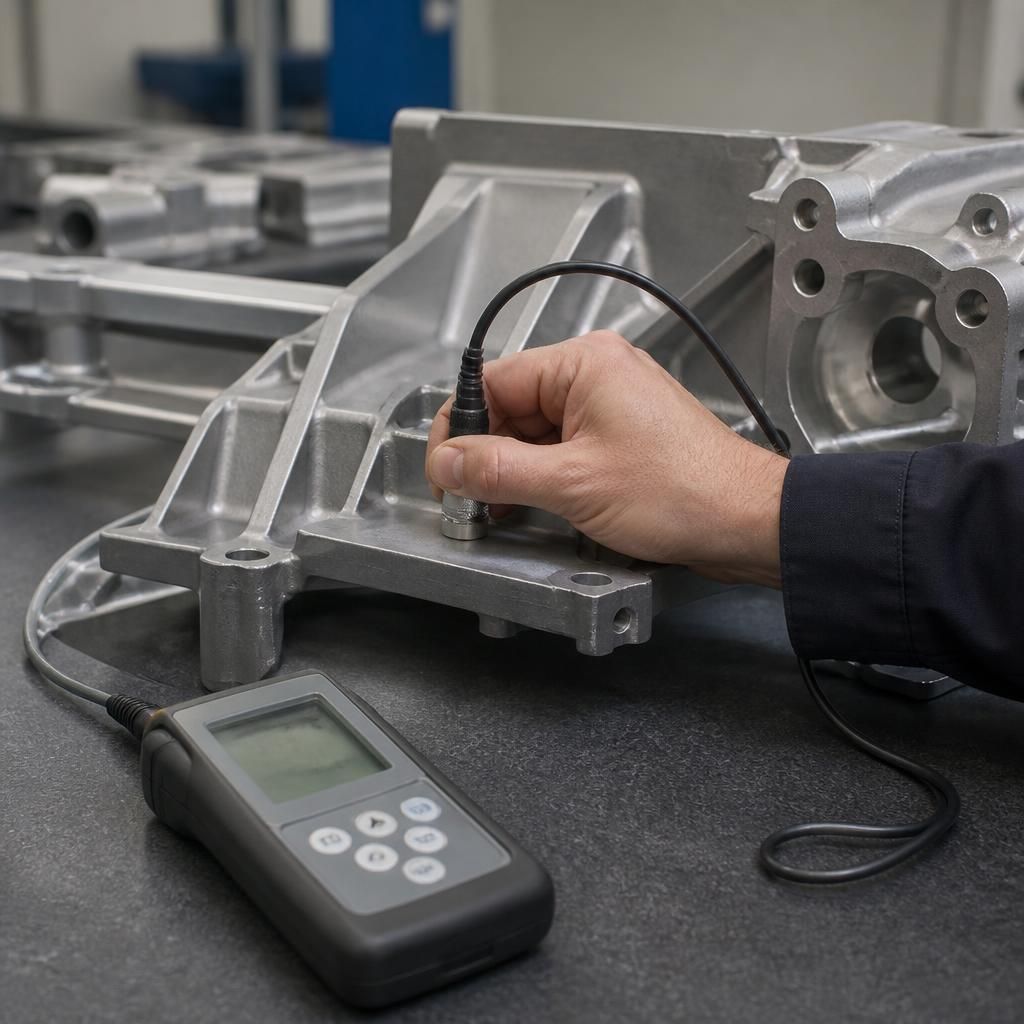
Consistent film thickness is an important factor in how long RAL 9007 powder coating protects an aluminium component. Areas with insufficient coating may provide weaker protection against moisture, contaminants and wear, while excessive build can affect the finish and may indicate that the powder has not cured as intended. The target film build should therefore be selected for the component’s service conditions and checked as part of quality control.
Thickness control is particularly relevant on complex aluminium parts, where corners, recesses and changes in shape can receive powder differently from broad, accessible surfaces. Verifying coverage across representative areas helps identify variations before components enter service. This supports more predictable long-term protection and reduces the risk that an overlooked thin area becomes the first point of coating deterioration.
Discuss RAL 9007 Powder Coating for Your Aluminium Components
Discuss your aluminium components with the powder-coating team to assess the suitable RAL 9007 system, pretreatment and application requirements for their service environment. Provide details of the component design, expected exposure and handling conditions so the finish can be specified appropriately.