

How does RAL 9007 powder coating contribute to environmental sustainability compared to other aluminium finishing processes?
RAL 9007 powder coating supports environmental sustainability by applying a dry, durable finish with minimal volatile organic compound emissions and limited material waste. Compared with liquid painting and some other aluminium finishing methods, powder coating can reduce overspray-related waste and help extend component life, reducing the need for replacement or repeat finishing.
RAL 9007 powder coating can support a lower-impact approach to aluminium finishing because its environmental performance is based on the powder application system, material efficiency and the service life of the finished component. Compared with solvent-based liquid painting, it avoids the routine use of liquid coatings containing significant solvent content. Compared with anodising, it can also avoid some of the process chemistry, rinsing and wastewater controls associated with an electrochemical treatment. Its overall sustainability still depends on preparation, curing, extraction, powder recovery and the eventual treatment of the aluminium.
Material efficiency during application
Powder coating is applied as a dry powder and then cured to form the finish. Powder that does not adhere to the component may be recoverable in a suitably controlled application system, whereas liquid paint overspray generally contains a mixture of paint solids, solvents and cleaning residues that requires managed disposal or treatment. This can make powder coating a more efficient use of coating material, particularly for repeatable batch work with consistent component sizes.
Material efficiency is not automatic. Contamination, poor earthing, unsuitable spray settings or incorrect booth management can reduce transfer efficiency and increase unusable powder. Responsible process control therefore matters as much as the coating type. Powder that has been contaminated or mixed incorrectly may not be suitable for reuse, so collection, storage and colour control remain important parts of the environmental assessment.
Comparison with liquid painting
Liquid painting commonly requires solvents to keep the coating fluid and to clean equipment. These solvents can contribute to volatile organic compound emissions and create additional handling and waste requirements. Powder coating does not use solvent in the same way during application, which simplifies the coating system and can reduce solvent-related emissions at the finishing stage.
Liquid systems may still be appropriate for particular substrates, repairs or specifications, and their environmental impact varies according to the formulation and equipment used. The relevant comparison is therefore between the complete systems, including preparation, application, curing, cleaning and waste treatment, rather than between the coating materials alone.
Comparison with anodising and other treatments
Anodising uses an electrochemical process involving acid-based baths, rinsing and sealing stages. Those stages require controlled chemical management and can produce wastewater that must be treated before discharge or disposal. Powder coating uses its own preparation and pretreatment requirements, but it does not rely on the same anodising bath process. This may reduce the chemical and water burden associated with some aluminium finishing specifications.
Anodising can offer particular functional properties, such as an integral oxide layer and a distinctive appearance, so it may remain the correct technical choice for certain applications. Powder coating is most environmentally credible where its performance is sufficient for the component’s exposure conditions and the coating does not need premature replacement.
Energy use and the full lifecycle
Powder coating requires an oven cure, so the energy source, oven design, loading pattern and operating controls affect its environmental impact. An assessment that considers only emissions during spraying may overlook this energy demand. Efficient curing, appropriate batch planning and avoiding unnecessary rework help prevent energy being used for defective or under-cured finishes.
The longer-term benefit comes from assessing the whole lifecycle. A coating that protects aluminium from weathering, abrasion or routine wear can help components remain in service for longer. This can defer the manufacture, transport and finishing of replacement parts. The benefit depends on the coating specification, substrate preparation, film quality and the conditions in which the component is used; powder coating should not be selected on environmental grounds without confirming that it is technically suitable.
Aluminium recycling at end of life
Aluminium remains a recyclable material after it has been powder coated. At the end of a component’s service life, the metal can enter established recycling routes, although the precise treatment depends on the recycler and the construction of the part. Keeping components correctly identified and separating incompatible materials where practical can support effective recovery. The coating itself becomes part of the overall recycling input and is normally managed within the recycler’s process rather than treated as a separate reusable aluminium stream.
For UK manufacturers, fabricators and other businesses comparing finishes, the most useful assessment is a process-level review: compare the coating formulation, preparation chemistry, energy used for curing or drying, overspray and waste controls, expected service conditions, and end-of-life route. RAL 9007 does not by itself make a component sustainable, but a well-controlled powder coating process can provide a sound environmental balance when its durability and finish are matched to the aluminium component’s intended use.
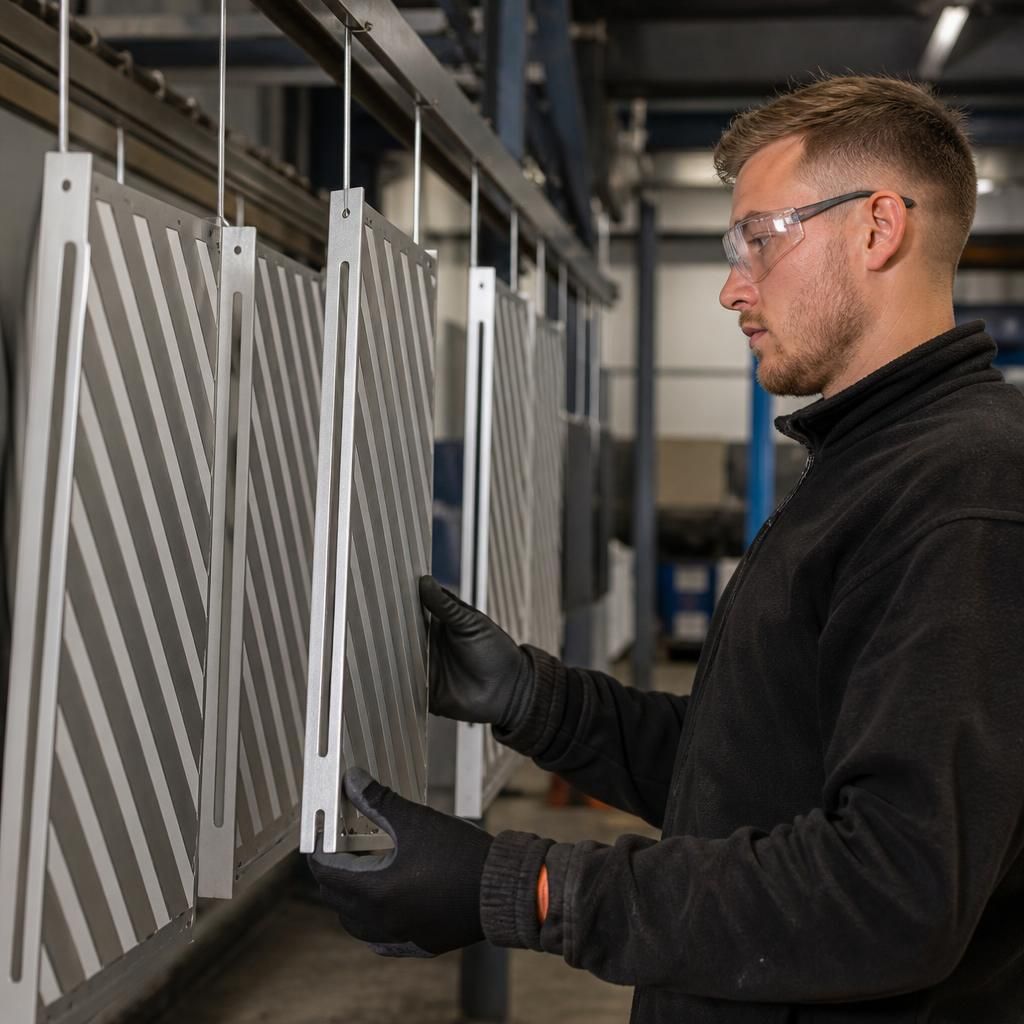
RAL 9007 is a colour designation, not a separate environmental process. Its sustainability depends on the powder formulation, aluminium preparation, application controls, curing requirements and the service conditions of the finished component. The RAL shade alone does not make an aluminium finish more or less sustainable than another powder-coated colour.
When comparing RAL 9007 with other aluminium finishes, assess the complete coating specification rather than the appearance in isolation. A suitable specification should provide the required protection without unnecessary rework, while its application should be controlled to produce a consistent film and avoid avoidable material use. This gives the selected finish a more meaningful environmental assessment than colour choice alone.