

What preparation steps are necessary before applying RAL 8029 aluminium powder coating to ensure optimal adhesion and performance?
Before applying RAL 8029 aluminium powder coating, remove oil, grease, dirt and existing contamination, then prepare the surface by suitable abrasion or chemical pretreatment to create a clean, stable key. Rinse and dry the component thoroughly, remove dust, mask areas that must remain uncoated, and inspect the surface before applying the powder.
Preparation for RAL 8029 aluminium powder coating involves more than achieving a visually clean surface. The aluminium component must be in a suitable condition for coating, designed and handled so that the powder can reach all required areas, and compatible with the selected pretreatment and curing process. These controls help prevent adhesion loss, blistering, pinholes, edge defects and premature corrosion.
Confirm the substrate and its condition
- Identify the aluminium alloy, casting or extrusion and check whether it has been anodised, painted, lacquered or treated with another finish. Different substrates and existing treatments may require different preparation methods.
- Check for embedded iron, copper, silicone, oil-based marking products, adhesive residues and other materials that could interfere with coating adhesion. Contamination can be introduced during fabrication, storage or assembly, not only during machining.
- Review the component for corrosion, pitting, oxidation and areas affected by previous coating failure. Deeply damaged surfaces may need repair or may require a decision on whether the part is suitable for recoating.
Complete fabrication before coating
All welding, drilling, cutting, grinding, bending and machining should normally be completed before the part enters the coating process. Fabrication carried out afterwards can expose bare aluminium, damage the finish and create paths for moisture to reach the substrate. Weld zones deserve particular attention because heat-affected areas, welding residues and spatter can behave differently from the surrounding aluminium.
Sharp burrs, loose edges and excessive weld irregularities should be removed or corrected. Powder tends to form a thinner film on sharp edges, so sensible edge preparation improves coverage and reduces a common weak point in protective finishes. Any grinding marks should be assessed for depth and direction, particularly where the finished component will be viewed closely.
Assess castings and enclosed sections
Porous cast aluminium can retain air, machining fluids or moisture. During oven curing, trapped material may expand or escape through the coating, producing pinholes, bubbles or craters. Castings should therefore be assessed for porosity, and any required outgassing or preheating procedure should be agreed with the coating specialist before production.
Hollow sections, folded returns and overlapping joints also need review. Components should not retain liquids from earlier processing, and enclosed areas may need suitable drain or vent holes. These openings should be positioned so that they support processing and service performance without compromising the component’s structural function.
Design masking and contact points
Define which areas must remain free of powder before the part is prepared for coating. This may include threads, bearing seats, mating faces, precision bores, electrical earth points and surfaces that must fit inside another component. Use appropriate plugs, caps, tapes or purpose-made masking methods that can tolerate the process temperature and do not leave residues.
Plan how the component will be suspended or electrically contacted during application. Contact points should be located on non-critical areas where possible, and the design should allow the part to hang securely without creating avoidable uncoated zones. Poor contact can affect powder transfer and produce uneven coverage, particularly in recesses and around complex geometries.
Check dimensional and process requirements
Powder coating adds a film thickness to the component, so clearances, threads, press fits, hinges and sliding interfaces should be checked before work begins. This is especially important for close-tolerance parts. The required RAL 8029 finish should also be specified with its intended gloss level, texture and performance requirements, as these characteristics influence the powder system and curing conditions.
Where aluminium is joined to other metals, consider the joint design and the operating environment. Contact between dissimilar metals can contribute to galvanic corrosion if moisture reaches the joint. Masking, sealing or an appropriate coating specification may be needed, depending on how the component will be used.
Agree the curing and verification requirements
The powder manufacturer’s technical requirements should be matched to the component’s material, thickness and geometry. Cure is determined by the metal temperature and the specified time at that temperature, rather than simply by the oven’s air-temperature setting. Large or thermally complex parts may heat at different rates, so the process should be validated for the actual component.
For important production work, a trial component or representative test panel can be used to confirm colour, texture, coverage and cure before the full batch is processed. After coating, suitable checks may include visual examination, film-thickness measurement, adhesion testing and inspection of masked areas, edges, holes and contact points. The exact tests should reflect the component’s service conditions and the agreed specification.
Good preparation is therefore a combination of material assessment, completed fabrication, controlled component design, planned masking and a verified coating process. These steps give RAL 8029 powder coating a more reliable foundation for adhesion and long-term service on aluminium components.
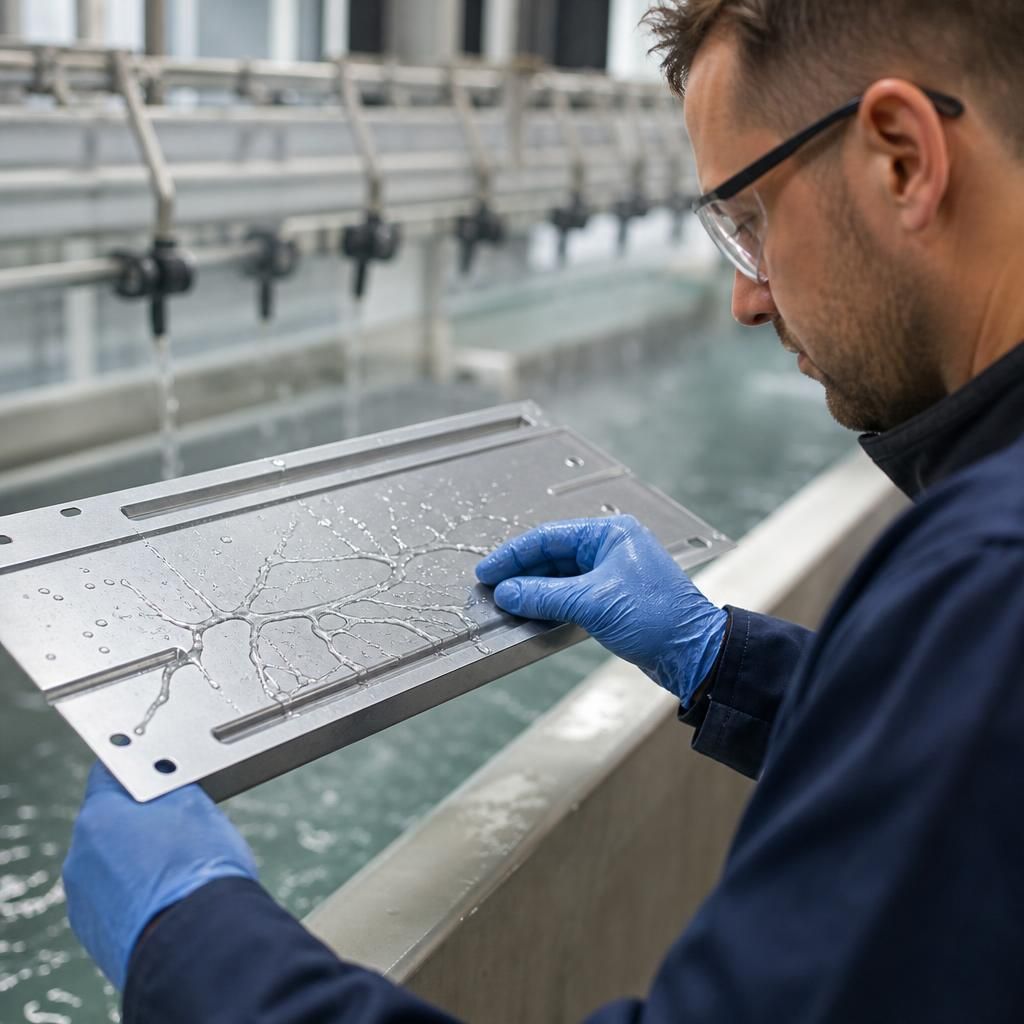
Aluminium can appear clean while still carrying a thin oxide layer, processing residues or fingerprints that interfere with RAL 8029 powder coating. After degreasing and any approved etching or conversion treatment, the surface should be checked rather than judged by appearance alone. A water-break check can help identify residual oils: clean water should spread as a continuous film, while beading or separating may indicate contamination that needs further treatment.
The prepared component should then be rinsed thoroughly, dried without recontamination and examined for powdery residue, staining or areas that have been missed. Gloves, clean handling equipment and protected storage help prevent contact contamination between preparation and powder application. For repeat production, recording the pretreatment sequence and checking representative parts provides better process control than relying on the finished colour as evidence of adequate preparation.
Discuss preparation for RAL 8029 aluminium powder coating
Discuss your aluminium components with a powder-coating specialist before production to confirm the appropriate preparation, masking and curing requirements for the specified RAL 8029 finish. Provide the component details and intended service conditions so the coating specification can be reviewed accurately.