

What maintenance is required for RAL 8029 aluminium powder-coated surfaces?
Maintain RAL 8029 aluminium powder-coated surfaces through regular cleaning with clean water, a mild detergent and a soft cloth or sponge, followed by thorough rinsing and drying. Avoid abrasive cleaners, harsh solvents and aggressive tools, and inspect the coating periodically for scratches, chips or lifting so any damage can be assessed and repaired promptly.
Maintenance of RAL 8029 aluminium powder-coated surfaces is mainly preventive: control the conditions around the coated component, protect the finish from mechanical and chemical damage, and deal with defects before moisture or contaminants reach the aluminium beneath.
Inspect vulnerable areas regularly. Pay particular attention to edges, corners, joints, drilled holes, folded sections, fixing points and areas where components touch one another. These locations are more likely to experience impact, coating movement or trapped moisture than broad, exposed faces. Look for blistering, peeling, cracking, staining that does not clear with normal care, exposed metal or corrosion around fixings. Record the location and apparent size of any defect so that deterioration can be monitored.
Keep water from being trapped. Aluminium powder-coated components should be installed and maintained so that water can drain away rather than collect in ledges, recesses, overlaps or behind fittings. Check that drainage paths, weep holes and gaps have not become blocked by debris, sealant or accumulated deposits. Where coated parts are used outdoors, pay close attention to horizontal surfaces and concealed faces, as prolonged dampness can affect the coating system even when the visible face appears sound.
Manage contact with incompatible materials. Moisture trapped between the coated aluminium and another material can create staining or localised deterioration. Check interfaces with steel, copper, treated timber, masonry, sealants and rubber products, particularly where dissimilar metals or chemically active residues may be present. Damaged or deteriorated isolating washers, gaskets and sealants should be assessed and replaced with materials suitable for the application. Do not apply an unverified sealant, adhesive or protective treatment over the powder coating, as some products can affect adhesion, gloss or colour.
Reduce mechanical stress. Avoid dragging tools, components or packaging across the finish. During maintenance of adjacent equipment, shield the coated surface from sparks, swarf, drilling debris and impact. Protective films or coverings should be suitable for powder-coated surfaces and should not be left in place where they can trap moisture or leave adhesive residue. Any temporary protection should be removed and the surface checked afterwards.
Respond correctly to damage. Minor marks should be assessed according to their depth and location rather than concealed immediately. A superficial mark may require a different treatment from a chip that exposes the aluminium or a defect that has begun to lift at its edges. Repairs should use a compatible system recommended for the original powder coating and the service environment. Colour matching can be more difficult with textured, metallic or pearlescent finishes such as RAL 8029, so a repaired area may not appear identical to the surrounding coating. For visible or safety-critical components, obtain a coating specialist’s assessment before applying a touch-up product.
Where the coating has failed over a larger area, local touch-up may not provide a durable result. The component may need assessment, preparation and recoating, with the cause of failure addressed first. Recoating over contamination, corrosion or poorly bonded material can leave the underlying problem in place.
Keep a simple maintenance record showing inspection dates, locations checked, defects found, products used and repairs completed. The appropriate inspection interval depends on exposure, use and the surrounding environment. Components near roads, industrial emissions, coastal air, high humidity, abrasive traffic or chemically active processes generally require closer attention than items in a clean, sheltered setting. The record helps establish a practical schedule based on actual conditions rather than relying on appearance alone.
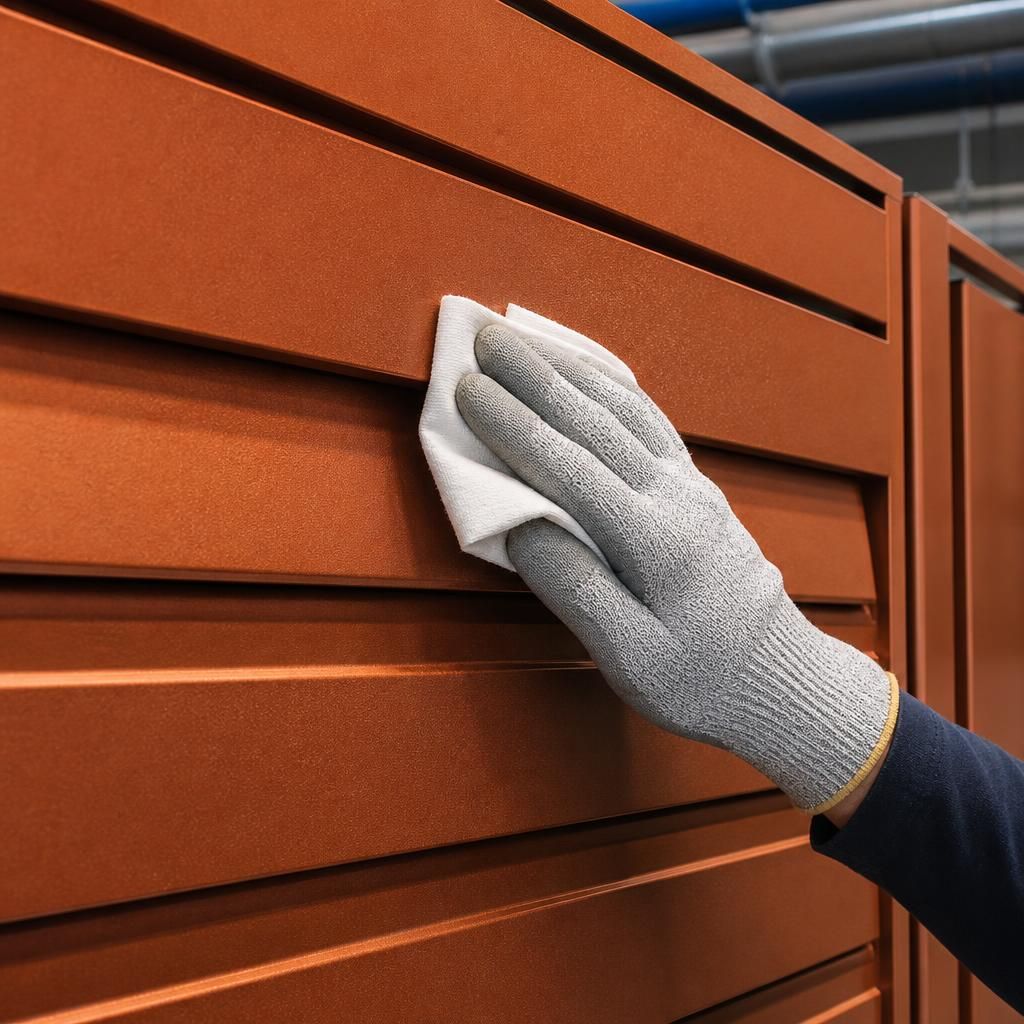
Routine maintenance should preserve the coating rather than alter its surface. Avoid polishing compounds, waxes, abrasive pads and unapproved protective treatments, as these can change the sheen, affect the texture or leave residues that attract dirt. This is particularly important for RAL 8029 finishes with a metallic, textured or special-effect appearance, where local rubbing may create visible variation. If a cleaning or protective product is unfamiliar, check its suitability for powder-coated aluminium and test it on a small, inconspicuous area before wider use.
Discuss maintenance for your RAL 8029 aluminium powder-coated surfaces
If you need advice on maintaining or assessing RAL 8029 aluminium powder-coated components, discuss the coating system and service conditions with a specialist. Powder-coating.co.uk can advise on suitable inspection, repair or recoating options for industrial applications.