

What are the preparation steps for RAL 8029 aluminium powder coating?
Preparation for RAL 8029 aluminium powder coating involves removing oil, grease, dirt and existing corrosion, followed by thorough rinsing and drying. The aluminium should then receive a suitable pretreatment, be inspected for defects, and have areas such as threads, apertures and contact points masked before powder application.
Effective preparation for RAL 8029 aluminium powder coating goes beyond making the metal visibly clean. It requires the correct coating specification, controlled handling of the aluminium, suitable conversion treatment, sound component design and a verified curing plan. RAL 8029 identifies the colour; the powder manufacturer’s technical data determines the required substrate treatment, application conditions and cure schedule.
Confirm the coating specification first. Establish whether the finish is intended for interior or exterior use, the required gloss and texture, the target film build, and any performance requirements for the component. Confirm that the selected powder is suitable for aluminium and that the proposed pretreatment is compatible with it. RAL 8029 is a pearl copper shade, so an approved sample or reference panel is useful where colour consistency and appearance are important. Pearl and metallic effects can be affected by application technique, film thickness, orientation and powder batch.
Complete all fabrication before coating. Cutting, drilling, welding, forming and grinding should be finished before the part enters the coating process. Burrs and sharp edges should be removed, while welds should be continuous and free from spatter, pinholes and residues that could disrupt the finish. The design should also allow the part to be supported securely and, where relevant, provide suitable drainage and venting. Enclosed sections without adequate vent holes can retain process liquids or release trapped gases during heating.
Check the aluminium substrate and its condition. Different aluminium alloys, castings, extrusions and welded areas can respond differently to pretreatment and heating. The coater should identify repairs, embedded foreign material, deep scratches, porosity and areas with inconsistent texture before processing. Dimensional tolerances are also worth reviewing because the coating adds a measurable layer and can affect close-fitting assemblies, sliding faces or threaded connections.
Use a controlled aluminium pretreatment system. After the initial surface preparation, aluminium normally requires a conversion treatment selected for the alloy, intended environment and powder system. This treatment creates a chemically suitable surface that supports adhesion and helps protect the substrate beneath the coating. The process should be controlled for concentration, contact time, temperature and rinsing quality in accordance with the treatment supplier’s instructions. Poorly controlled chemistry, residual salts or excessive handling after treatment can compromise the result even when the aluminium appears satisfactory.
Prevent contamination after treatment. Components should be handled with clean gloves or other suitable protection and kept away from dust, silicone products, oil, adhesive residue and unapproved marking materials. Supports and racks should not transfer contaminants to the treated surface. The part should be moved into the application area without unnecessary delay or contact, because fingerprints and airborne contamination can affect adhesion and visible appearance.
Plan racking and electrical contact points. Powder coating depends on an effective electrical connection between the part and the application equipment. Racks, hooks and contact areas should therefore be designed to hold the component securely while providing a reliable conductive path. Contact points should be positioned where they are acceptable for the finished assembly or can be treated afterwards. Heavy or unusually shaped parts may need additional support to prevent movement, distortion or uneven powder deposition.
Protect areas that must remain uncoated. Masking should be selected for the oven temperature and the powder process rather than relying on ordinary tapes or plugs. In addition to functional faces, consider bearing seats, earth points, mating surfaces, identification marks and areas used for later welding or assembly. Masking must be fitted tightly enough to prevent edge build-up, but it should not damage the treated surface when removed.
Prepare the application and curing conditions. The spray area should be free from dust and incompatible powder residue, with equipment set up for the selected aluminium component and finish. The oven should be capable of delivering the specified metal temperature consistently throughout the load. Cure time is based on the part’s metal temperature, not simply the oven air temperature, so thick and thin sections may require particular attention. Under-curing can reduce coating performance, while excessive heat can alter the colour or appearance of a pearl shade.
A trial panel or representative component can be used to confirm colour, effect, coverage, adhesion and cure before a production batch is processed. Final checks should include visual inspection under consistent lighting, verification of masked areas and contact points, film-thickness assessment where specified, and appropriate adhesion or cure testing. Keeping the powder batch, pretreatment route and oven settings recorded makes it easier to investigate any variation in the RAL 8029 finish.
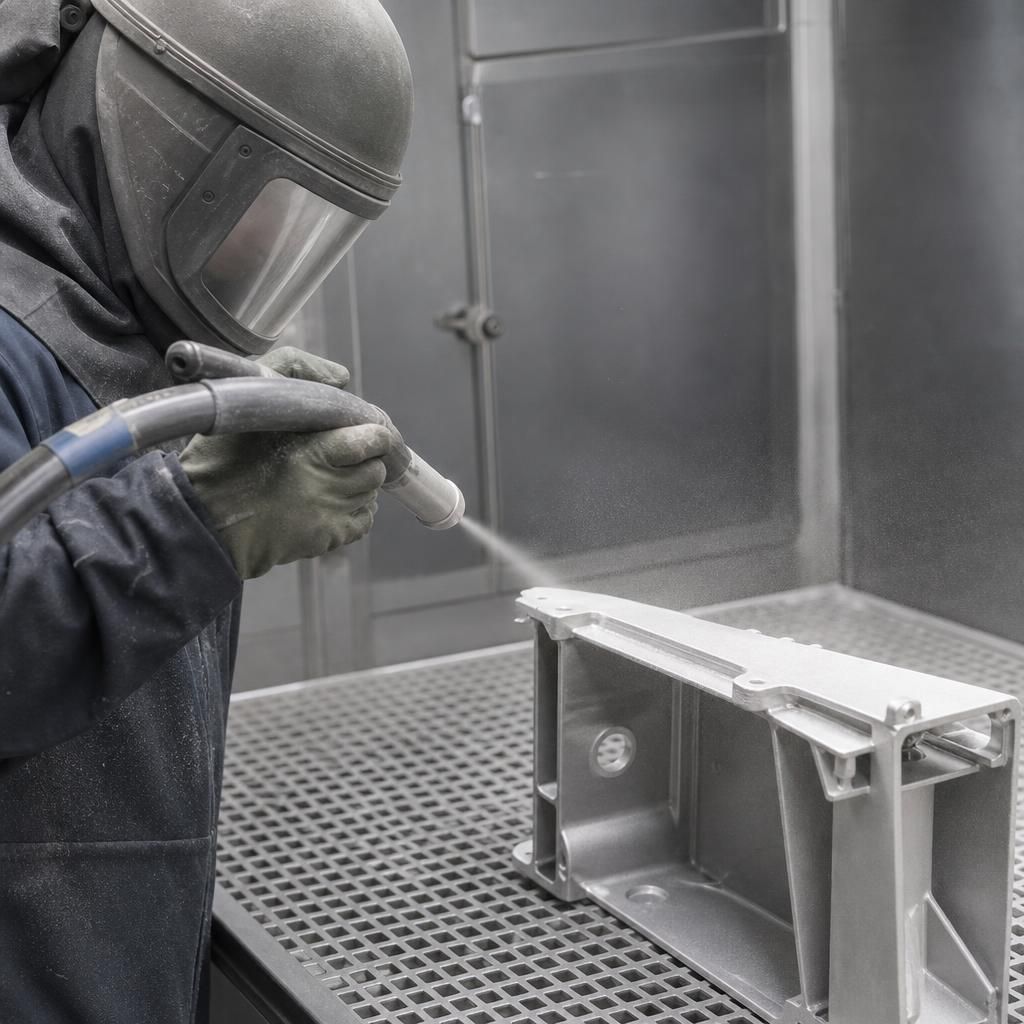
Where abrasive preparation is required, the media must be suitable for aluminium. Steel shot or contaminated equipment can embed ferrous particles in the surface, creating points of corrosion beneath the coating. A compatible non-ferrous abrasive and controlled pressure can provide a consistent key without damaging thin sections, profiles or machined details. The prepared surface should then be cleared of abrasive dust before chemical pretreatment.
This stage is particularly important when aluminium arrives with old protective film, labels or adhesive residue. These materials should be removed using methods that do not spread silicone, oil or solvent residue across the substrate. Any remaining contamination can interfere with conversion treatment and may produce localised adhesion failure, even when the finished RAL 8029 surface looks uniform initially.