

What are the advantages of using RAL 8029 for aluminium surfaces over other powder coat colours?
RAL 8029 gives aluminium a distinctive pearl-copper appearance while retaining the durable, uniform finish associated with powder coating. Compared with lighter or more neutral colours, its deeper tone can provide stronger visual definition and coordinate effectively with architectural, industrial and fabricated metalwork where a standard white, grey or black finish is unsuitable.
The main advantage of RAL 8029 on aluminium is specification control: it provides a recognised colour reference for projects that require a copper-toned metallic appearance without relying on an informal colour description. This can simplify communication between designers, fabricators, powder coaters and end users. However, RAL 8029 is not inherently more durable or corrosion-resistant than other powder coat colours. Those properties depend primarily on aluminium preparation, pretreatment, powder chemistry, film thickness, curing and the environment in which the component is used.
Compared with standard neutral shades, RAL 8029 can be useful where the finish needs to support a particular design language or help distinguish one group of components from another. It may suit metalwork intended to coordinate with copper, bronze, timber, masonry or other warm-toned materials. In commercial and architectural work, a defined RAL reference also reduces ambiguity when colour requirements are included in drawings, schedules and inspection criteria.
- Clearer procurement: specifying RAL 8029 gives suppliers a common target rather than leaving the finish open to subjective descriptions such as “copper effect” or “bronze-like”.
- Consistent project identity: the same reference can be applied to separate aluminium components produced in different batches, subject to normal controls over powder batch, application and curing.
- Design differentiation: the shade can separate feature panels, trims, frames or equipment casings from adjacent metalwork without changing the aluminium substrate or component design.
- Compatibility with powder coating: RAL 8029 can be applied using the same general powder-coating principles as other colours, provided the selected product is suitable for aluminium and the service environment.
Colour selection should not be confused with coating specification. A RAL number identifies the intended colour, but it does not by itself define gloss level, surface texture, resin type, exterior durability, film build or warranty classification. Two coatings identified by the same colour reference may appear different if one is smooth and glossy while another is matt or textured. Metallic or pearlescent effects can also be influenced by spray equipment, part orientation and powder distribution, so large visible surfaces need particular process control.
RAL 8029 may therefore offer a visual advantage over plain colours, but it can also require more careful approval. For high-visibility aluminium work, a representative sample or control panel should be agreed before production. The sample should show the proposed powder, gloss, texture, substrate preparation and application method. Viewing conditions matter as well: metallic finishes can change in appearance with lighting direction and viewing angle. Comparing a sample with a colour card alone may not accurately predict the finished component.
There is no general rule that a darker or metallic shade will hide surface defects. Aluminium dents, scratches, weld marks, sanding patterns, contamination and uneven pretreatment can remain visible through the coating. Good preparation is consequently just as important for RAL 8029 as for white, grey, black or any other colour. Components should be clean, suitably pretreated and free from residues that could interfere with adhesion. Edges, recesses, joints and areas affected by fabrication need attention before coating.
The chosen powder formulation is also more important to long-term performance than the colour reference. For external aluminium, the specification should consider exposure to ultraviolet light, moisture, pollutants, abrasion and cleaning chemicals. An exterior-grade system with suitable pretreatment is normally more relevant than selecting RAL 8029 simply because it is a particular shade. If the component is exposed to high temperatures or direct solar gain, the colour should be assessed as part of the overall thermal design; darker finishes can absorb more solar radiation than lighter ones.
Maintenance requirements are broadly governed by the coating system and operating environment rather than by RAL 8029 itself. Routine cleaning with appropriate, non-abrasive methods helps preserve the finish, while harsh chemicals, aggressive pressure washing and unsuitable solvents may damage powder coating regardless of colour. Any future repairs should be assessed carefully, because a local liquid touch-up may not reproduce the original metallic appearance exactly.
In practical terms, RAL 8029 is most advantageous when a project needs a documented, distinctive colour choice and the appearance forms part of the component’s specification. It is not a substitute for selecting the correct aluminium pretreatment and powder system. The sound comparison with other shades is therefore two-stage: first confirm that the colour meets the visual and coordination requirements; then confirm that the proposed coating system meets the component’s exposure, handling, cleaning and service requirements.
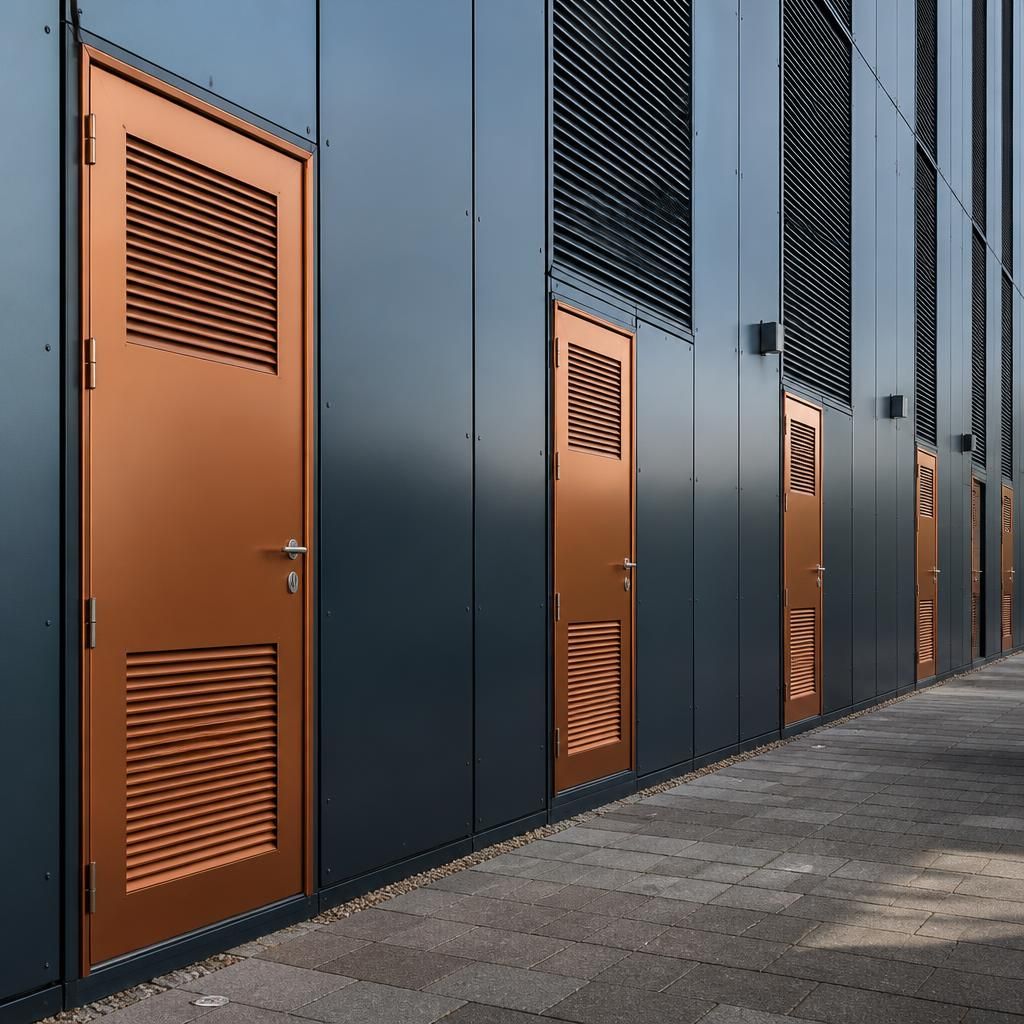
One practical advantage of RAL 8029 is that it can support visual zoning within a larger installation. Where aluminium components serve different functions, applying the copper-toned finish to selected guards, access panels or service elements can make those parts easier to distinguish from surrounding structures without changing their shape or introducing labels. This is most effective when the colour allocation is defined in the project drawings and applied consistently across the relevant component group.