

What applications are best suited for RAL 8029 aluminium powder coating?
RAL 8029 aluminium powder coating is best suited to architectural and decorative metalwork where a distinctive pearl-copper finish is required alongside protection for the aluminium substrate. Typical applications include façades, panels, doors, window frames, railings, signage and selected industrial components where appearance, durability and consistent batch finishing are important.
RAL 8029 aluminium powder coating is best suited to aluminium parts that need a warm pearl-copper appearance combined with a hard-wearing, uniform finish. It is particularly appropriate for visible components produced in repeatable batches, where colour consistency, resistance to everyday handling and compatibility with aluminium are important considerations.
Beyond general architectural metalwork, suitable applications can include:
- External building components: soffit and fascia sections, sun-shading assemblies, canopy frameworks and screening systems can use RAL 8029 where the finish forms part of the overall design specification.
- Interior fit-out components: aluminium trims, partition elements, display structures, reception features and bespoke furniture parts may benefit from the colour’s decorative character and clean, consistent surface.
- Commercial and public-realm equipment: planters, seating frames, bollard components, cycle-storage parts and other fabricated aluminium items can be coated where the finish must remain presentable under regular contact.
- Electrical and mechanical enclosures: cabinets, covers, housings and access panels are suitable when the enclosure is aluminium and the required coating specification supports the intended indoor or outdoor exposure.
- Retail and display equipment: shelving components, product stands, branded fixtures and display frames can use the shade to create a coordinated metallic appearance across multiple parts.
- Specialist fabricated components: brackets, frames, guards and formed aluminium assemblies can be considered where the parts are designed for powder coating and the specified performance requirements are compatible with the coating system.
The colour is most effective when the coated part remains visually prominent rather than being hidden within an assembly. It can help distinguish a product range, coordinate several aluminium components or provide a metallic appearance without relying on a liquid paint finish. For parts that are repeatedly handled, the powder-coated surface can also provide a practical finish, although the precise resistance depends on the powder formulation, film build, curing and service environment.
Application choice should begin with the operating conditions rather than colour alone. Indoor components generally face fewer exposure demands, while outdoor or semi-exposed parts require assessment of moisture, pollutants, ultraviolet light, abrasion and temperature variation. Coastal, chemical or heavily industrial environments may call for a coating system specifically rated for those conditions. The fabricator or coating specialist should also confirm whether a standard decorative grade or a higher-performance specification is required.
RAL 8029 is less suitable where the coated item will be exposed to temperatures beyond the coating system’s rating, severe chemical contact, continuous immersion or intense abrasion without an appropriate specialist formulation. It may also be unsuitable where an exact visual match to an existing finish is required but the original surface uses a different material, gloss level or texture. A sample or approved reference panel is useful because the apparent colour can change with gloss, texture, lighting and viewing angle.
Part design affects the practical suitability of the application. Aluminium sections should be accessible for cleaning and coating, while enclosed cavities, drainage points, sharp edges and threaded areas need consideration during design and preparation. Different aluminium alloys and previously treated surfaces can also influence adhesion and final appearance. Where several components must appear identical, they should be assessed as one coating specification and, where practical, processed under consistent conditions.
For a production project, the coating brief should identify the aluminium grade, component dimensions, intended environment, required gloss or texture, masking points and performance expectations. This makes RAL 8029 a sensible choice for decorative and functional aluminium assemblies, rather than treating the colour as a standalone decision. Powder coating providers serving manufacturers, fabricators, construction firms and automotive businesses can then advise whether the proposed parts and exposure conditions suit the selected system.
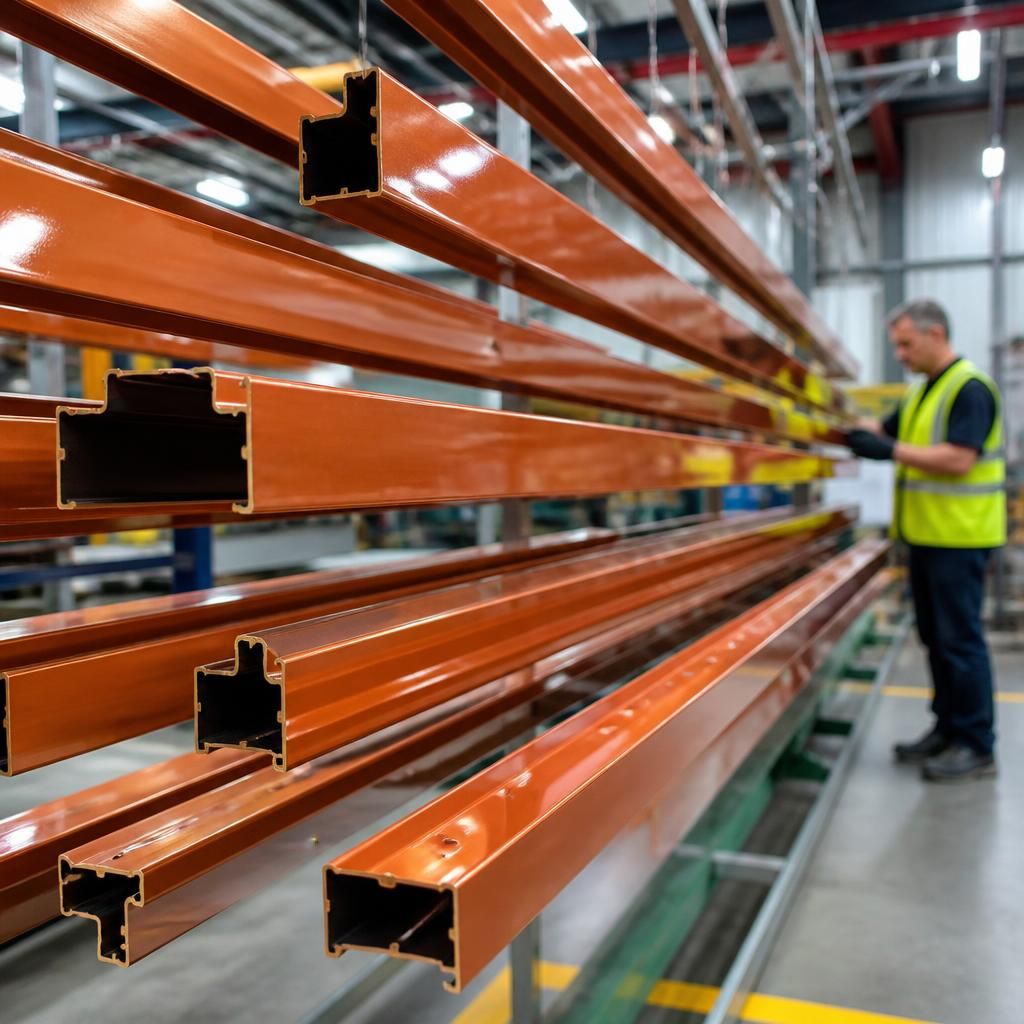
RAL 8029 is particularly well suited to aluminium components that can be powder coated before assembly or installation. Removable panels, access covers, trim sections and modular frames can usually be presented to the coating process with their visible faces fully exposed, helping produce a more even pearl-copper appearance than parts coated after assembly. This makes the finish relevant to manufactured components where both presentation and repeatable production matter.
Applications should be reviewed at the component stage rather than only by the finished product. The coating specification needs to account for areas that must remain uncoated, such as electrical contact points, threaded features or joint faces, while confirming that the selected powder system matches the component’s indoor or outdoor service conditions.