

How does RAL 8029 aluminium powder coating impact the thermal conductivity and energy efficiency of metal components in industrial settings?
RAL 8029 aluminium powder coating adds a thin polymer layer with much lower thermal conductivity than aluminium, so it can modestly reduce heat transfer across the coated surface. Its effect on energy efficiency is usually governed more by component design, coating thickness, airflow and operating temperature than by the RAL 8029 shade itself, although its darker finish may absorb more radiant heat than lighter colours.
RAL 8029 aluminium powder coating usually has a limited direct effect on the energy efficiency of a metal component. It does not materially alter the bulk thermal conductivity of the aluminium; instead, it adds a surface layer whose thermal behaviour becomes relevant at interfaces, around heat-flow paths and where the component exchanges heat by radiation.
Conduction through the finished component
For a coated aluminium part, heat still travels mainly through the aluminium substrate. The coating can add a small amount of thermal resistance in the direction of heat flow, but the practical significance depends on the coating system, applied film build, contact area and the temperature difference across the part. On a large aluminium panel or enclosure, this additional resistance is often less influential than the geometry and thickness of the metal itself.
The result is different where the coating sits directly between two surfaces intended to transfer heat. Coating a mounting face, heat-sink contact area, flange or other joining surface can reduce direct metal-to-metal contact and introduce contact resistance. These areas may therefore need to be masked before coating, or machined and treated in accordance with the component specification after coating. This is particularly important for electrical enclosures, thermal management assemblies and fabricated parts fixed to a heated or cooled structure.
Radiant heat and surface behaviour
Thermal radiation is affected by the finish’s surface characteristics, including colour, gloss and emissivity. RAL 8029 is a dark copper shade, so its response to radiant heat can differ from that of a pale or highly reflective finish. In an outdoor or exposed installation, the balance between incoming radiation, emitted heat, airflow and the surrounding surfaces can influence the component’s operating temperature.
Colour alone does not provide a dependable indication of thermal performance. Two RAL 8029 powder coating systems may have different resin chemistry, gloss levels, pigments and surface textures. Where radiant heat is critical, the relevant coating supplier should provide measured emissivity or solar-reflectance data for the exact product and finish rather than relying on the RAL reference alone.
Effect on energy efficiency
Any change in energy use is normally indirect. For example, a coated enclosure may reach a different internal temperature, which can affect the duty required from fans, heaters or cooling equipment. A coated component in a process line may also alter the rate at which heat enters or leaves an adjacent assembly. Whether this improves or reduces efficiency depends on the intended heat path: restricting unwanted heat transfer may be useful, whereas restricting heat flow from a designed heat sink may be undesirable.
The coating’s value should therefore be assessed against the function of the part:
- For protective covers and enclosures, the finish may be considered as one factor in the overall thermal balance, alongside ventilation, insulation, seals and internal heat sources.
- For heat-dissipating parts, preserve the specified bare-metal contact and mounting areas so that heat can move into the supporting structure or cooling system.
- For components exposed to sunlight or other radiant sources, compare the complete surface finish with the alternatives under the expected installation conditions.
- For assemblies that cycle between hot and cold conditions, assess the coating, substrate and fixings together rather than treating the colour as an independent thermal solution.
Factors that should be specified
Thermal assessment should use the proposed powder chemistry, cure condition, film thickness and surface finish. The operating temperature range, component dimensions, airflow, radiation sources and contact arrangements should also be recorded. A thermal model can then include the coating as a surface layer and apply the appropriate boundary conditions. For higher-risk applications, testing a representative coated assembly is more useful than comparing colour swatches.
During production, consistent preparation and application help keep the thermal result predictable. Uneven film build, overspray on contact faces or coating accumulated around joints can create local differences in heat transfer. Masking requirements, acceptable coating build and any post-coating machining should be agreed from the engineering drawing before batch production begins.
In summary, RAL 8029 should not be selected as a stand-alone energy-efficiency measure. Its principal thermal influence arises at interfaces and at the exposed surface, while the component’s design, operating conditions and intended heat path determine whether that influence is beneficial. For industrial metalwork, the most reliable approach is to specify the finish alongside contact-area requirements and verify the complete assembly where temperature control affects performance.
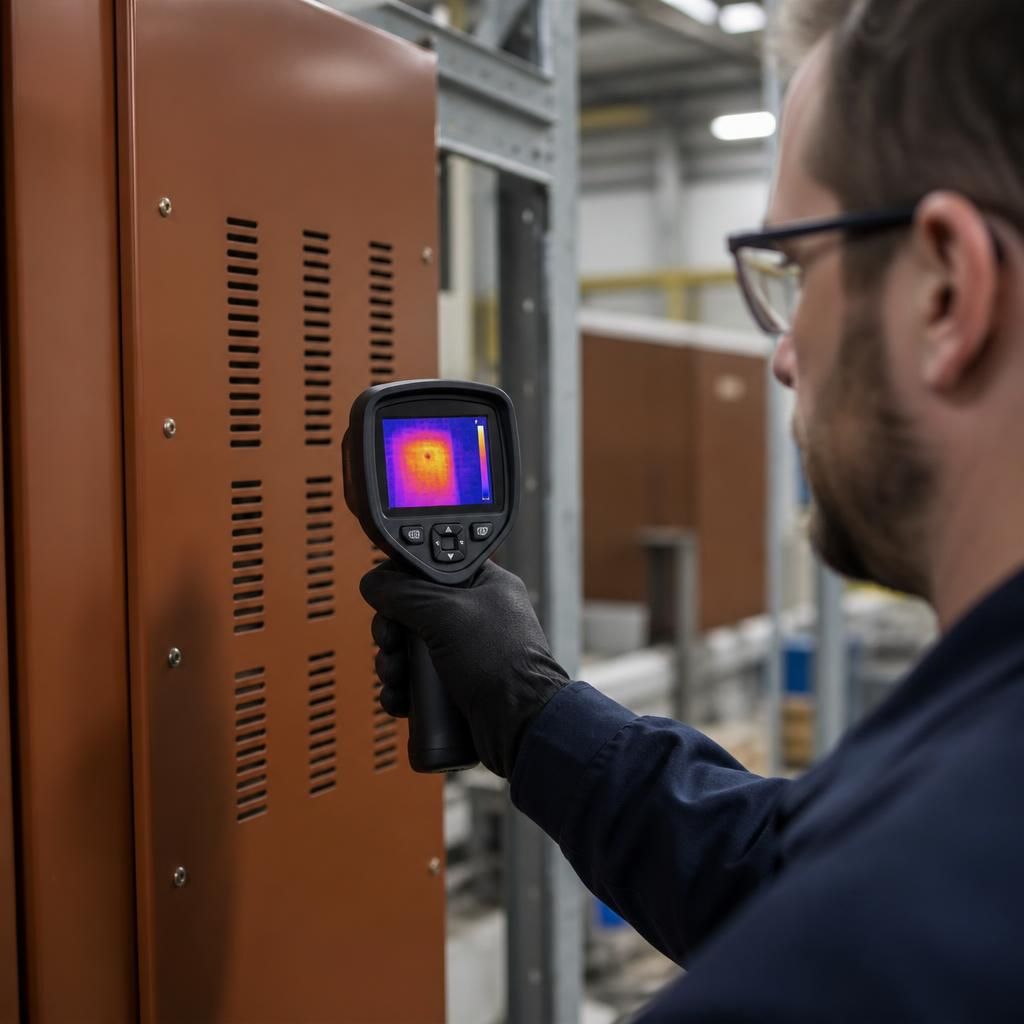
RAL 8029 powder coating can affect the accuracy of infrared temperature measurements because a painted surface may have different emissivity from bare aluminium. An infrared camera may therefore display a different temperature even when the underlying metal has not experienced an equivalent change.
For reliable thermal checks, use the emissivity value for the specific coating system or verify readings against a suitable contact measurement. Keep the measurement method consistent when comparing coated components, and avoid treating a colour-based thermal image as proof of improved or reduced energy efficiency.