

How does RAL 8029 aluminium powder coating contribute to the sustainability goals of my industrial operation?
RAL 8029 aluminium powder coating can support industrial sustainability goals by providing a durable finish that extends component service life and reduces the need for frequent recoating or replacement. The powder-coating process also produces a low-waste finish, with excess powder potentially recoverable within suitable application systems, helping to use materials more efficiently.
RAL 8029 aluminium powder coating contributes to industrial sustainability mainly through the coating system and application process, rather than through the colour itself. Its potential benefits include reducing solvent use, improving material utilisation, supporting efficient component refurbishment and preserving aluminium products for longer use. The environmental value depends on the preparation method, curing requirements, powder recovery arrangements and the whole-life design of the coated component.
Lower solvent-related emissions: Powder coating is applied as a dry powder rather than a liquid coating diluted with conventional solvents. This can reduce the use and handling of solvent-based materials and limit volatile organic compound emissions associated with solvent evaporation. The exact environmental outcome depends on the powder formulation, pretreatment chemicals, curing equipment and controls used at the coating facility, so these factors should be considered when assessing the process against your organisation’s environmental objectives.
More controlled material use: Powder is applied electrostatically to a prepared aluminium surface and then cured to form the finish. Where the equipment is designed for recovery, suitable overspray can be collected and reused rather than treated as immediate coating waste. This supports a more controlled approach to powder consumption, although recovered material must be managed according to the coating system and colour requirements. RAL 8029 powder should not be assumed to be interchangeable with other shades or formulations.
Support for circular design: Aluminium is a recyclable material, but its recovery is influenced by the product’s construction and the coating system. A powder-coated aluminium component can remain within a recyclable product stream when it is designed, processed and segregated appropriately. For projects with end-of-life targets, assess whether the coated parts can be separated from other materials and whether the chosen pretreatment and coating chemistry is compatible with the intended recycling route. Powder coating does not remove the need for responsible waste sorting.
Reduced demand for replacement parts: A well-specified finish can help a component remain suitable for its intended use and may make refurbishment more practical than discarding the underlying aluminium. This is particularly relevant where the coating is applied to housings, fabricated assemblies, architectural elements or industrial components that would otherwise require replacement because of surface deterioration. The sustainability benefit should be evaluated alongside the component’s design life, operating environment and eventual recovery arrangements.
Energy considerations: Powder coating requires an oven-curing stage, so the process has an energy demand that should be included in any environmental assessment. Energy efficiency can be improved through appropriate batch planning, correctly specified cure schedules, effective oven loading and avoidance of unnecessary rework. The correct curing specification is essential: under-curing can compromise performance, while excessive curing can waste energy and affect the finish. The coating colour alone does not establish the energy consumption of the process.
How to assess the contribution for a project:
- Define the relevant sustainability objective, such as reducing solvent use, controlling coating waste, improving refurbishment options or lowering process energy.
- Confirm the powder formulation, pretreatment system and curing requirements with the coating provider and powder manufacturer.
- Ask how overspray is managed and whether recovery is technically suitable for the planned colour and production arrangement.
- Include surface preparation, masking, rejected parts, packaging, collection and delivery within the project assessment rather than examining the powder alone.
- Record coating consumption, rework and energy data where these are needed for internal environmental reporting.
- Consider the component’s full life cycle, including installation, maintenance, refurbishment and end-of-life separation.
For a B2B project, the most defensible claim is therefore that RAL 8029 aluminium powder coating can support sustainability objectives when it forms part of a well-controlled, low-waste and properly specified coating process. It should not be presented as inherently sustainable solely because it is a powder coating or because it uses the RAL 8029 shade. A coating specification aligned with the component’s service conditions, production method and end-of-life plan provides a more reliable basis for environmental decision-making.
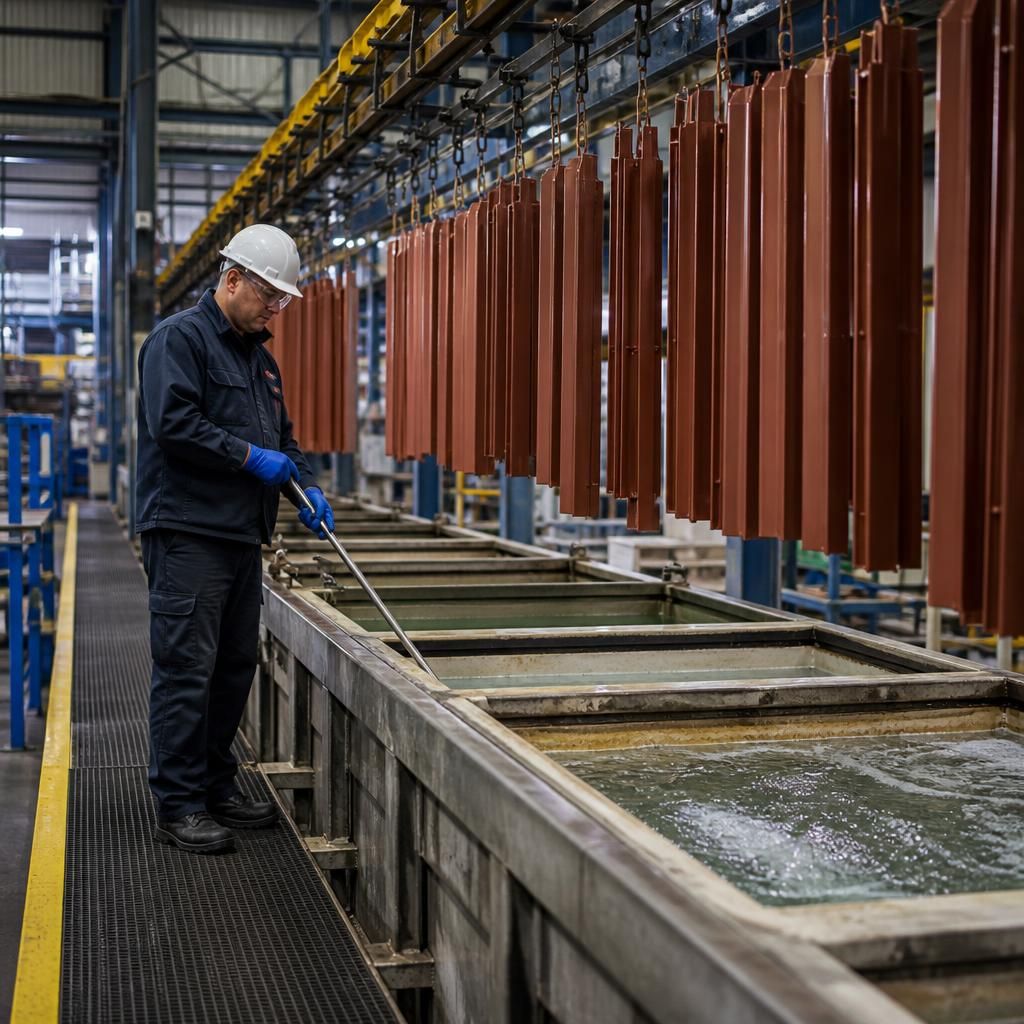
Pretreatment is an important part of the sustainability assessment for RAL 8029 aluminium powder coating. Cleaning, etching and conversion treatment help prepare aluminium for reliable adhesion, but the chemicals, rinse water and associated waste streams should also be considered when reviewing the environmental performance of the process.
Ask the coating provider how pretreatment chemicals are controlled, how rinse water is managed and how treatment residues are disposed of. The aim is not to remove preparation from the process, since inadequate preparation can lead to coating failure and rework, but to ensure that the preparation system is proportionate to the component, its operating environment and the required service life. This gives your sustainability review a more complete view of the coating operation rather than focusing only on the powder and finished appearance.
Discuss Your RAL 8029 Sustainability Requirements
Discuss your RAL 8029 aluminium powder coating requirements with our Midlands team, including the component’s operating conditions, production process and sustainability objectives. We can help you identify the coating and preparation considerations that should be included in your project assessment.