

What specific environmental conditions and performance criteria should RAL 7035 powder coated aluminium adhere to for optimal results in your project?
RAL 7035 powder coated aluminium should be specified for the exposure conditions it will face, including moisture, UV light, temperature variation, pollutants and contact with chemicals or abrasion. Optimal results depend on sound aluminium preparation, complete and even curing, strong coating adhesion, consistent colour and film coverage, and a finish class appropriate to the project’s durability requirements.
For optimal results, RAL 7035 powder coated aluminium should be specified against the actual service environment, the component’s mechanical duty and the required maintenance regime. The assessment should cover how the part is designed, assembled, handled and cleaned, rather than treating the RAL colour designation alone as a performance specification.
Assess the exposure in practical terms
The coating system should be suitable for the component’s location, whether it is installed internally, externally, under cover or in an area subject to repeated condensation. Parts that remain damp because of poor drainage, concealed joints or horizontal ledges can face more demanding conditions than their general location suggests. The design should therefore allow water to run off and should avoid pockets where dirt or moisture can remain trapped.
Where aluminium is joined to other metals, the specification should also consider contact compatibility. Dissimilar-metal contact, exposed fixings and unsealed joints can create local corrosion risks at interfaces even when the visible powder finish is sound. Isolation materials, suitable fixings and correctly sealed junctions may be needed, particularly where the assembly is exposed to persistent dampness.
Set mechanical performance criteria
Specify the level of resistance required for the part’s handling and service conditions. Relevant criteria may include:
- Impact resistance: important for panels, guards, enclosures and components that may be struck during transport, installation or operation.
- Scratch and abrasion resistance: relevant where parts slide against one another, pass through equipment or are cleaned frequently.
- Hardness: useful when the surface must resist marking during assembly, although hardness should not be considered in isolation from flexibility.
- Flexibility: necessary where aluminium sections are formed, pressed, folded or subject to movement after coating. A finish that is too brittle can fail at bends or around formed edges.
- Wear resistance: important for components exposed to repeated contact, foot traffic or moving mechanisms.
The required level depends on the component rather than its colour. A decorative cover and a heavily handled fabricated part should not automatically receive the same performance specification.
Check compatibility with the operating environment
Before coating, identify every substance likely to contact the finished component. This can include detergents, lubricants, hydraulic fluids, oils, fuels, sealants, adhesives, concrete residues and process chemicals. The relevant question is not simply whether the coating is described as durable, but whether it has been assessed against the specific substances, concentration, contact time and cleaning temperature involved in the project.
Temporary contact during installation can also matter. Cementitious materials, adhesive residues and marking products may stain or attack a finish if left in place. The specification should state which cleaning products are permitted and which should be excluded, with small-scale compatibility checks used where the chemical or cleaning process is unusual.
Account for assembly and fabrication details
Performance depends partly on details outside the visible face of the coating. Drawings should identify areas that must remain uncoated, such as earthing points, bearing seats, threaded holes, hinges and close-tolerance interfaces. Masking requirements should be agreed before production so that the coating does not interfere with assembly or electrical continuity.
Edges, corners, recesses and weld zones deserve particular attention because they can receive a different film build from broad faces. The design should avoid unnecessarily sharp transitions and inaccessible cavities where inspection, cleaning or drainage will be difficult. If the aluminium will be cut, drilled or modified after coating, the specification should define how exposed edges and damaged areas are to be treated.
Define appearance tolerances separately from technical performance
RAL 7035 identifies a colour reference, but it does not by itself define gloss level, texture, surface effect or acceptable visual variation. The project brief should state whether the finish is smooth, textured, matt or higher gloss, and should explain how parts will be viewed and compared. Colour assessment should use agreed samples or panels under consistent lighting rather than relying solely on photographs or screens.
For multi-part assemblies, specify whether adjacent components must be visually matched and whether they will be inspected together. Differences can be more noticeable when parts have different shapes, orientations or production batches. Where appearance is critical, retain an approved reference sample and define the viewing distance and inspection method before manufacture.
Use evidence that matches the intended duty
The coating specification should identify the applicable test requirements and acceptance limits for the project. Depending on the application, evidence may cover mechanical resistance, flexibility, surface hardness, chemical compatibility, weathering behaviour and resistance to corrosion-related failure. Standards or sector schemes may be required by the end client, architect or main contractor, so these should be confirmed at quotation and drawing-review stages rather than assumed from the RAL designation.
Inspection should include the areas that are difficult to assess visually, including edges, recesses, masked zones and fixing interfaces. Records should link the finished parts to the agreed colour and finish sample, coating system, substrate preparation requirements and test documentation. This creates a clearer basis for acceptance than colour matching alone.
In practice, the strongest specification combines an exposure description, mechanical and chemical duty, assembly constraints, appearance requirements and defined inspection evidence. That approach allows RAL 7035 to be selected as the required colour while ensuring the complete aluminium coating system is suitable for the way the component will actually be used.
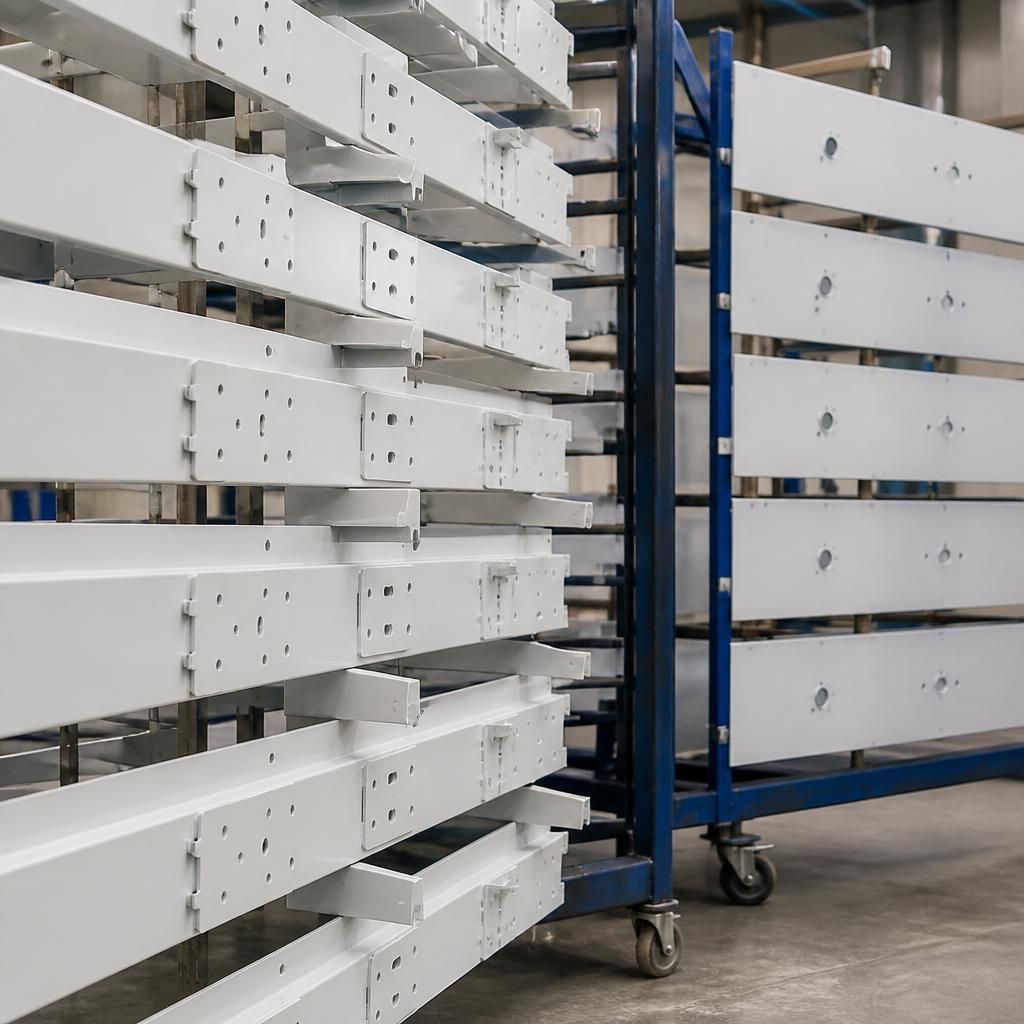
Application and storage conditions are separate from the environment the finished RAL 7035 powder coated aluminium will face in service. Aluminium should be clean, dry and free from condensation before preparation and coating, while coated parts should be protected from moisture, contamination and impact until they are ready for inspection or assembly.
Temperature control matters because a cold aluminium component can attract condensation even when the surrounding air appears dry. Moisture or contamination held beneath the powder can compromise the finish at an early stage. The coating specification should therefore define suitable handling, preparation and curing controls, with particular attention to components brought in from unheated storage or exposed to changing temperatures.
Storage and transport arrangements should also prevent rubbing, trapped moisture and contact with materials that could mark or contaminate the surface. Separating finished parts and avoiding pressure on edges helps preserve the coating before installation. These precautions support the specified adhesion, appearance and durability criteria without treating the RAL colour reference as evidence of application quality.