

What maintenance is required to ensure the longevity of RAL 7035 powder coated aluminium?
Maintain RAL 7035 powder coated aluminium by cleaning it regularly with clean water, a mild detergent and a soft cloth, then rinsing and drying the surface thoroughly. Avoid abrasive pads, harsh chemicals and solvent-based cleaners, and inspect periodically for scratches, chips or coating damage so that affected areas can be assessed and repaired before deterioration spreads.
Maintaining RAL 7035 powder coated aluminium involves controlling moisture, contamination, mechanical contact and exposure conditions so the coating remains intact and the aluminium substrate is not placed under unnecessary stress. In addition to routine surface cleaning and visual inspection, effective maintenance includes checking surrounding components, keeping drainage paths clear, preventing damaging contact and dealing with defects using a suitable repair method.
Prevent water retention and contamination
- Ensure profiles, panels and fabricated assemblies are positioned so water can drain rather than collect in joints, recesses or horizontal surfaces.
- Keep drainage holes, channels and ventilation gaps free from dirt, sealant residue and other obstructions.
- Remove deposits that can hold moisture against the finish, including bird fouling, salts, construction dust, oils and other industrial contaminants. Deposits left in place can create localised staining and may increase the risk of coating deterioration.
- Pay particular attention to sheltered areas, overlaps, corners and interfaces beneath fixings, where contamination may remain unnoticed.
Check fixings, joints and adjacent materials
Maintenance should cover the complete installation rather than the visible face of the aluminium alone. Inspect fixings, brackets, gaskets, sealants and joint details for movement, deterioration or trapped moisture. Loose components can cause vibration and rubbing, while failed seals may allow water to reach the metal beneath the coating.
Where aluminium is installed alongside other metals or treated materials, check that contact details remain appropriate. Persistent moisture between dissimilar metals can contribute to galvanic corrosion, particularly where the coating has been damaged or where exposed edges allow an electrical connection. Isolating materials, sound seals and effective drainage help reduce this risk. Any corrosion around fixings or interfaces should be assessed at an early stage rather than concealed with an unsuitable coating or sealant.
Prevent mechanical damage during use
- Do not drag tools, components or packaging across the coated surface.
- Protect finished aluminium during nearby cutting, welding, drilling, construction or installation work, as sparks, swarf and impact can mark or penetrate the coating.
- Use suitable supports and padding when components are stacked, transported or stored to prevent pressure marks and rubbing.
- Check doors, covers, moving sections and access panels for contact points that could abrade the finish during operation.
- Keep abrasive materials away from the surface, including cement residue, grit and unprotected metal edges.
Damage should be classified before any touch-up is attempted. A superficial mark may require a different treatment from a deep scratch, exposed aluminium, blistering, flaking or corrosion at an edge. The repair method should be compatible with the original powder coating, the aluminium substrate and the exposure conditions. Small repairs may be possible with an appropriate proprietary system, but extensive damage or defects in a safety-critical or highly visible component should be assessed by a qualified coating professional. Touch-up paint should not be applied solely because its colour appears similar; compatibility, adhesion, gloss and weathering performance also matter.
Manage the surrounding environment
Identify changes in exposure that may increase maintenance requirements. Coastal salt, industrial pollutants, road spray, chemical vapour, persistent condensation and high levels of airborne dirt can place greater demand on the coating than a clean, sheltered location. If the use of the building or process area changes, review whether the existing finish remains suitable and whether the inspection programme needs to become more detailed.
Prevent direct contact with substances that may attack or stain the finish. Chemicals, wet cement, mortar, bituminous products, strong solvents and uncured sealants should be kept away from powder coated aluminium. If accidental contamination occurs, follow the relevant product guidance and seek technical advice where the substance or its concentration is unknown.
Use a planned maintenance record
For commercial and industrial installations, record the areas inspected, the condition of the coating, defects found, action taken and any recurring cause of damage. This makes it easier to distinguish normal surface soiling from a developing issue such as water ingress, movement at a joint or repeated impact. Maintenance records are also useful when deciding whether a component needs local repair, removal and recoating, or replacement.
The most reliable approach is preventative: maintain drainage and interfaces, control contact with damaging materials, protect the finish during associated work and investigate changes before they affect larger areas. The required maintenance level ultimately depends on the aluminium component’s design, location, exposure and use, so the coating supplier’s care guidance and the project specification should take precedence where they provide more specific instructions.
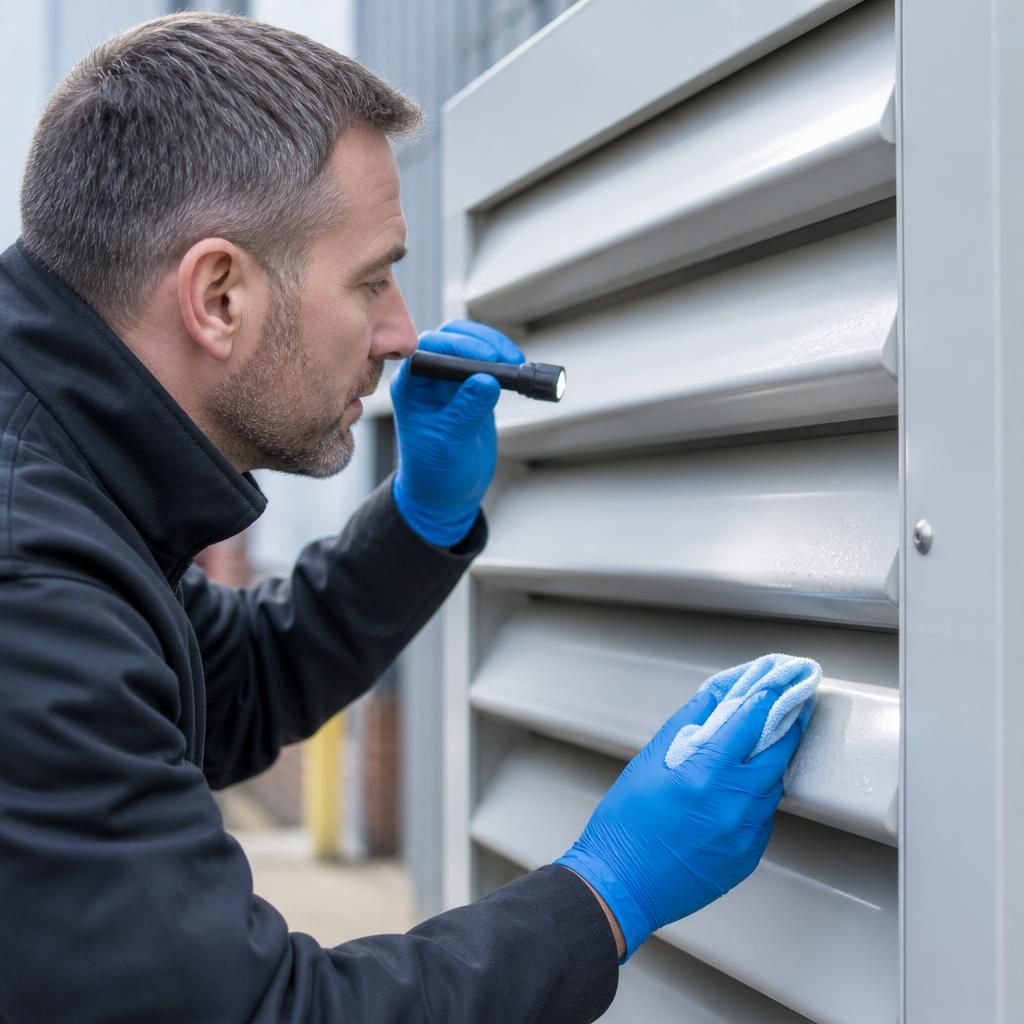
Because RAL 7035 is a light grey finish, changes in surface appearance can be easier to notice than on darker colours. A dull or uneven area may be ordinary dirt, but persistent loss of gloss, chalky residue or a change in texture can indicate weathering of the coating rather than removable contamination.
Test an affected area using the approved cleaning method before deciding on further action. If the appearance remains altered after cleaning, or the surface leaves a powdery residue, record the location and seek coating advice rather than repeatedly cleaning it. Blistering, flaking, exposed aluminium or corrosion require assessment of the underlying cause and a compatible repair system; applying a visually similar paint without checking adhesion and compatibility can conceal deterioration instead of restoring protection.