

What is the process for applying the RAL 7035 powder coat on aluminium?
Applying RAL 7035 powder coat to aluminium involves cleaning and pretreating the surface, drying it thoroughly, then electrostatically spraying the powder onto the prepared metal. The coated component is heated to the powder manufacturer’s specified curing schedule, allowing the particles to flow and form a smooth, durable light-grey finish.
The RAL 7035 powder-coating process for aluminium is a controlled sequence of specification, surface preparation, masking, powder application, curing and inspection. The result depends not only on spraying the correct light-grey powder, but also on selecting a suitable coating system, controlling the aluminium temperature during cure and protecting critical features from overspray.
1. Confirm the coating specification
Before processing, the component is assessed against its intended use. The specification should identify the required RAL colour, gloss level, texture, durability requirements and whether the part will be used indoors or exposed to weather, chemicals or abrasion. The aluminium alloy, casting quality, welded areas and previous finishes can also affect the treatment selected.
RAL 7035 identifies the colour family, but it does not by itself define the powder chemistry, gloss, film thickness or performance classification. These details should therefore be agreed before production, particularly where several components must have a consistent appearance or where parts are being coated in batches.
2. Inspect and prepare the component for processing
Aluminium components are checked for oil, corrosion, swarf, weld residues, sharp edges, dents and other conditions that could show through the finished film. Any design features that may trap water, retain contaminants or prevent an even coating should be identified at this stage.
After the cleaning and pretreatment stage described above, the part must be free from residue and completely dry. Pretreatment is particularly important on aluminium because it supports adhesion and helps reduce the risk of premature coating failure. Castings and porous sections may need additional consideration, as trapped gases or contaminants can create pinholes, blisters or small surface defects during heating.
3. Mask and rack the aluminium
Areas that must remain uncoated, such as threads, electrical contact points, bearing seats, drainage holes and close-tolerance faces, are masked with suitable plugs, caps or tapes. Masking materials must tolerate the curing conditions without leaving residue or distorting.
The component is then positioned on a suitable rack. The contact points need to provide a reliable earth path for electrostatic application, while the racking arrangement must allow the powder cloud to reach the required faces. Parts should not touch one another, and their orientation should allow air circulation and consistent heating in the oven.
4. Apply the powder
The operator applies the selected RAL 7035 powder using electrostatic equipment set for the component and coating system. The powder particles are charged and attracted to the earthed aluminium, allowing them to form an even layer over accessible surfaces.
Application is controlled to avoid thin areas, excessive build, runs, heavy edges and back-ionisation. Recesses, internal corners and complex profiles may require adjustments to gun distance, air flow or spray technique. The operator also checks that the powder is not being deposited on masked areas or on the rack contact points needed for electrical continuity.
Film thickness is assessed against the agreed specification rather than judged by colour alone. An apparently even colour does not confirm that the coating has the required coverage or performance. Excessive thickness can affect appearance, fit and curing, while insufficient thickness may leave the aluminium less protected.
5. Cure the coating under controlled conditions
The loaded components are transferred to the curing oven, where the powder melts, flows and chemically cross-links to form the finished film. The correct schedule is determined by the powder manufacturer and relates to the actual temperature reached by the metal, not simply the temperature displayed for the oven air.
Part size, wall thickness, rack loading and the mass of the aluminium influence how quickly the component reaches the required temperature. For this reason, large or unevenly shaped items need particular attention. Under-curing may leave the film short of its intended hardness and chemical resistance; over-curing can affect colour, gloss or coating performance.
6. Cool, inspect and release the component
After curing, the parts are allowed to cool sufficiently for safe handling and inspection. Masking is removed carefully so that edges are not lifted and contact surfaces remain usable. The finished RAL 7035 surface is checked for colour consistency, gloss, coverage, adhesion, visible contamination, pinholes, craters, runs and mechanical damage.
Where required by the project specification, checks may include coating-thickness measurement, adhesion testing, visual comparison with an approved sample and confirmation that masked dimensions remain within tolerance. Components that do not meet the agreed requirements may need controlled remedial work or complete stripping and recoating, depending on the defect and the location of the affected area.
Practical points for aluminium projects
- Provide drawings identifying masking zones, contact areas and surfaces where coating thickness could affect assembly.
- State the required gloss, texture and performance level separately from the RAL colour reference.
- Design drainage and venting into hollow or fabricated sections where possible to support consistent processing.
- Identify cast, machined and welded areas because they may respond differently during heating and inspection.
- Protect finished parts during packing, transport and installation, since a correctly cured film can still be damaged by impact, abrasion or unsuitable handling.
For larger batches or complex aluminium fabrications, agreeing the specification and an acceptable reference finish before production helps control variation between components. Collection and delivery arrangements can also be considered when coordinating coated parts with manufacturing, fabrication or assembly schedules across the Midlands.
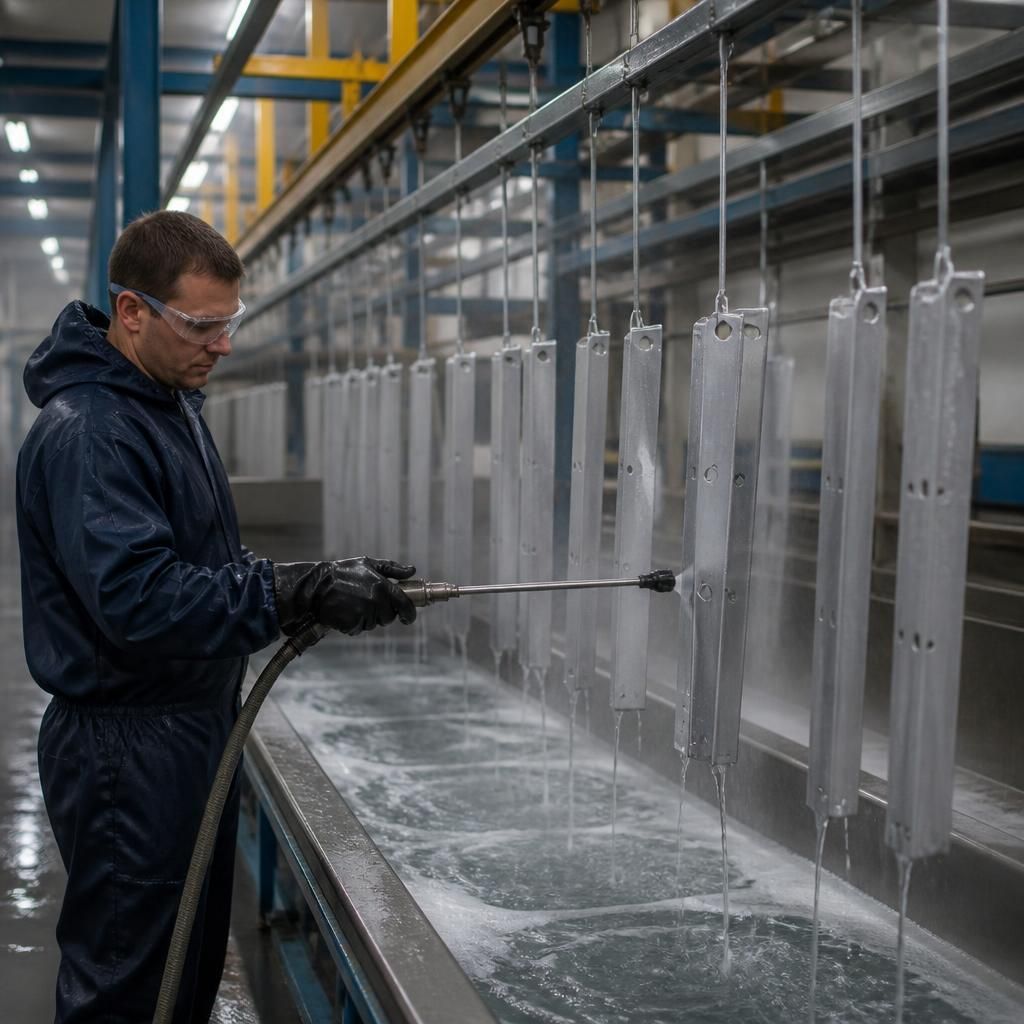
For RAL 7035 powder coating on aluminium, the pretreatment stage must leave a clean, chemically stable surface before powder is applied. Aluminium is typically cleaned to remove oils and handling residues, followed by a suitable conversion treatment and controlled rinsing. The exact system depends on the alloy, fabrication method and required exposure performance.
Rinse quality is important because leftover cleaner or treatment chemicals can interfere with adhesion and contribute to staining, blistering or uneven coverage. Components should therefore be thoroughly dried, including joints, recesses and hollow sections, before they enter the spray stage. This is a key reason why a visually clean part is not necessarily ready for powder coating: its surface condition must also be suitable for the coating system being used.