

What are the key benefits of choosing RAL 7035 powder coated aluminium regarding coating adherence and maintenance requirements?
When aluminium is correctly prepared and the powder is properly cured, RAL 7035 powder coating provides a firmly bonded, continuous finish that resists flaking and wear. Its smooth, durable surface is straightforward to maintain with routine cleaning using mild detergent and water, alongside periodic checks for scratches or localised damage.
The main benefits of RAL 7035 powder coated aluminium are dependable adhesion to a correctly prepared substrate and a finish that needs relatively little ongoing care. For B2B applications, this can reduce the need for frequent cosmetic attention while helping the aluminium retain a consistent light-grey appearance throughout its service life.
Adhesion depends on more than the powder itself. Aluminium naturally forms an oxide layer, and any oil, dirt, moisture, handling residue or poorly controlled oxidation can interfere with the coating system. Proper preparation therefore normally includes cleaning and degreasing, suitable surface conditioning and an appropriate pretreatment before the powder is applied. These stages help create a chemically receptive surface and reduce the risk of premature separation.
A well-specified system also helps the coating remain attached around practical features such as edges, returns, apertures and fixing areas. Correct powder coverage and oven curing are important here. Insufficient curing can leave the film with weaker mechanical properties, while excessive curing may affect its appearance and performance. For this reason, coating work should be assessed against the relevant project specification rather than judged by colour alone.
Good adhesion provides several practical advantages:
- It reduces the likelihood of lifting, blistering or edge failure during normal handling and service.
- It helps the coating act as a protective barrier between the aluminium and the surrounding environment.
- It supports a more uniform appearance across batches of components when preparation and curing are controlled consistently.
- It makes the finish more suitable for fabricated parts that will be handled, assembled or exposed to routine contact.
Maintenance is primarily preventive. Surface deposits should be removed before they become difficult to shift, particularly where components are exposed to construction dust, traffic pollution, industrial residue or airborne salts. Use clean water and a non-abrasive, pH-neutral or mild cleaning product with a soft cloth or sponge. Rinse away cleaning residue and allow the surface to dry without using abrasive equipment.
Harsh alkaline or acidic cleaners, scouring pads, wire brushes and strong solvents can mark or soften the finish. Cleaning methods should also be tested on a concealed area where the component is exposed to an unfamiliar chemical, sealant or building product. This is particularly relevant for architectural or fabricated assemblies cleaned alongside glass, masonry and other materials.
Routine inspection should look for more than general dirt. Pay particular attention to corners, cut edges, drilled areas, joints and locations where fasteners or adjacent components may have caused impact damage. A small breach does not mean the entire component needs recoating, but it should be assessed and treated appropriately to prevent moisture or contaminants reaching the substrate. Touch-up products may improve local protection, although they may not reproduce the exact texture, gloss or colour of the original baked finish.
Where damage is extensive, or where adhesion has failed over a wider area, cleaning alone is not a suitable remedy. The affected coating may need to be removed, the aluminium reassessed and the surface prepared again before recoating. Attempting to apply new powder over a contaminated or unstable layer can simply conceal the underlying problem.
In practice, the lowest-maintenance result comes from matching the powder coating specification to the exposure conditions before production begins. Indoor components generally present different demands from external, coastal, industrial or heavily handled parts. The required pretreatment, powder type, film build, appearance level and inspection regime should therefore be agreed with the coating provider and recorded as part of the job specification.
RAL 7035 identifies the colour, not the complete performance specification. Adhesion and maintenance outcomes also depend on the aluminium alloy, preparation system, powder formulation, curing conditions, component design and environment. Selecting those elements together gives the finish the best prospect of remaining secure, cleanable and visually consistent without unnecessary maintenance.
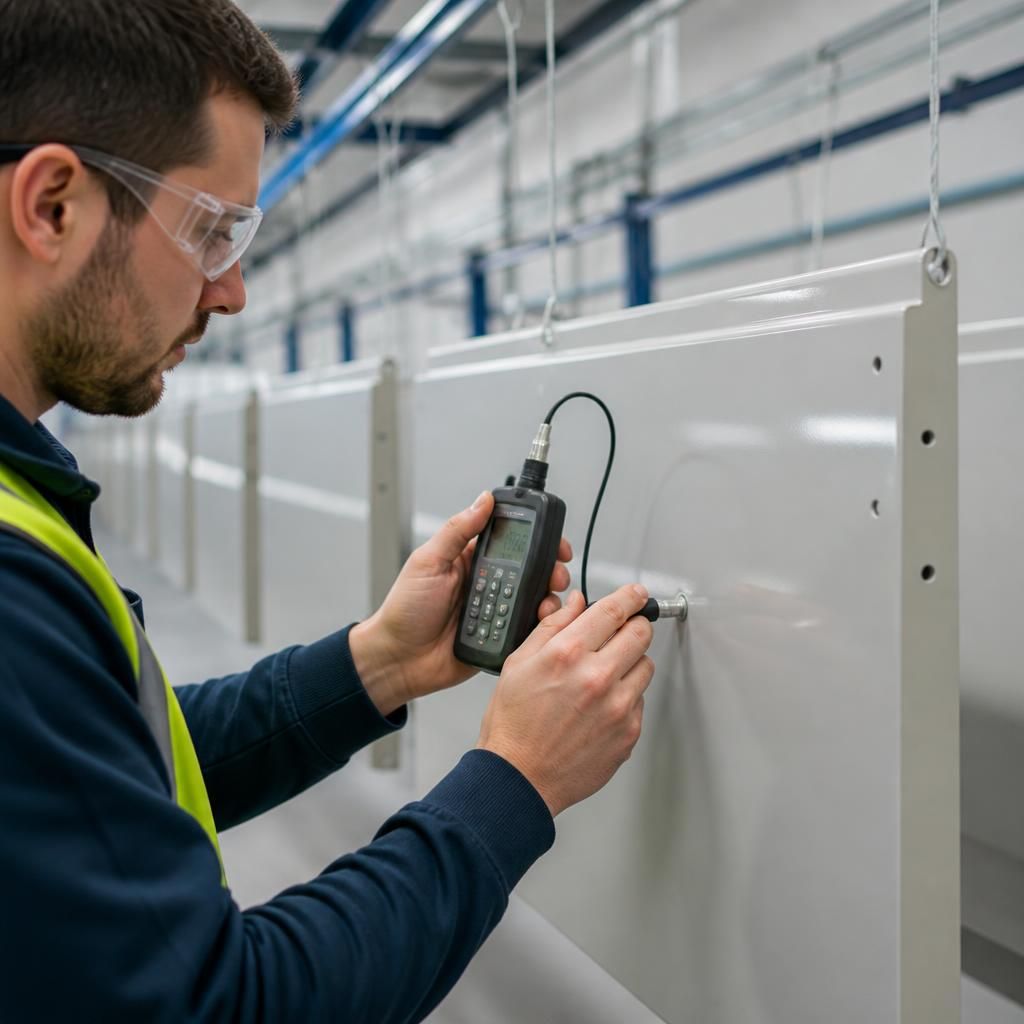
Coating adherence is best confirmed through documented quality checks rather than appearance alone. For RAL 7035 powder coated aluminium, a project inspection may include visual examination, film-thickness checks and verification that the coating has reached the specified cure. Where appropriate, cross-cut or pull-off adhesion testing can provide additional evidence that the film is securely bonded to the prepared aluminium.
These checks are particularly useful for batch production because they identify process variation before components enter assembly or service. Test results and inspection records can also help distinguish a coating-related defect from later damage caused by fabrication, handling or installation. Establishing acceptance criteria at the outset gives the maintenance team a clear basis for deciding whether a mark requires routine cleaning, local treatment or a more substantial remedial process.
Discuss RAL 7035 Powder Coated Aluminium for Your Project
Discuss your aluminium components, exposure conditions and finish requirements with Powder-coatings.co.uk to establish a suitable RAL 7035 powder coating specification. Providing drawings or component details can help the coating team assess the appropriate preparation, finish and maintenance considerations for your project.