

How does RAL 7035 powder coating enhance the longevity and appearance of aluminium components in challenging environments?
RAL 7035 powder coating forms a bonded protective layer over aluminium, helping resist moisture, abrasion and surface corrosion in demanding environments when the preparation and coating specification are suitable. Its light grey finish provides a consistent, professional appearance while helping conceal minor surface marks and maintaining the component’s visual quality over extended use.
RAL 7035 powder coating enhances aluminium components by combining a controlled decorative finish with a specified protective system. Its contribution to long-term performance depends on the complete coating specification: aluminium preparation, pretreatment, powder grade, film build, curing and the suitability of the finished component for its environment.
In challenging conditions, the coating acts as a barrier between the aluminium and external contaminants. This helps limit direct contact with industrial residues, salts, cleaning agents and other substances that can affect an uncoated surface. Where exposure is severe, the powder type and pretreatment should be selected for the chemical conditions rather than relying on colour designation alone. RAL 7035 identifies the light grey colour; it does not, by itself, define the coating’s resistance or service life.
Appearance is also influenced by how the finish responds to sunlight and temperature changes. A suitable exterior-grade powder can provide better resistance to ultraviolet exposure, helping the light grey colour and surface gloss remain more stable. Correct curing is important because an under-cured or over-cured coating may show poorer mechanical performance, colour variation or changes in gloss. Components exposed to repeated heating and cooling also require a system that can accommodate movement without premature loss of adhesion.
Aluminium preparation has a direct effect on durability. Grease, oxide residues, dust and handling contamination must be removed before coating, while an appropriate conversion or other pretreatment helps provide a sound interface between the substrate and powder film. Particular care is needed around holes, corners, welds, cut edges and joints, where contamination or inadequate coverage can create weak points. Component design should also allow drainage and avoid recesses that retain water or cleaning residues.
The coating’s appearance is affected by more than its colour. Uniform application helps prevent visible variation in shade, texture and gloss across a batch. The condition of the aluminium before coating, the orientation of parts during application and the cure conditions can all influence the final result. For components that are viewed together, using consistent preparation and application controls is important for achieving a visually even finish.
For a project involving demanding exposure, the specification should define:
- the environment, including outdoor exposure, coastal atmosphere, industrial contamination, cleaning chemicals and temperature variation;
- the required powder chemistry and exterior or specialist performance grade;
- the aluminium alloy and the required preparation and pretreatment method;
- the target film thickness and acceptable limits for coverage, adhesion, colour and gloss;
- the cure schedule, based on the metal temperature required by the powder manufacturer;
- the inspection and sample-approval requirements for the finished batch.
These controls make the expected longevity more predictable and help distinguish a genuinely suitable system from a finish selected only for its colour. They are particularly relevant where components are difficult to access after installation, because early coating failure can involve significant removal, transport and rework.
Powder coating does not make aluminium maintenance-free. Components should still be inspected for damage, contamination, staining and localised coating breakdown. Cleaning should follow a method compatible with the powder system; aggressive solvents, abrasive tools and unsuitable high-pressure techniques can damage the surface or expose the substrate. Prompt attention to chips or impact damage can also reduce the risk of deterioration spreading beneath the coating.
For B2B projects, the most reliable approach is to assess RAL 7035 as part of a complete aluminium coating specification. A coating applicator can review the component’s dimensions, intended exposure, handling requirements and finish expectations before recommending preparation, powder type and quality checks. Powder-coatings.co.uk provides industrial powder coating for businesses across the Midlands and surrounding areas, with collection and delivery options for suitable projects.
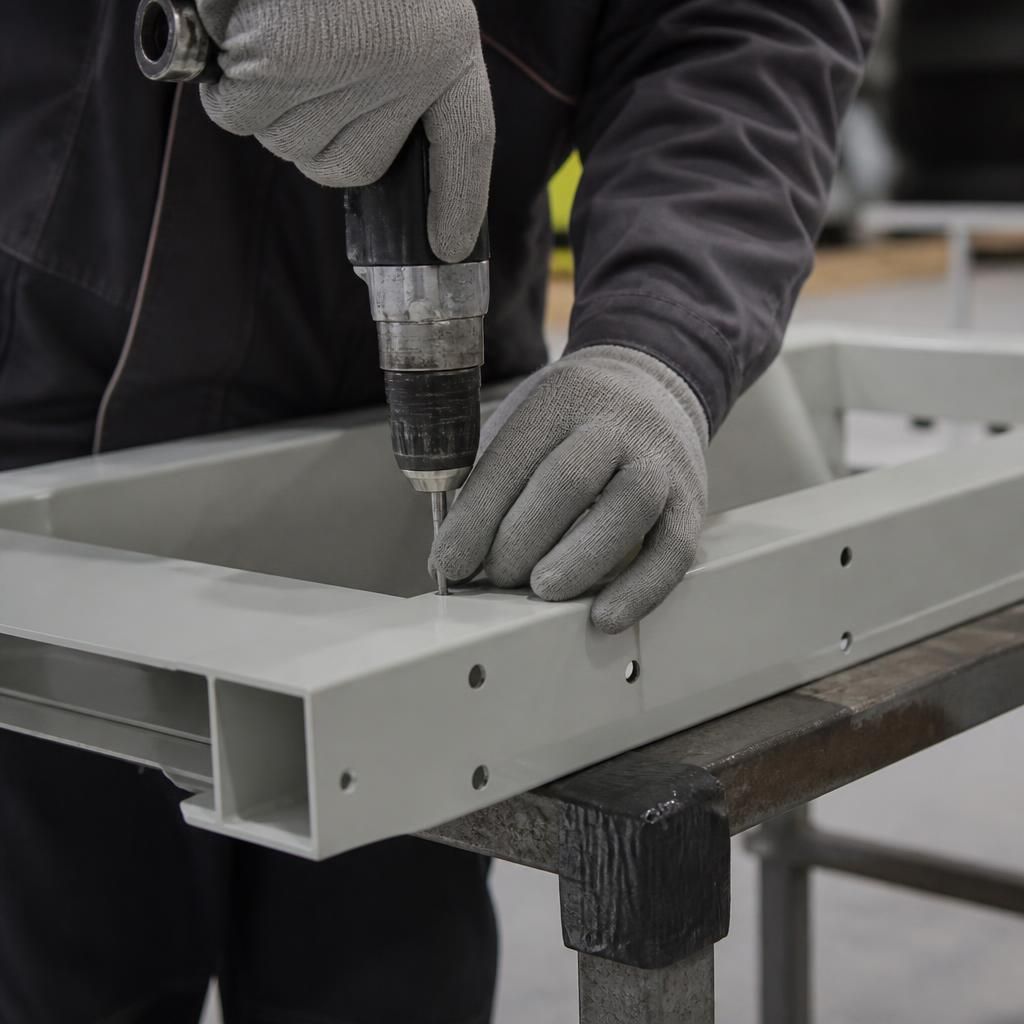
Protecting the coating during handling and installation is essential to preserving the longevity and appearance of RAL 7035 powder coated aluminium. Drilling, cutting, clamping, impact from tools or contact with abrasive packing can damage the film, leaving local areas vulnerable to contamination and surface deterioration.
Where possible, aluminium components should be fully finished before delivery and kept separated during transport and storage. Any necessary site modification should be limited and carefully controlled, with exposed areas cleaned and repaired using a compatible touch-up system. This prevents small installation defects from becoming visible blemishes or developing into wider coating breakdown in service.