

What are the advantages of choosing RAL 2000 powder coating over traditional paint for aluminium?
RAL 2000 powder coating provides aluminium with a tougher, more uniform and longer-lasting finish than traditional liquid paint, with improved resistance to chipping, abrasion and weathering. The dry application also produces less overspray and avoids the solvents associated with many liquid coatings, making it a practical choice for durable industrial components.
For aluminium components, RAL 2000 powder coating offers advantages over traditional liquid paint through its controlled dry-film application, heat-cured finish and consistent colour coverage. The result is a hard-wearing decorative surface that can be specified for manufactured parts, fabricated assemblies and architectural components where appearance and service performance must be considered together.
More consistent film formation
Powder is applied as dry particles that are electrostatically attracted to the aluminium before curing. This allows the coating to form an even film across accessible faces, rather than relying on liquid paint to flow and dry without runs, sags or solvent evaporation marks. Controlled application is particularly useful where several aluminium parts must have a comparable RAL 2000 orange appearance.
The cured coating also provides a continuous finish around suitable profiles and edges. Coverage still depends on component design, hanging, access and preparation, so recessed areas and complex geometries should be assessed before processing. These factors affect both powder coating and liquid paint, but are easier to manage when the application and curing process are planned as part of production.
Improved production control
Powder coating supports a repeatable industrial process. Components can be prepared, coated and cured using defined stages, helping to control colour, film formation and finish across a batch. Unlike liquid paint, there is no wet coating to attract dust while it dries, and the finished parts do not carry residual liquid solvent that can affect handling or assembly.
For manufacturers and fabricators, this can simplify specification and inspection. The required colour can be identified using the RAL system, while the intended gloss level, texture and coating thickness can be agreed separately. Those details matter because a colour reference alone does not define the complete appearance of an aluminium component.
Practical and environmental considerations
Powder coating is applied without the liquid carriers used in many conventional paint systems. This reduces reliance on solvent-based application materials and means unused powder may be recoverable within a suitably controlled process. The environmental benefit depends on the powder formulation, equipment, curing energy and waste controls, so it should be evaluated as part of the complete coating specification rather than assumed from the colour alone.
Powder also produces a ready-to-handle cured surface in one coating system, whereas liquid paint may require several coats, flash-off periods or a separate protective clear coat to achieve the required result. The appropriate comparison should therefore consider the full system, including primer, topcoat, curing, masking, repair and inspection requirements.
Why aluminium benefits from the choice
Aluminium is widely used where low weight, corrosion resistance and a clean appearance are required, but its surface still needs a suitable coating when colour coding, branding or additional protection is part of the design. RAL 2000 powder coating adds a defined visual finish without changing the underlying advantages of the metal. It can be specified for panels, frames, extrusions, fabricated parts and other components, provided the aluminium grade, dimensions and curing requirements are compatible with the process.
- It provides a consistent RAL 2000 appearance across matched components.
- It creates a dry, cured surface that is suitable for controlled industrial handling.
- It allows colour, gloss, texture and coating thickness to be considered as separate specification points.
- It can reduce the number of wet-coating stages needed for an equivalent finish.
- It is suitable for batch processing where repeatability is important.
Points to check before choosing powder coating
Powder coating is not automatically the right option for every aluminium part. The component must tolerate the curing cycle, and its size must suit the available coating and oven equipment. Areas that will be welded, machined, threaded or assembled may need masking or a coating-free allowance. Components exposed to unusual chemicals, constant immersion or particularly demanding outdoor conditions may also require a coating system selected for that environment rather than a general decorative specification.
Repairs should be considered as well. Local touch-up paint can be useful for minor damage, but it may not reproduce the colour, texture or gloss of the original powder-coated surface exactly. For this reason, the intended use, handling arrangements and maintenance expectations should be discussed before production.
Overall, the main advantage of RAL 2000 powder coating over traditional paint for aluminium is process control: the colour and finish are applied as part of a defined industrial system rather than built up through successive wet coats. When the component design, preparation, curing requirements and exposure conditions are suitable, this provides a practical combination of visual consistency, handling convenience and long-term surface performance.
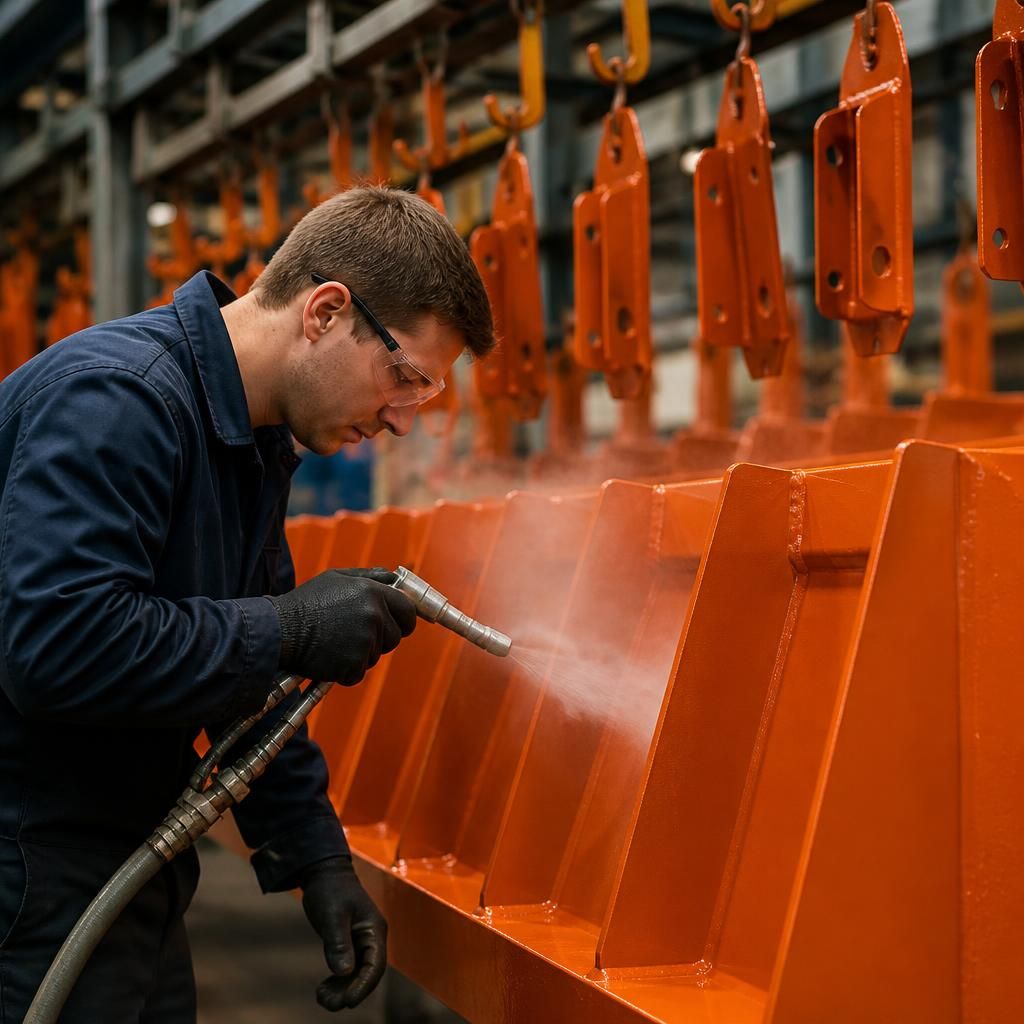
A key advantage of RAL 2000 powder coating over conventional paint is the way the cured film responds to heat and solvents. Most industrial powder coatings form a cross-linked thermoset layer during curing, so the finish does not simply soften back into a liquid film when exposed to suitable cleaning agents or moderate heat. This supports a more stable surface on aluminium components that must be handled, cleaned or used in demanding industrial settings.
The precise resistance still depends on the powder formulation, cure quality and chemicals involved. Where aluminium parts will contact fuels, oils, cleaning products or other aggressive substances, the coating specification should be checked against those conditions rather than relying on the RAL colour reference alone.