

What are the maintenance requirements for RAL 1018 powder coated aluminium sheets?
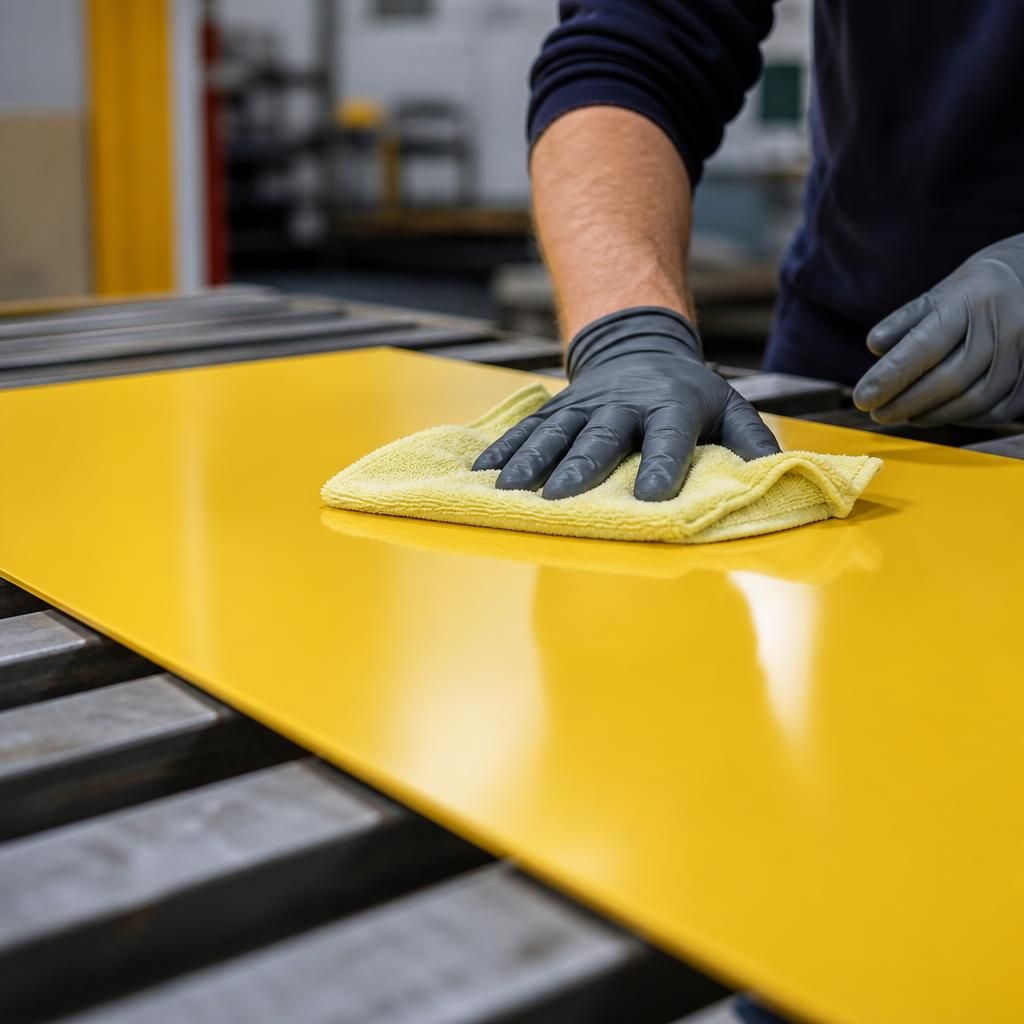
RAL 1018 powder coated aluminium sheets should be maintained by removing dust, dirt and pollutants with clean water and a mild, non-abrasive detergent, then rinsing and drying the surface thoroughly. Inspect the coating periodically for scratches, chips, staining or areas where contamination has accumulated, and address any damage promptly using a repair system suitable for the powder coating and aluminium substrate.
Maintenance of RAL 1018 powder coated aluminium sheets is primarily preventative: preserve the coating by controlling contamination, moisture, impact and chemical exposure, while maintaining the surrounding fixings and structure. The coating does not remove the need for sensible care, particularly where sheets are installed outdoors, near traffic, or in an industrial atmosphere.
Cleaning methods should be chosen according to the type of contamination. Fine dust and loose particles can usually be removed without rubbing them across the surface. Grease, oily residues, traffic film, bird deposits and process contamination may require a detergent specifically confirmed as suitable for powder coated aluminium. Test any unfamiliar cleaning product on an inconspicuous area first, and follow its dilution and contact-time instructions. Avoid abrasive pads, scouring powders, wire brushes and aggressive solvents, as these can dull the finish or soften the coating.
High-pressure washing requires particular care. Excessive pressure or a concentrated jet can force water behind joints, seals and folded edges, and may worsen a small coating defect. Keep the nozzle away from vulnerable details and do not direct water into drainage holes, fixings or open seams. After cleaning, check that water can drain freely rather than remaining in horizontal recesses or at the base of the sheet.
Environmental exposure has a direct effect on maintenance requirements. Aluminium sheets installed near roads, coastal areas, manufacturing processes or construction activity can collect salts, acidic deposits, alkaline dust or metal particles. These contaminants should not be allowed to remain on the coating for prolonged periods. Internal sheets may need less frequent attention, but areas exposed to condensation, wash-down procedures or airborne oils still require monitoring.
Pay attention to the details around the sheet rather than only the visible face. Deteriorating sealants, loose fasteners, damaged trims and blocked drainage points can allow moisture to remain against the coating or substrate. Where aluminium is fixed against another metal, inspect the contact area for signs of trapped moisture or galvanic corrosion, particularly if the assembly is exposed to rain or condensation. Any remedial work should maintain separation and sealing in accordance with the original system design.
Physical damage is best prevented through handling and site controls. Protect sheets from dragging, impact and contact with sharp tools during installation or maintenance work. Do not place hot equipment, wet materials, cement residues or untreated metal swarf directly on the coated face. RAL 1018 is a bright yellow finish, so contrasting marks, rust staining and localised discolouration may be particularly noticeable even when the coating remains sound.
If the finish becomes scratched, chipped or locally worn, the repair method should be selected for the coating type, the extent of the defect and the exposure conditions. A minor cosmetic repair may be appropriate for an isolated mark, whereas widespread damage, exposed aluminium or corrosion around edges may require professional preparation and recoating. The repaired area may differ in colour, gloss or texture from the original RAL 1018 finish, so compatibility and appearance should be assessed before work begins.
For industrial installations, a maintenance record is useful. Record the location of each sheet, the surrounding exposure, products used for cleaning, observed defects and any repairs carried out. This helps identify recurring problems such as contamination from a nearby process, water retention at a joint or repeated impact from vehicles and equipment. Maintenance intervals should then be adjusted to the actual site conditions rather than applied as a universal timetable.
- Use cleaning products confirmed as compatible with powder coated aluminium.
- Prevent prolonged contact with solvents, cement, mortar, strong acids, strong alkalis and concentrated industrial chemicals.
- Keep drainage routes, joints and sheet edges free from trapped debris and standing water.
- Protect the surface during building, fabrication and plant-maintenance work.
- Have significant coating failure or corrosion assessed before applying a touch-up product.
Where the sheets form part of a larger fabricated assembly, maintenance should follow the coating applicator’s recommendations and the requirements of the installation environment. A powder coating specialist can help determine whether a defect needs local repair, substrate preparation or complete recoating, and can advise on a compatible system for the aluminium.
Routine polishing is not normally required for RAL 1018 powder coated aluminium sheets. Wax, silicone-based products and surface dressings should not be applied unless their compatibility with the powder coating has been confirmed, as they can leave residues that attract contamination or interfere with later repair and recoating work. A clean, dry surface is generally the most suitable condition for assessing the finish and carrying out any remedial treatment.
Discuss maintenance requirements for your RAL 1018 powder coated aluminium sheets
If you need to confirm the most suitable maintenance approach for your RAL 1018 powder coated aluminium sheets, discuss the installation conditions and coating requirements with a powder coating specialist before arranging remedial work.