

What are the key considerations when choosing RAL 1018 powder coating for aluminium used in outdoor versus indoor environments?
When choosing RAL 1018 powder coating for aluminium, assess the environment’s exposure to UV light, moisture, temperature changes, abrasion and chemicals. Outdoor applications require a coating system and pretreatment suited to weathering, while indoor components can be specified around appearance, handling and the particular risks present in the building.
Choosing RAL 1018 powder coating for aluminium depends on the required exterior or interior performance class, the substrate preparation, the exposure conditions and the importance of colour retention. RAL 1018 is a strong zinc yellow, so changes in gloss, chalking or colour uniformity can be more visually apparent than with darker or less saturated finishes.
Specify the correct coating system. Outdoor aluminium generally requires a powder formulation designed for external exposure, with resistance to sunlight and weathering. An indoor formulation may be appropriate where the component is protected from direct daylight and severe environmental exposure, but it should still be selected according to the building conditions and cleaning regime. Using an interior-grade product externally can lead to premature loss of appearance and performance.
Consider the exact location. Two outdoor components may face very different demands. A sheltered canopy, a fully exposed façade element and equipment near a coast or industrial process area should not automatically receive the same specification. Salt deposits, airborne pollutants, standing water and frequent wetting can all affect the coating system. The component’s orientation, drainage and exposure to contaminants should therefore be included in the enquiry.
Give aluminium pretreatment particular attention. Powder coating does not compensate for contamination, oxide residues or an unsuitable conversion layer on the metal. The preparation sequence should be compatible with aluminium and appropriate to the intended environment. This helps the coating bond to the substrate and reduces the risk of defects developing beneath the visible yellow finish. Edges, joints, recesses and areas around fixings require the same attention as broad, accessible faces.
Assess colour and appearance requirements. RAL 1018 can be supplied in different surface effects, such as varying gloss levels or textures, subject to the chosen powder specification. A texture may disguise minor handling marks, whereas a smoother finish can provide a different visual effect but may show surface imperfections more readily. For assemblies made from separate parts, it is sensible to agree the finish and colour reference in advance and assess a representative sample where close visual matching matters.
Colour matching should also be considered across production batches, replacement parts and adjacent materials. The appearance of a coated panel can vary with viewing angle, texture, gloss and lighting. If several aluminium components are intended to appear as one installation, they should be specified and, where practical, processed under consistent conditions.
Review the aluminium component itself. Thin sections, deep recesses, folded edges and assembled parts may present different coating and curing challenges. Trapped moisture, oils, sealants or gases in hollow sections can contribute to pinholing or other surface defects during curing. Drainage and venting arrangements should be considered before coating, and areas that must remain uncoated should be clearly identified for masking.
Separate appearance from mechanical performance. RAL 1018 identifies the colour, not the complete technical performance of the coating. The specification should also address adhesion, hardness, flexibility, impact requirements and resistance to the substances the component will encounter. For indoor industrial parts, this may include oils, detergents, handling damage or process residues. For outdoor parts, it may include repeated wetting, dirt retention and contact with maintenance equipment.
Account for cleaning and maintenance. Bright yellow finishes can show accumulated dirt and contamination clearly, particularly on exposed horizontal or lightly sloped surfaces. The cleaning method should be compatible with the powder coating: abrasive pads, aggressive solvents and unsuitable alkaline or acidic products may damage the surface or alter its gloss. The proposed cleaning regime should be discussed when selecting the finish, especially for transport, manufacturing and public-facing installations.
Check the curing and inspection requirements. Powder coating must be cured in accordance with the product specification and the aluminium component’s actual metal temperature, rather than relying only on oven air temperature. Consistent preparation, application and curing help prevent variations between parts. Inspection should cover colour, gloss, coverage, edges, adhesion and visible defects, with particular care given to areas that will be exposed or frequently handled.
For a sound specification, provide the coater with the aluminium alloy or component details, dimensions, intended location, exposure conditions, preferred surface effect, masking requirements and any chemical or cleaning risks. The decision between an indoor and outdoor RAL 1018 system should then be based on the complete service environment, not colour alone.
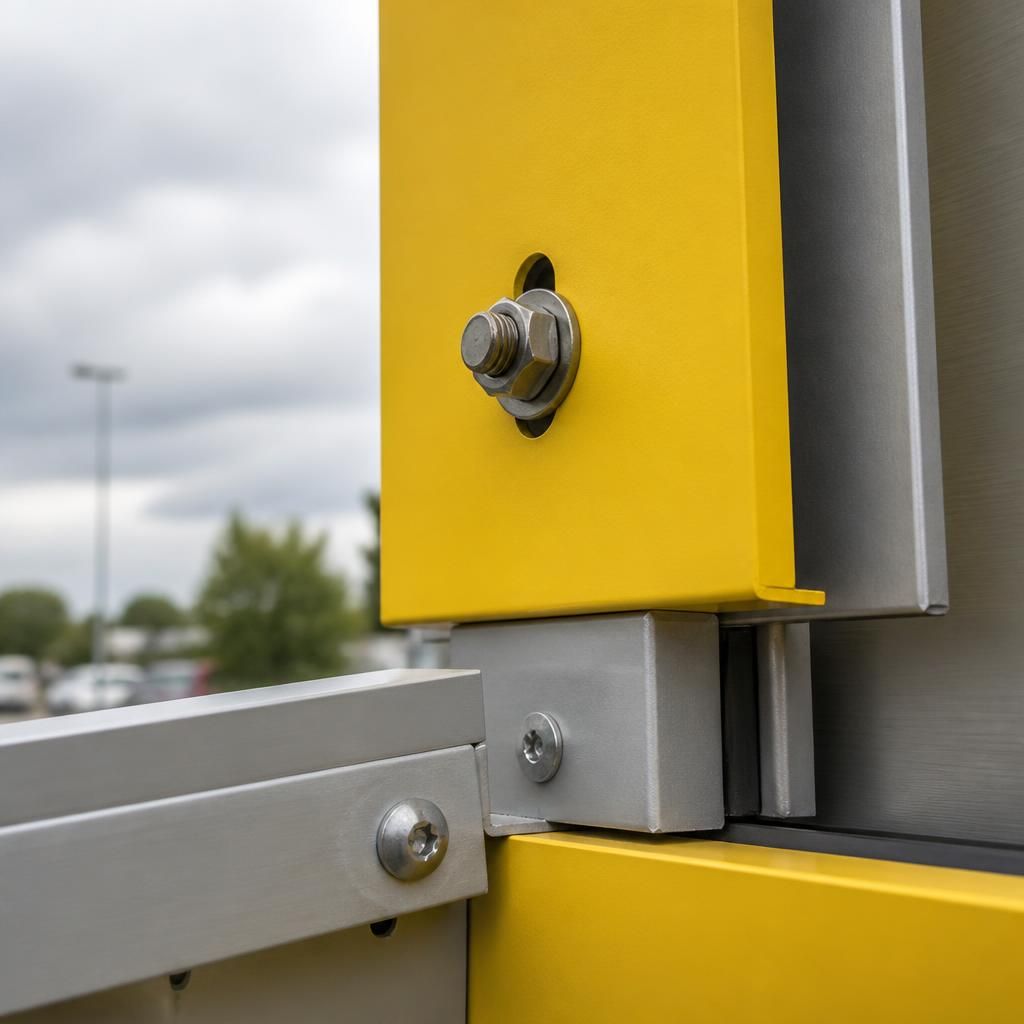
Compatibility between the coated aluminium and adjoining materials is an important difference between indoor and outdoor use. Outside, rainwater and condensation can create an electrolyte between aluminium and dissimilar metals, increasing the risk of galvanic corrosion at fixings, brackets and joints. Specify compatible fixings and use suitable separators or jointing materials where required.
Indoor components are generally less exposed to persistent moisture, but condensation, wash-down procedures and damp areas can still affect interfaces. The design should prevent water being trapped against the coating, while sealants and gaskets must be compatible with the powder finish. Reviewing the complete assembly, rather than the aluminium surface alone, helps maintain both appearance and protection.