

Is RAL 1018 powder coating suitable for custom-design aluminium components?
Yes, RAL 1018 powder coating can be suitable for custom-design aluminium components, provided the alloy, surface preparation, component geometry and curing requirements are compatible with the coating process. Its bright zinc-yellow finish is effective where a distinctive colour is required, but samples and specification checks are advisable for complex shapes, tight tolerances or assemblies requiring masked areas.
RAL 1018 powder coating is generally suitable for custom-design aluminium components where the design allows reliable powder application and the bright zinc-yellow finish meets the project’s visual and functional requirements. Suitability depends less on the colour itself than on how the component is designed, prepared, assembled and used.
Custom aluminium parts often include features that require more planning than standard flat sections. Recesses, sharp internal corners, deep channels and enclosed cavities can affect how powder reaches the surface and how air moves during curing. Powder may be lighter in sheltered recesses or accumulate at edges and corners, so the design should be reviewed for consistent coverage rather than assessed only from its overall shape.
RAL 1018 is a strong visual choice where the component must be distinctive or easy to identify. Its bright yellow appearance can support colour coding, safety-related identification or a deliberate architectural and product-design scheme. On custom parts, however, appearance is affected by edge geometry, welds, cast textures and the condition of the aluminium beneath the coating. A smooth, consistent substrate generally produces a more uniform result than a surface with visible tooling marks or variable texture.
Design details that should be considered before coating include:
- Fixing points and threads: threaded holes, bearing seats and close-fitting interfaces may need masking or post-coating treatment so that the coating does not interfere with assembly.
- Contact faces: faces used for electrical earthing, bonding or close mechanical contact should be identified on the drawing and protected from unwanted coating.
- Drainage and ventilation: hollow sections and fabricated assemblies should allow cleaning fluids to drain and air to escape. Poorly vented areas can create processing problems and may retain moisture.
- Welded areas: weld spatter, residues and uneven weld profiles can remain visible through a bright colour unless they are properly finished before preparation.
- Edges and transitions: rounded or dressed edges normally support more even powder coverage than knife edges, which can produce thinner coating at the edge.
Aluminium also requires a preparation system appropriate to the alloy and its surface condition. Cutting lubricants, handling marks, oxidation and contamination must be removed before coating. Cast, extruded and machined sections may each respond differently during preparation, so a single specification should account for the forms used in the finished component. Where a custom assembly combines aluminium with other metals, the interfaces should be reviewed separately because dissimilar materials can require different preparation or masking arrangements.
Part design can also affect curing. The component must tolerate the specified oven process without distortion, loss of dimensional accuracy or damage to attached materials. Plastics, seals, adhesives, electronics and heat-sensitive inserts may need to be fitted after coating or selected for compatibility with the process. Assemblies that cannot be separated should be discussed before production, particularly where powder must not enter enclosed areas.
For components with tight tolerances, the coating thickness should be included in the engineering allowance. This is relevant to holes, slots, locating surfaces, sliding fits and interfaces between multiple coated parts. Masking can preserve critical areas, but masking itself must be defined clearly so that exposed boundaries remain acceptable in appearance and function.
A trial component or representative sample is useful for custom designs, especially when the final part combines several materials, has complex geometry or will be viewed alongside existing components. It allows the project team to check the RAL 1018 appearance, masking lines, coverage in recessed areas, assembly fit and compatibility with the intended end use before a larger batch is processed. Colour should be assessed under the lighting conditions in which the component will normally be seen, as bright yellow can appear different in daylight, workshop lighting and enclosed interiors.
RAL 1018 should therefore be treated as a suitable finish option for many bespoke aluminium components, but not as a substitute for design-for-coating review. The drawing or coating specification should identify the required colour, gloss or surface appearance, areas to remain uncoated, dimensional limits, substrate condition and any performance requirements. A Midlands powder-coating specialist can review these points with the manufacturer or fabricator and arrange collection and delivery where required across the Midlands and surrounding areas.
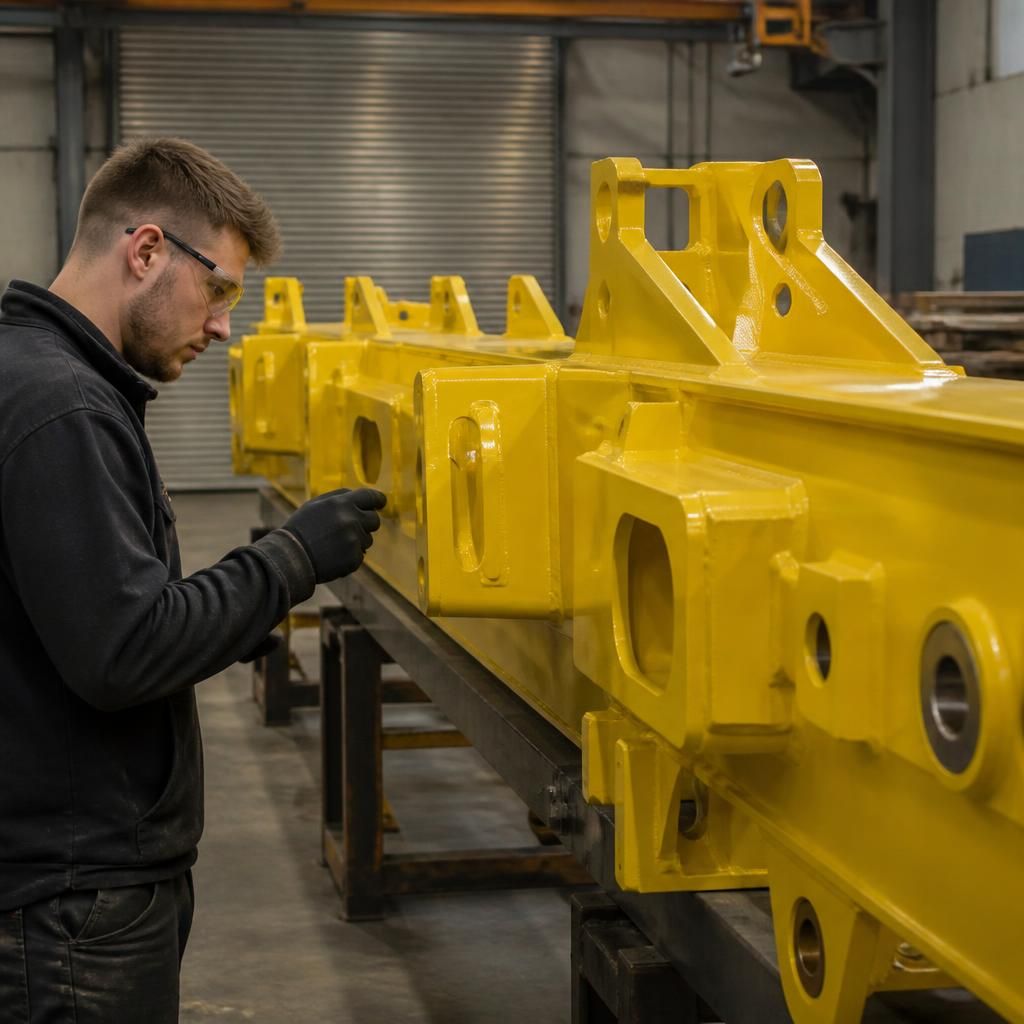
RAL 1018 identifies the colour of the finish, not its complete performance specification. For a custom-design aluminium component, the coating system should also be selected according to the service environment, including exposure to moisture, sunlight, abrasion, cleaning chemicals and temperature changes. A component used indoors may require a different formulation or gloss level from one installed externally or handled frequently.
The intended appearance should be defined alongside these performance requirements. Gloss, texture and acceptable colour variation can affect how the bright zinc-yellow finish appears across separately coated parts or components made from different aluminium forms. A written specification helps prevent the colour reference being treated as the only acceptance criterion and ensures that RAL 1018 is matched with a coating system appropriate to the component’s actual use.