

How does RAL 1018 powder coating contribute to corrosion resistance in aluminium sheets?
RAL 1018 powder coating contributes to corrosion resistance by forming a continuous, durable barrier over the aluminium sheet, helping limit contact between the metal and moisture, salts and other corrosive contaminants. Its effectiveness depends on thorough surface preparation, correct application and complete coverage of edges, joints and other areas where corrosion protection could otherwise be compromised.
RAL 1018 powder coating improves the corrosion resistance of aluminium sheets by adding a bonded protective coating system over the naturally oxidising metal. The yellow colour designation identifies the finish shade, but it is not the source of the protection. Corrosion performance comes from the aluminium grade, surface preparation, pretreatment, powder formulation, coating thickness, curing and the conditions in which the sheet is used.
Aluminium naturally forms a thin oxide layer when exposed to air. This layer provides useful basic protection, but it can be disrupted by moisture, chlorides, acidic or alkaline deposits and contact with other metals. Once localised damage occurs, pitting can develop beneath contaminated areas. A correctly applied powder coating adds a more resistant barrier, reducing the opportunities for water and aggressive substances to reach the aluminium surface.
The coating also helps separate aluminium from the surrounding environment. This is particularly relevant for sheets used in external structures, plant areas, transport-related equipment and industrial enclosures, where airborne pollution, condensation, road salts or process residues may be present. It does not make the aluminium immune to corrosion; rather, it forms part of a corrosion-control system that must be matched to the exposure conditions.
Surface preparation is central to long-term performance. Aluminium can carry oxides, oils, machining residues, dirt and other contaminants that interfere with adhesion. Preparation normally involves cleaning and controlled treatment of the substrate before powder application. A suitable pretreatment can improve the bond between the aluminium and the coating and help reduce the risk of corrosion spreading from small defects under the finish. The exact preparation method should be selected according to the alloy, the condition of the sheet and the intended environment.
Coating continuity is also important. Bare areas around cut-outs, drilled holes, folded edges, welds, fasteners and joins can become preferential sites for corrosion. Fabrication and coating should therefore be considered together. Burrs, sharp edges and poorly prepared weld areas may reduce local coating coverage, while trapped residues in folds or joints can create a persistent source of moisture. Components should be designed and presented for coating so that all accessible surfaces can be cleaned, treated and coated consistently.
The powder must be applied and cured within the product manufacturer’s specified process range. Insufficient curing may leave the film with reduced adhesion or chemical resistance, whereas unsuitable processing can affect its flexibility and finish. Excessive or uneven build can also create problems around edges, apertures and assembled parts. Quality checks may include visual inspection, adhesion assessment, coating thickness checks and examination for pinholes, inclusions, impact damage or uncoated sections.
RAL 1018 itself does not provide greater corrosion resistance than another RAL colour simply because it is yellow. Two colours applied using the same compatible powder system and process can offer comparable protection. Differences arise from the selected resin technology, pretreatment, film performance and exposure rating, rather than from the RAL number alone. Where the sheet will face severe industrial contamination, persistent humidity or salt exposure, the specification should focus on the complete coating system rather than selecting a colour in isolation.
Aluminium assemblies also require attention to galvanic corrosion. If the coated sheet is connected to dissimilar metals, moisture can create an electrochemical cell, especially where the coating is damaged at a fixing point. Compatible fasteners, suitable isolating materials and careful treatment of drilled or cut areas can reduce this risk. Water traps should be avoided, and joints should be designed to drain rather than retain contaminated moisture.
Powder coating protects the underlying aluminium only while the film remains intact and properly bonded. Abrasion, impact, drilling, bending after coating, harsh cleaning chemicals and prolonged exposure to unsuitable process substances can create weaknesses. If damage occurs, it should be assessed and repaired using a compatible method rather than simply covered with an unrelated paint. Regular inspection is useful for identifying chips, blistering, underfilm corrosion, staining and failed sealant before the affected area expands.
For industrial aluminium sheets, the most reliable approach is to specify RAL 1018 as part of a complete, exposure-appropriate powder coating system. That specification should account for the aluminium substrate, fabrication details, pretreatment, coating chemistry, curing requirements, handling and the substances likely to contact the finished sheet. When these factors are controlled, the coating can substantially improve resistance to atmospheric and handling-related corrosion while retaining the requested RAL 1018 appearance.
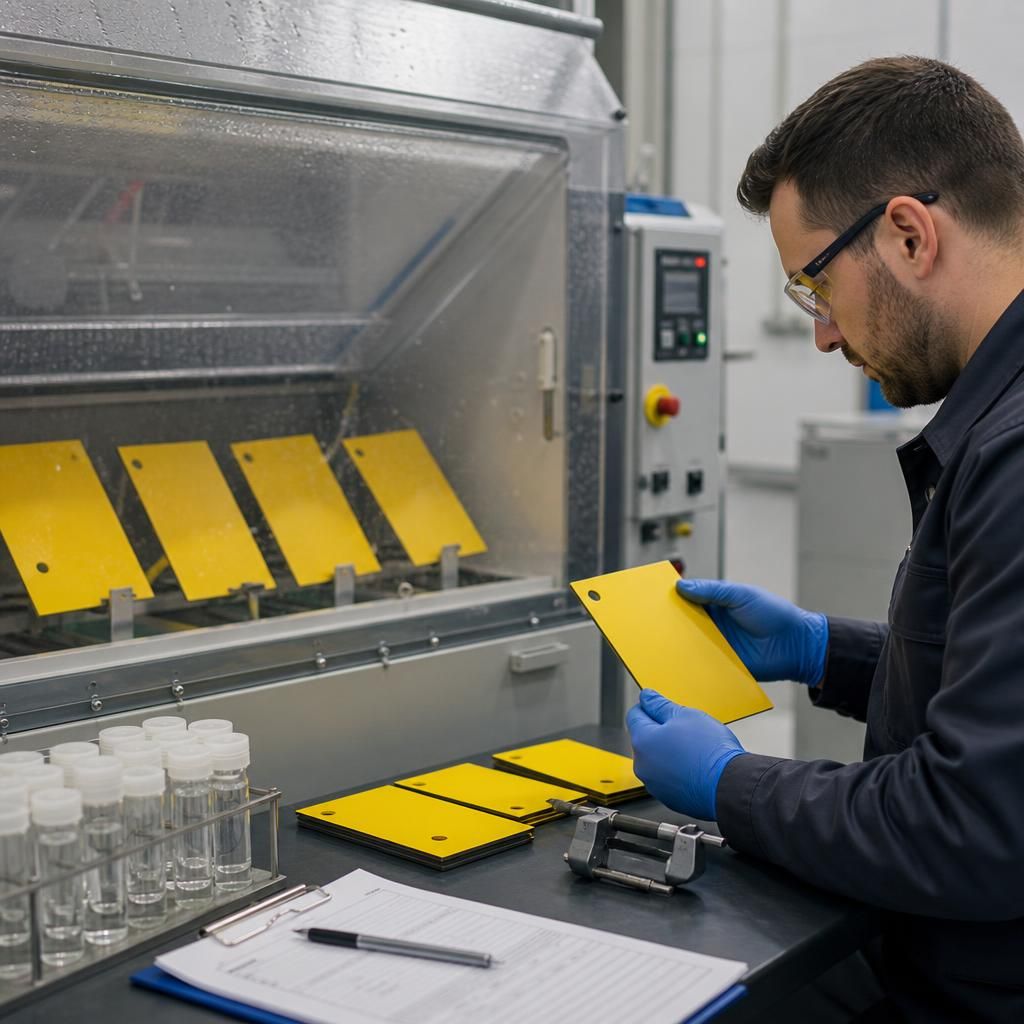
Evidence for corrosion resistance should relate to the complete coating system rather than the RAL 1018 colour reference. Where a project requires documented performance, assessment should use the intended aluminium substrate, pretreatment, powder formulation, film build and curing conditions. Laboratory methods such as salt-spray or cyclic-corrosion testing can help compare systems, but their results should be interpreted against the actual exposure and design of the finished component.
A representative test panel can also help verify that the selected process produces a continuous finish on the relevant sheet profile, including formed areas, apertures and edges. This is particularly useful where the aluminium will be exposed to moisture, salts or industrial residues, because small differences in preparation or geometry can affect local protection even when the visible RAL 1018 finish appears consistent.
Discuss your corrosion-resistant RAL 1018 aluminium coating requirements
Discuss your corrosion-resistant RAL 1018 aluminium coating requirements with the Powder-coatings.co.uk team, providing the sheet alloy, component geometry and intended exposure so the coating system can be assessed appropriately.