

How does RAL 1018 powder coating compare to other RAL colours in terms of durability and application suitability for aluminium components?
RAL 1018 powder coating is generally no more or less durable than another RAL colour when the same powder formulation, aluminium pretreatment and curing process are used. Its suitability for aluminium components therefore depends mainly on the required corrosion, UV, impact and chemical resistance, together with the component’s indoor or outdoor application, rather than the yellow colour itself.
RAL 1018 is a colour designation, not a separate durability class. Compared with other RAL colours, its performance on aluminium is governed primarily by the selected powder coating system, surface preparation, film build and curing conditions. The main differences associated with the colour itself relate to appearance, pigment behaviour, heat absorption and the visibility of surface changes.
RAL 1018 Zinc Yellow can be suitable for aluminium components in indoor and outdoor applications where a high-visibility yellow finish is required. It should not, however, be selected on colour alone. The coating specification needs to reflect the component’s exposure, required service life, likely contaminants, impact risk and the level of colour retention expected.
RAL is not a measure of coating performance. A RAL number identifies the target colour so that different parts or batches can be matched. It does not specify whether the powder is an epoxy, hybrid, standard polyester or higher-weathering polyester formulation, nor does it define the required coating thickness or pretreatment. Two aluminium components finished in RAL 1018 can therefore have significantly different resistance to weathering and chemicals if different coating systems are used.
In practical terms, RAL 1018 may be compared with other colours in the following ways:
- Weathering and colour retention: the quality of the resin and pigment package has more influence than the RAL reference. Bright yellow can show gradual fading, chalking or loss of gloss if an unsuitable internal-grade powder is used outdoors. A weather-resistant polyester system is generally more appropriate for exposed aluminium than a formulation intended only for interior use.
- Opacity and visual uniformity: vivid colours can make variations in film thickness, substrate preparation or application technique more noticeable. The coater may need to control coverage carefully around edges, recesses and complex profiles. A representative sample or drawdown is useful where exact visual consistency is important.
- Heat absorption: lighter and brighter finishes usually absorb less solar heat than very dark colours. RAL 1018 may therefore result in less heat build-up than black or deep grey finishes under strong sunlight, although the actual component temperature also depends on its shape, orientation, ventilation and surrounding materials.
- Visibility of marks: yellow surfaces can make dirt, dark handling marks, scuffs and local contamination more apparent than some mid-tone or dark colours. This is mainly an appearance and maintenance consideration rather than evidence of lower coating strength.
- Gloss and texture: a smooth, high-gloss yellow finish reflects light differently from a matt, textured or fine-textured finish. Texture can help disguise minor surface irregularities, but it may alter the perceived colour and can be more difficult to clean than a smooth coating.
Application suitability depends on the aluminium component. RAL 1018 can be used for fabricated panels, guards, frames, enclosures, brackets, machine components and other metal parts when the selected coating is compatible with the intended service conditions. The design must still allow the powder to reach all required surfaces and should avoid features that trap pretreatment chemicals or interfere with drainage. Sharp edges, weld areas, cast imperfections and deep recesses require particular attention because they can affect coverage and long-term protection regardless of the chosen RAL colour.
For internal components, a hybrid or epoxy-based system may be considered where ultraviolet exposure is limited and resistance to handling, abrasion or certain chemicals is more important than long-term exterior colour stability. Epoxy-rich systems are not normally the first choice where the aluminium will receive regular sunlight, because their surface appearance can deteriorate with ultraviolet exposure. For external components, a suitable polyester system is generally the more relevant comparison, with the required weathering grade selected according to the project specification.
Industrial environments may require a further distinction between colour and chemical performance. RAL 1018 does not by itself determine resistance to oils, cleaning agents, solvents, fuels, alkaline deposits or process chemicals. If the component will be cleaned frequently or exposed to aggressive substances, the powder manufacturer’s chemical-resistance data and a practical compatibility assessment should be reviewed. The same principle applies to impact and abrasion: resin formulation, film build, substrate preparation and the severity of contact are more significant than whether the finish is yellow, blue, grey or another RAL colour.
Aluminium pretreatment is particularly important. Aluminium forms an oxide layer naturally, and a suitable cleaning and conversion or pre-treatment process helps the powder coating adhere consistently and resist underfilm corrosion. Poor preparation can lead to loss of adhesion, blistering or corrosion at damaged areas, even when the chosen RAL colour and powder formulation are otherwise appropriate. This makes preparation and process control essential when comparing a RAL 1018 component with one finished in another colour.
Colour matching also deserves attention when components are manufactured or coated in separate batches. Surface gloss, texture, viewing angle, curing conditions and the underlying substrate can all affect how RAL 1018 appears. A physical approved sample is more reliable than relying only on a screen image or printed reference. Where several parts will be assembled together, they should be specified with the same coating system, finish level and colour reference wherever possible.
Before specifying RAL 1018 for an aluminium component, confirm:
- the component’s indoor, sheltered or fully exposed location;
- the required resistance to ultraviolet exposure, moisture, abrasion, impact and chemicals;
- the powder type and exterior or interior performance classification;
- the required gloss level, texture, film thickness and colour tolerance;
- whether the geometry permits consistent cleaning, pretreatment and powder coverage;
- how visible dirt, scuffing and colour change will be in the finished installation; and
- whether a sample panel or approved colour standard is needed before production.
In summary, RAL 1018 is not inherently less durable than other RAL colours. Its suitability for aluminium is determined by the complete coating specification and by how the component will be used. The yellow finish can offer useful visibility and may absorb less solar heat than dark colours, but it can also make contamination, fading or uneven coverage more noticeable. Selecting the coating system and preparation process first, then confirming the colour, finish and application requirements, provides a more reliable basis for comparison than choosing by RAL number alone.
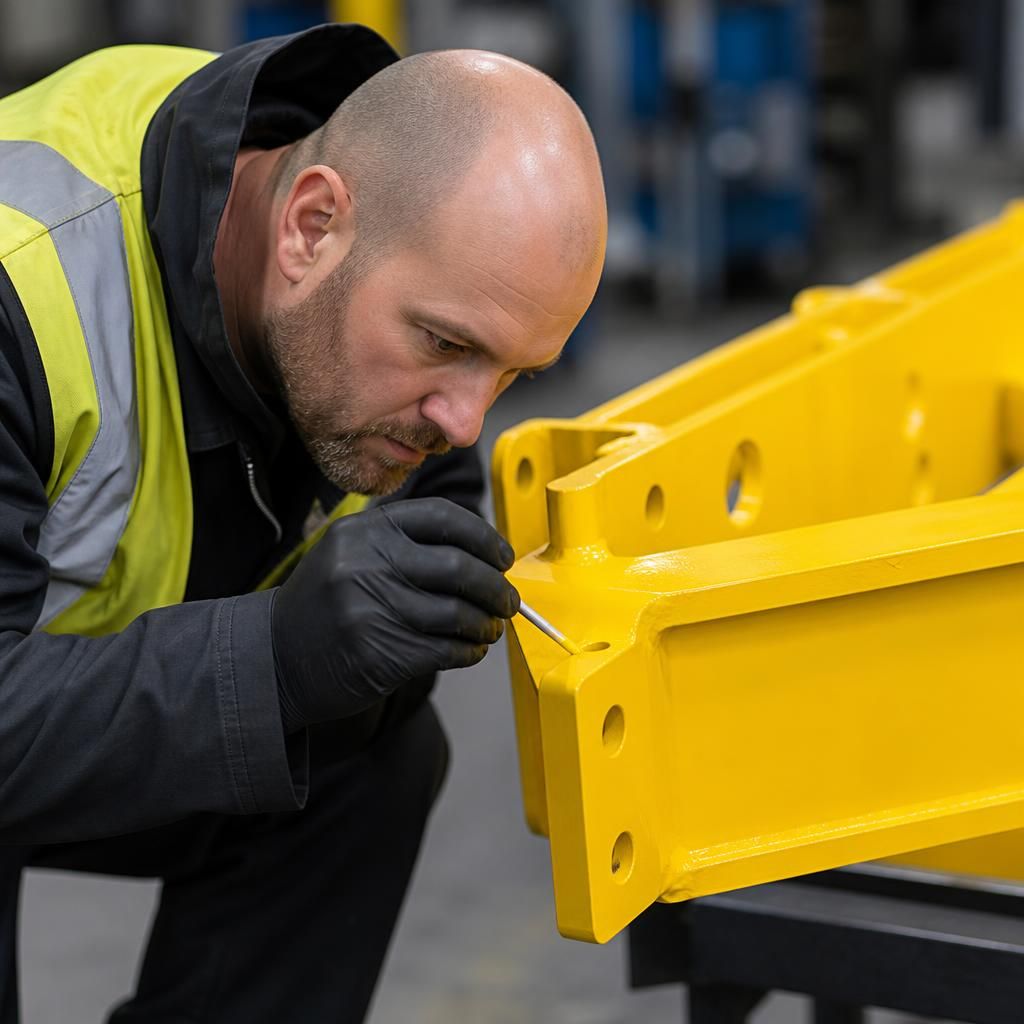
Repairability is an important practical consideration when comparing RAL 1018 with other colours on aluminium components. A local repair may restore protection, but a touch-up coating can differ from the original powder finish in colour, gloss and texture. These differences are often more noticeable on a vivid yellow such as RAL 1018 than on some darker or less saturated colours.
Where components are likely to suffer handling damage or impact, specify a compatible repair method alongside the original coating system. The repair area should be cleaned, assessed for exposed aluminium or corrosion and treated in accordance with the coating manufacturer’s guidance. For visible assemblies, a replacement panel or professionally refinished part may provide a more consistent appearance than an isolated touch-up.
Discuss Your RAL 1018 Aluminium Coating Requirements
Discuss your aluminium components with our team, including their operating environment, geometry and finish requirements, to help identify a suitable RAL 1018 powder coating specification. You can also provide drawings or samples where colour and coverage need careful assessment.