

What specific maintenance practices enhance the longevity and performance of Interpon D1036 Matt coatings on aluminium surfaces?
Regularly clean Interpon D1036 Matt-coated aluminium with clean water, a soft cloth or sponge, and a mild, pH-neutral detergent to remove dirt without abrading the finish. Inspect the surface for damage, corrosion or residue, address defects promptly using a compatible repair system, and prevent prolonged contact with harsh chemicals, standing water or abrasive materials.
Maintaining the longevity and performance of Interpon D1036 Matt on aluminium depends on more than routine surface cleaning. A planned maintenance approach should control mechanical damage, prevent contamination from adjacent construction materials, preserve drainage and joint details, and ensure that any remedial work uses materials compatible with the original coating system.
Use a planned maintenance record. Record the coating specification, installation details, exposure conditions and any remedial work carried out. This gives maintenance teams a reference when assessing changes in colour, gloss, adhesion or edge performance. The frequency of checks should reflect the location: coastal, industrial, high-traffic and heavily handled components generally require closer attention than protected architectural elements.
Protect the coating from mechanical damage. Aluminium components should not be dragged across hard surfaces, stacked without suitable separators or used as temporary supports during later works. Protect coated sections when drilling, cutting, welding, rendering or installing adjacent materials. Welding spatter, swarf and sharp tools can permanently mark a matt finish, while impact damage may expose the aluminium beneath the coating. Temporary protection should be secured without methods that could pull at the finish or leave adhesive contamination.
Control contact with incompatible substances. Cement, mortar, plaster, lime deposits, bituminous products, aggressive solvents and some sealants can affect a powder-coated surface if they remain in contact with it. Construction materials should therefore be kept away from completed aluminium wherever possible. Sealants, gaskets, tapes, fixings and cleaning agents used alongside the coating should be checked for compatibility before installation. Do not use a solvent, polish, wax or chemical treatment simply because it is suitable for another metal or painted finish.
Maintain surrounding details rather than treating the coating in isolation. Check that fixings remain secure, protective separators are intact and joints, gaskets and sealants continue to perform as intended. Dissimilar-metal contact should be controlled with suitable separation and compatible components, reducing the risk of galvanic effects at interfaces. Drainage paths, recessed details and horizontal ledges should remain free from obstructions so that moisture is not retained against the aluminium or coating edges.
Deal with defects using a controlled repair process. Small marks should not be enlarged by aggressive scraping or improvised sanding. The appropriate repair method depends on the depth, location and extent of the defect, so the coating supplier’s technical guidance should be consulted before selecting a touch-up product. A repair may not reproduce the exact matt appearance of the factory-applied finish, particularly where the surrounding coating has weathered. Larger areas, exposed edges, loss of adhesion or corrosion-related defects should be assessed by a suitably experienced coating professional rather than repeatedly covered with an unapproved paint.
Keep remedial materials compatible. Touch-up coatings, primers, sealants and preparation products should be specified for use with the existing Interpon D1036 Matt system and the aluminium substrate. Compatibility includes adhesion, flexibility, chemical resistance, colour and surface appearance. Applying a generic aerosol paint or an incompatible clear coat can create a visible mismatch and may introduce a weaker layer at the defect.
Coordinate maintenance with other contractors. When adjacent glazing, roofing, signage, electrical or building work is undertaken, communicate the coating requirements before work starts. Contractors should know which tools, masks, tapes and chemicals are unsuitable for the finished surface. Any temporary coverings should be removed carefully and the interface checked afterwards so that trapped contamination, scuffing or adhesive transfer is not left unaddressed.
These practices help preserve the coating’s visual consistency and protective function. The most effective approach is preventative: manage handling and compatible materials from the outset, maintain the components around the aluminium, keep accurate records and obtain technical advice before carrying out repairs that could alter the original finish.
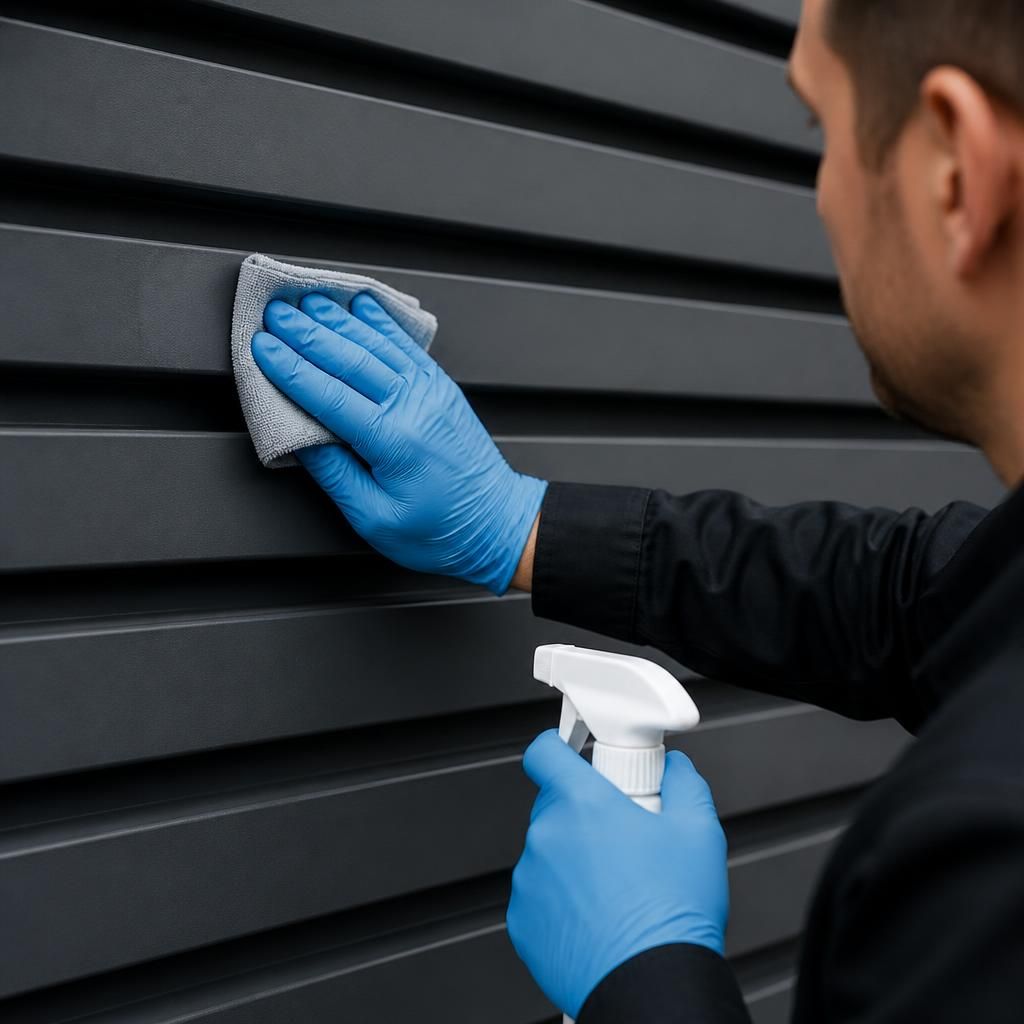
Test any proposed cleaning product and method on a small, inconspicuous area before applying it across the aluminium surface. Follow the intended dilution and application process, then allow the test area to dry fully before checking for colour change, whitening, streaking or a difference in surface sheen. A product that appears harmless while wet may leave a visible change on a matt finish once dry.
Keep a record of products that have been tested and approved for the specific coating system, including any dilution instructions and restrictions. This gives maintenance teams a consistent reference and reduces the risk of individual operatives introducing chemicals or procedures that alter the appearance of Interpon D1036 Matt.
Discuss your Interpon D1036 Matt aluminium coating requirements
Discuss your Interpon D1036 Matt aluminium coating requirements with the powder-coating team, including the component’s use, exposure and finish expectations. This helps establish a suitable specification and maintenance approach for the project.