

What are the maintenance requirements for Interpon D1036 Matt Aluminium coatings to ensure their longevity?
Maintain Interpon D1036 Matt Aluminium coatings by cleaning the surface with clean water and a mild, non-abrasive detergent, then rinsing and drying it thoroughly. Inspect periodically for dirt, pollutants, staining or mechanical damage, and address contamination or coating defects promptly using compatible repair methods to help preserve the finish and protective performance.
Long-term care for Matt Aluminium powder-coated surfaces depends on controlling the conditions around the coating, not just removing visible dirt. In addition to routine washing and visual checks, maintenance should prevent abrasive contact, avoid incompatible chemicals, manage water retention and ensure that any alteration or repair uses materials suitable for the coating system.
Establish a maintenance schedule based on the environment in which the aluminium is installed. Areas exposed to marine air, industrial emissions, road spray, high levels of airborne dust or persistent moisture require closer attention than sheltered, clean environments. Record the location, date, observed condition and action taken at each maintenance visit. This provides a useful history and helps identify recurring sources of contamination or damage.
- Control abrasive contact: Do not use scouring pads, wire brushes, abrasive powders or tools that can scratch the matt surface. Avoid dragging equipment, packaging or metal components across coated aluminium.
- Use compatible cleaning equipment: Soft cloths, sponges or soft-bristled brushes are more appropriate for loosening deposits without altering the surface texture. Cleaning tools should themselves be free from grit and metal fragments.
- Prevent chemical damage: Keep solvents, strong acids, strong alkalis, aggressive degreasers, cement residues and other building chemicals away from the coating. If such material is accidentally deposited, refer to the coating supplier’s care guidance before attempting removal, particularly where the substance has dried or bonded to the surface.
- Remove trapped moisture: Check joints, recesses, overlaps, drainage paths and horizontal ledges where water or contaminated residue can remain. Persistent dampness can increase the risk of staining and may expose vulnerable edges or damaged areas to corrosion.
- Protect during nearby work: Mask or shield coated aluminium during cutting, grinding, welding, rendering, concrete work and decorating. Metal swarf, sparks, wet cement and paint splashes can cause damage that is more difficult to correct after curing.
Pay particular attention to edges, corners, fixings, joints and areas where components meet. These locations are more likely to suffer impact, friction, trapped deposits or damage caused by movement between materials. Check that attached fittings have not created new points of abrasion and that drainage remains unobstructed.
Where the coating has been cut, drilled or modified after application, the exposed area should not be left as an untreated alteration. The appropriate repair procedure depends on the size and position of the defect, the condition of the surrounding coating and the original coating specification. Clean and prepare the affected area using a method compatible with the system, then use a suitable repair coating or approved touch-up material. A repair may not reproduce the exact appearance of the original matt finish, so larger or prominent defects should be assessed by a qualified coating professional rather than repeatedly over-painted.
Do not apply waxes, polishes, sealants or protective treatments simply because they are marketed for painted metal. Some products can leave a visible sheen, attract dirt or interfere with later repairs. Any additional treatment should be confirmed as compatible with the powder-coated finish and tested on an inconspicuous area where appropriate.
Maintenance should also include the surrounding construction. Correct leaking gutters, failed seals, blocked drainage and sources of repeated impact before they cause continued contamination or coating deterioration. Where aluminium is in contact with other metals or treated materials, inspect the interface for staining or corrosion and ensure that the specified separation, sealing or fixing arrangement remains intact.
For industrial installations, document any process chemicals, emissions or cleaning agents that could contact the surface and review their compatibility with the coating specification. If colour change, loss of finish, blistering, flaking, corrosion staining or repeated adhesion failure is observed, stop using unapproved cleaning or repair products and obtain technical advice. Early assessment can distinguish surface contamination from a wider coating or substrate problem and helps ensure that corrective work does not create further damage.
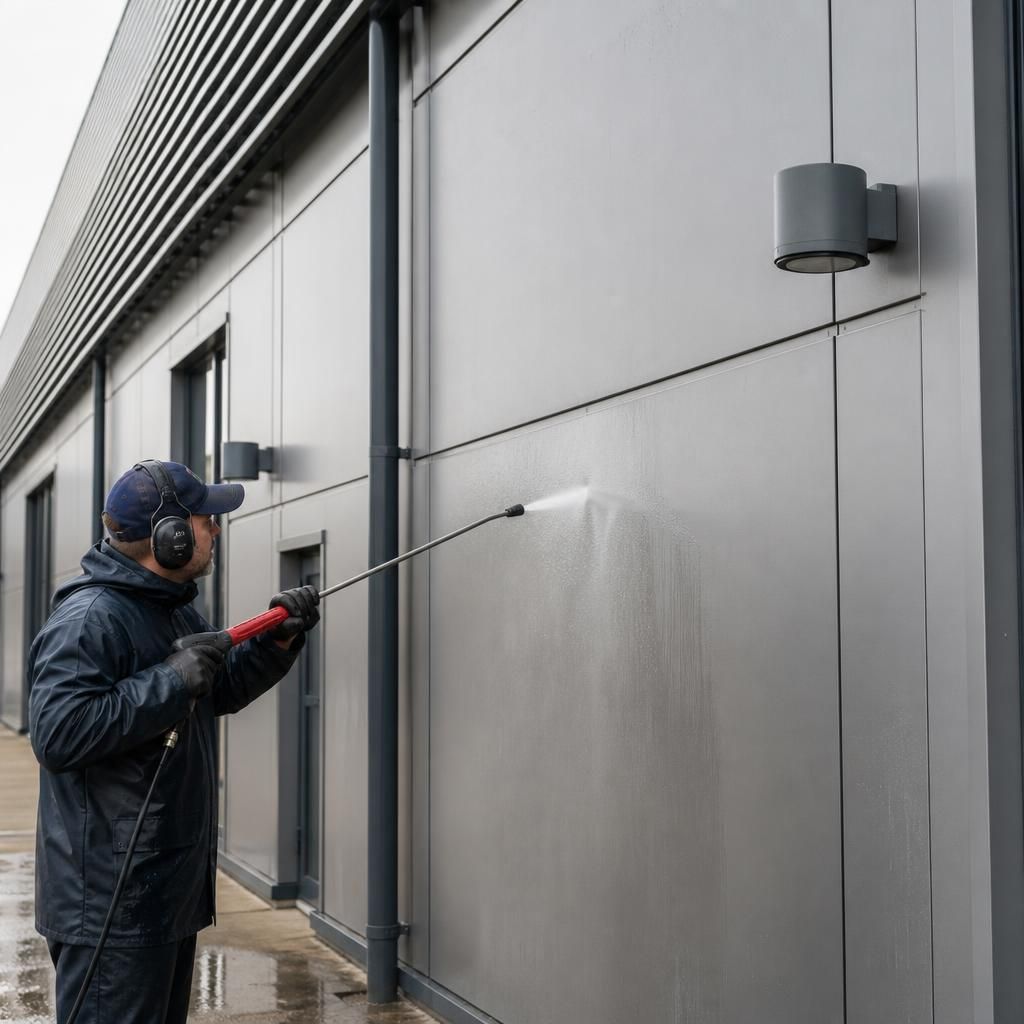
A key maintenance requirement for Interpon D1036 Matt Aluminium coatings is to control how water and cleaning equipment are used. Avoid directing high-pressure water at close range, particularly towards edges, joints, seals, fixings or drainage openings, as forceful spray can drive moisture behind components and disturb accumulated deposits. Use a controlled flow and work methodically across the surface rather than concentrating water on one area.
Cleaning is best carried out in shaded conditions, allowing the surface to remain cool while detergent is applied and removed. This reduces the risk of rapid drying, water marks and detergent residue on the matt finish. After cleaning, inspect the surface in consistent lighting so that genuine changes in coating condition can be distinguished from temporary streaking, retained moisture or uneven drying.
Discuss Your Interpon D1036 Matt Aluminium Maintenance Requirements
Discuss your Interpon D1036 Matt Aluminium maintenance requirements with our powder-coating specialists, providing details of the installation environment, coating condition and any planned alterations. We can help identify suitable care and repair considerations for your aluminium components.