

What are the application techniques used for achieving optimal results with Interpon D1036 Matt Aluminium coatings?
Optimal results with Interpon D1036 Matt Aluminium coatings depend on consistent electrostatic powder spraying, even coverage and curing under tightly controlled conditions. Applicators should confirm the recommended film build and cure schedule, address edges and recesses carefully, and use test panels to verify the matt appearance before full production.
For Interpon D1036 Matt Aluminium, optimal application depends on controlling powder deposition, equipment settings, component handling and finish inspection as one connected process. The technique should be adapted to the component’s geometry, surface area and production volume so that the powder is applied consistently without disturbing the intended matt appearance.
Set up the spray equipment consistently. The spray gun, powder pump and feed system should be checked before production begins. Stable powder delivery is important because fluctuations can create visible differences in coverage and surface texture. Gun voltage, current, powder output and air settings should be selected according to the equipment supplier’s guidance and then kept consistent throughout the batch. Sudden changes to these settings can affect transfer efficiency and the appearance of the coating.
Good electrical grounding is also essential. The workpiece, hooks, racks and conveyor should provide a reliable earth path, with contact points kept free from excess powder and contamination. Poor grounding can reduce powder transfer, encourage uneven deposition and leave areas that require unnecessary reworking. Contact points should be positioned where they will have the least effect on the finished component, while still supporting the part securely during spraying.
Use a controlled spray pattern. The operator should maintain a steady gun movement and a consistent relationship between the gun and the workpiece. Overlapping passes in a planned sequence help prevent stripes, heavy bands and thin areas. Large flat sections are generally best treated with orderly horizontal or vertical passes, while complex fabrications may require a defined route around the component. The operator should avoid stopping the gun directly over one area, as localised powder build-up can affect the final texture.
For larger aluminium assemblies, applying powder in sections can improve control. A typical sequence may address the less visible faces first, followed by the principal viewing surfaces, with the operator checking that the powder has not been disturbed during repositioning. Components should be supported and moved carefully after spraying because uncured powder can be marked by contact, vibration or excessive handling.
Manage difficult geometries deliberately. Internal corners, boxed sections, narrow channels and closely spaced features can alter the electrical field and the movement of powder. Rather than relying on one long spray pass, the applicator may need to change the gun angle, reduce the powder output or use a separate pass at a more suitable orientation. The aim is to reach the required areas without creating excessive build-up on exposed faces. Any adjustment should be recorded and repeated consistently for similar components.
Automatic reciprocators or other programmed equipment can provide repeatable movement on regular profiles and high-volume batches. Manual spraying remains useful for varied fabrications, intricate assemblies and areas where the component changes shape. A combined approach can be effective: automated equipment handles accessible, repeatable surfaces, while a trained operator deals with geometry that the programmed path cannot cover reliably.
Protect the powder and the work environment. Powder should be stored and handled in accordance with its technical documentation, kept dry and protected from contamination. The booth, hoses, guns and recovery equipment should be cleaned using a defined procedure when changing colours or finishes. Residual powder from another product can alter the appearance of a matt coating, particularly where subtle surface differences are easy to see. Recovered powder should only be reused where the coating system and quality procedure expressly allow it.
Application should take place in a stable, well-maintained booth environment. Excessive dust, poor extraction or contaminated air can affect deposition and introduce surface defects. Filters, hoses and nozzles should be inspected as part of routine process control rather than only after a visible problem occurs.
Inspect the finish using a defined method. Inspection should cover coverage, visible contamination, runs or heavy areas, missed surfaces and consistency between components. Checks are most useful when carried out at agreed stages, including after spraying and after the coating process has been completed. Lighting and viewing conditions should remain consistent so that changes in matt appearance are not confused with changes caused by the inspection environment.
For repeat production, approved settings, spray sequences and inspection criteria should be documented. This creates a practical reference for future batches and helps identify whether a variation comes from equipment, powder handling, component orientation or operator technique. Where the component design changes, the application route should be reviewed rather than assumed to transfer unchanged from the previous job.
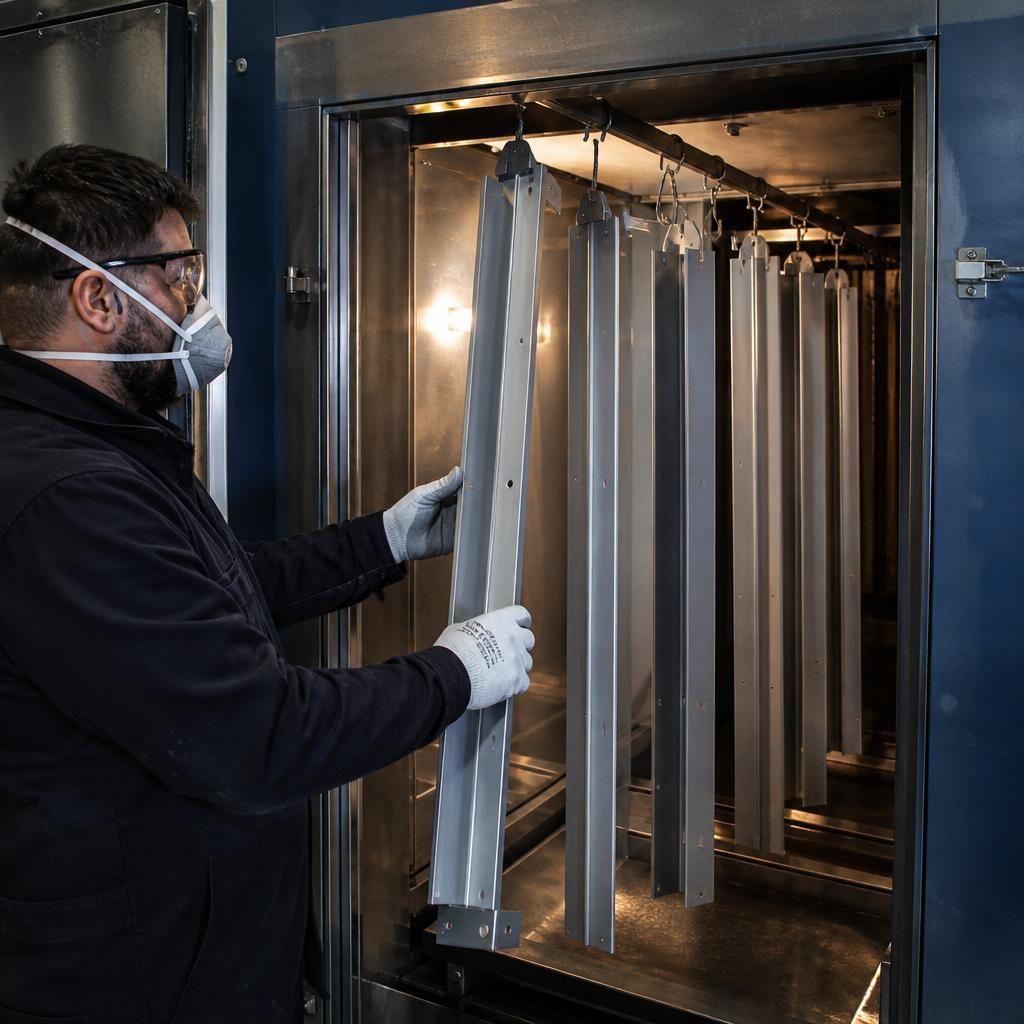
Curing is the stage that converts the applied Interpon D1036 Matt Aluminium powder into a finished coating, so oven control is as important as spray technique. Components should be loaded to allow air circulation and consistent heating, with the cure schedule based on the coating’s technical documentation and the actual metal temperature rather than oven air temperature alone.
For repeat batches, verify that the oven reaches the required conditions across the full component and avoid overloading areas that could heat unevenly. Test panels or representative parts can be used to confirm cure and check that the matt appearance remains consistent before production continues.