

How does Interpon D1036 Matt coating support sustainability efforts in industrial aluminium applications?
Interpon D1036 Matt supports more sustainable industrial aluminium applications by providing a durable finish that can help extend component service life and reduce the need for frequent recoating or replacement. Its powder-coating process also avoids the solvent content associated with conventional liquid coatings, while aluminium components can remain suitable for recycling at the end of their useful life.
Interpon D1036 Matt can support sustainability in industrial aluminium applications through a combination of powder-coating characteristics, long-term component use and more considered lifecycle planning. Its contribution is strongest when the coating specification, aluminium design, preparation, application and end-of-life route are assessed as one system rather than in isolation.
Powder coating is applied as a dry material, so the process does not rely on the solvent content associated with conventional liquid coatings. This can help reduce the release of solvent-related volatile organic compounds during application. Powder that does not initially adhere to the component may also be collected and managed within the finishing process, helping to limit unnecessary material waste where the equipment and coating system are suitable for recovery.
The sustainability value of the finish also depends on achieving the correct coating performance first time. Appropriate preparation removes contaminants and supports consistent adhesion across the aluminium surface. Correct application control, including suitable film coverage and curing, reduces the risk of defects that could otherwise lead to stripping, reworking or premature refinishing. These process controls are therefore important both for finish quality and for responsible use of materials, energy and labour.
Interpon D1036 Matt may be considered within a broader circular approach to aluminium products. Aluminium components can often be separated from other construction or manufacturing materials more readily than bonded or composite alternatives, depending on how the finished product has been designed and assembled. At the end of service, the coating should be considered as part of the complete component rather than treated as a reason to discard the aluminium. Actual recycling arrangements depend on the fabricator, product construction and the facilities handling the material.
Specification decisions can further affect the environmental profile of an aluminium application. Designers and manufacturers should assess:
- the expected exposure conditions and the required coating specification;
- the aluminium alloy, component geometry and preparation method;
- whether the finished part can be dismantled, repaired or reused;
- how coating powder, packaging and preparation waste will be managed; and
- the route by which the component can enter an appropriate recovery or recycling stream at the end of its service.
A matt finish can also be selected for visual and functional reasons, but sustainability should not be judged by appearance alone. The relevant assessment includes the complete coating system, the substrate, the application controls and the intended service environment. A finish that is unsuitable for the exposure or incorrectly applied may create additional material use through remedial work, regardless of its initial coating type.
For industrial aluminium projects, the most defensible approach is to document the specification and application requirements before production begins. This allows the coating system to be matched to the component’s use, supports consistent manufacture and makes later maintenance, refurbishment or recycling decisions easier to plan. Powder coating is not a substitute for responsible design and waste management, but Interpon D1036 Matt can form part of a lower-impact aluminium strategy when those measures are applied together.
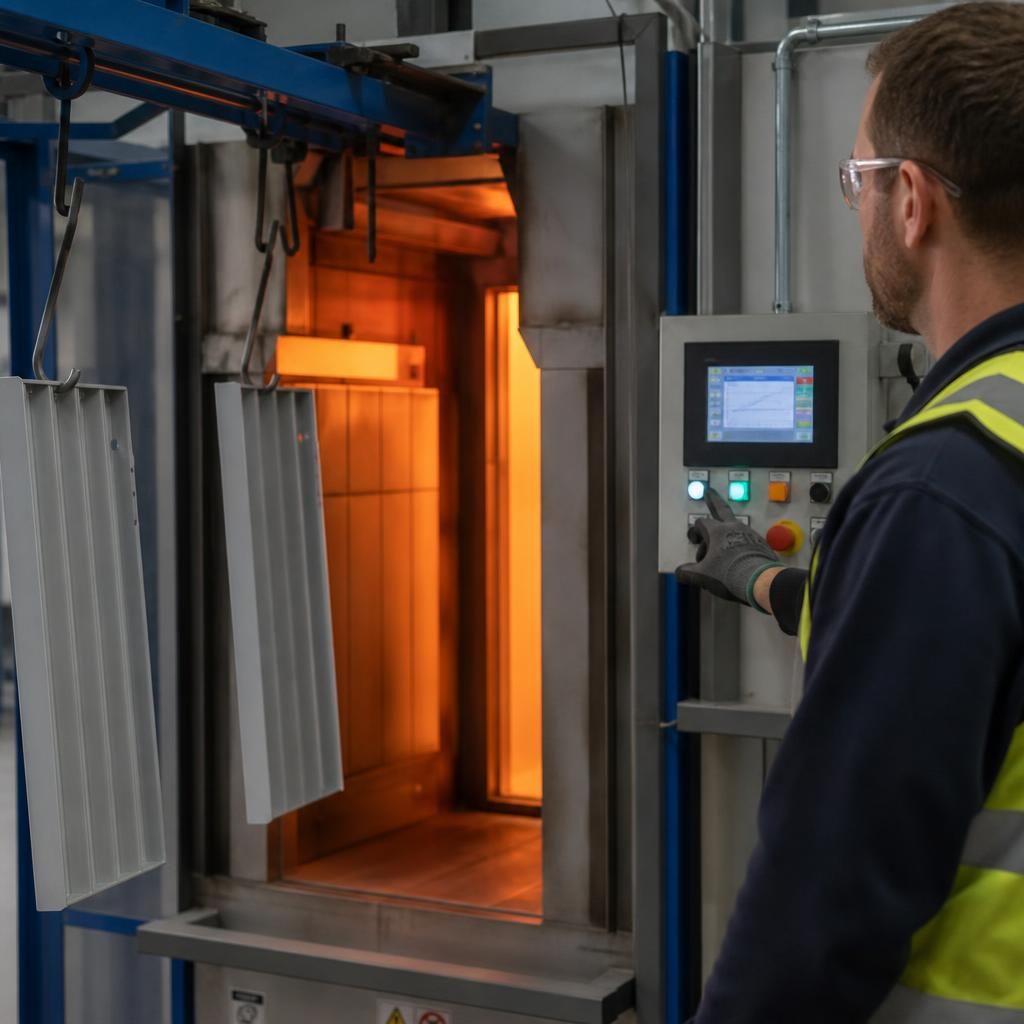
The curing stage is an important part of assessing the sustainability of Interpon D1036 Matt on industrial aluminium. The coating must reach its specified cure so that it develops the intended performance; under-curing can compromise the finish, while excessive heating can use energy unnecessarily and affect coating quality.
Accurate oven control, suitable production loading and adherence to the approved cure requirements help avoid repeat processing. These measures do not replace good substrate preparation or specification, but they can reduce avoidable energy use and rework during manufacture.
Discuss your sustainable Interpon D1036 Matt aluminium application
Discuss your aluminium component, exposure conditions and sustainability objectives with the powder-coating team to assess whether Interpon D1036 Matt is suitable for the application. A defined specification can then guide production planning and responsible end-of-life decisions.