

What are the specific benefits of using Interpon D2015 and D2525 finishes for aluminium projects?
Interpon D2015 and D2525 finishes provide aluminium projects with durable protection against weathering, helping preserve the substrate and maintain colour and gloss over time. They also offer a consistent, premium-quality appearance, making them suitable where both long-term performance and architectural presentation matter.
Interpon D2015 and D2525 finishes offer aluminium projects a specified architectural coating system with controlled application, dependable adhesion and a choice of durability levels. Their principal benefits are suitability for aluminium components, repeatable factory-applied coverage, clear performance-based specification and reduced reliance on site-applied finishing work.
Key benefits for aluminium projects include:
- Appropriate durability selection: D2015 and D2525 provide different levels of long-term coating performance, allowing the finish to be matched to the building type, exposure conditions and project specification. D2525 is generally considered where the design calls for a higher durability classification than D2015.
- Reliable aluminium finishing: Powder coating is applied as a bonded finish to prepared aluminium rather than as a decorative layer placed loosely over the surface. Correct pre-treatment and curing help the coating remain securely attached to the substrate.
- Controlled factory application: Application in a specialist coating facility allows the aluminium parts to be cleaned, pre-treated, coated and cured under controlled conditions. This supports consistent film coverage across batches and reduces variables associated with painting on a construction site.
- Efficient treatment of manufactured components: Aluminium window sections, façade parts, panels, trims, brackets and other fabricated items can be coated before delivery to site. This can simplify installation because the components arrive with their specified finish already applied.
- Design flexibility: The systems can be specified across a broad range of architectural colours and surface effects, helping designers coordinate aluminium elements with surrounding cladding, glazing and other materials. The finish can therefore be selected as part of the wider design rather than treated as an afterthought.
- Repeatability for larger projects: Where multiple aluminium components need to match, using a defined coating system and agreed specification makes it easier to manage colour, gloss and finish requirements across production batches. This is particularly relevant to façades and other projects involving repeated profiles or panels.
- Practical lifecycle benefits: A correctly specified and applied powder coating gives the aluminium a finished surface that can be cleaned as part of routine building maintenance. This avoids the need to apply a separate decorative coating after installation and can make future maintenance planning more straightforward.
The benefit of choosing between D2015 and D2525 is therefore not simply the appearance of the aluminium. The coating specification also affects how the components are manufactured, inspected, installed and maintained over the intended service life. The correct option should be confirmed against the project’s exposure, component design, colour requirements, preparation method and any relevant architectural specification.
For projects involving fabricated aluminium parts, the coating provider should review the alloy, surface condition, dimensions and proposed use before work begins. These factors influence preparation, hanging, masking, curing and the ability to achieve the required finish consistently across the complete component.
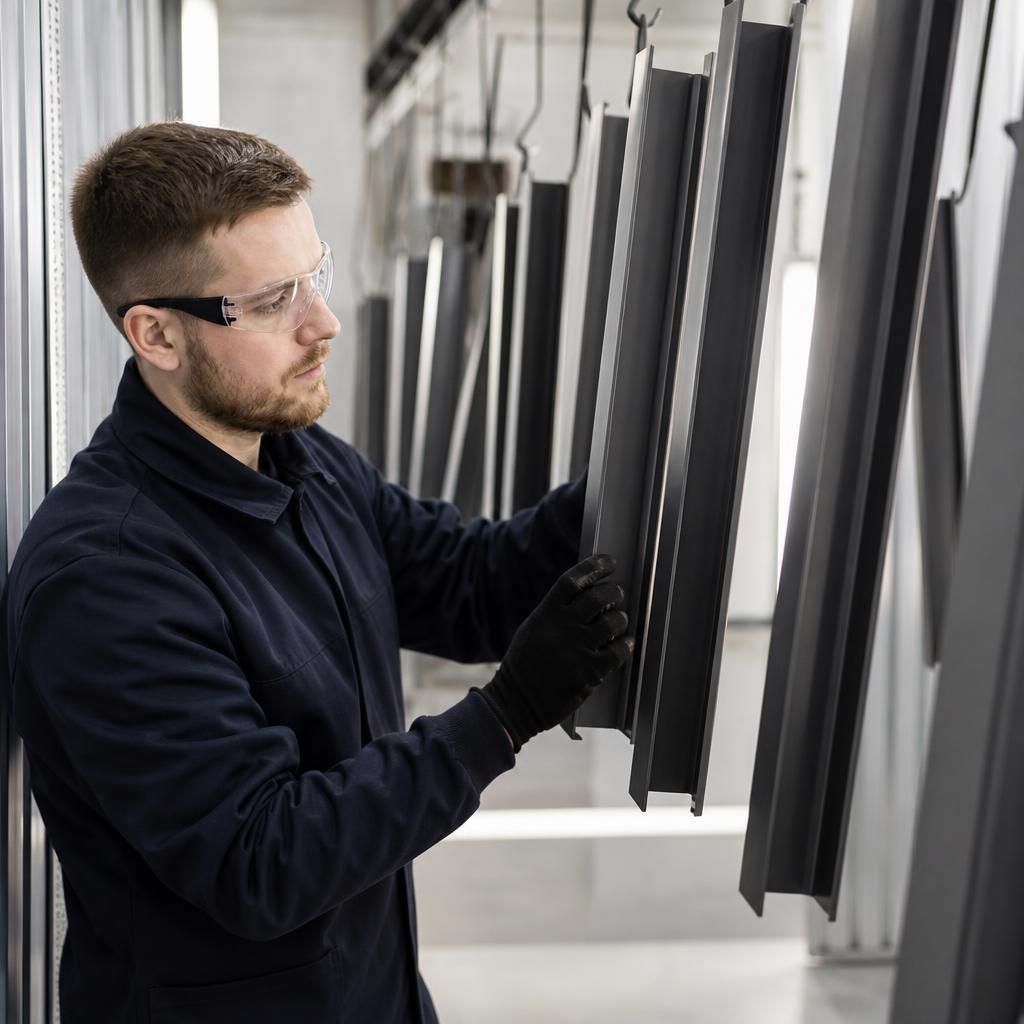
A further benefit of Interpon D2015 and D2525 finishes is that the coated aluminium can be inspected before it reaches the installation stage. Colour, gloss, coverage and visible surface defects can be checked against the agreed specification while the components are still at the coating facility. This allows any issue to be identified before the parts are incorporated into a façade, window system or other assembly, where correction would be more disruptive.
For projects with repeated aluminium profiles or panels, this inspection point also supports clearer quality control between the coating, fabrication and installation stages. The specified finish can be recorded as part of the component’s production documentation, helping project teams verify that delivered parts correspond with the intended coating system.
Discuss Your Interpon D2015 or D2525 Aluminium Project
Discuss your aluminium project with the coating team to assess whether Interpon D2015 or D2525 is appropriate for its exposure, design and specification requirements. Provide the component details and finish expectations for an informed coating recommendation.