

What are the key differences in performance and application between Interpon D2015 and D2525 finishes for industrial aluminium projects?
Interpon D2015 is a standard-durability architectural finish for aluminium in less demanding environments, while Interpon D2525 provides higher resistance to UV exposure, weathering and colour or gloss change for more demanding external applications. Both are applied as powder coatings, but the appropriate choice depends on the project’s exposure conditions, required durability and specified coating system.
The principal difference is the level of long-term weathering performance specified for each coating system. Interpon D2015 and Interpon D2525 are both powder-applied finishes for aluminium, so the basic application sequence is similar, but D2525 is selected where the finished component must retain its appearance and protective performance under more severe or prolonged exposure. The correct choice should therefore be based on the building location, exposure severity, design life, colour requirements and the coating specification—not on application method alone.
Performance during service
- Resistance to ultraviolet exposure: D2525 is intended for projects where sustained sunlight creates a greater risk of fading, chalking or loss of gloss. D2015 can be appropriate where the exposure and specified durability are less demanding.
- Colour and gloss retention: The higher-performance D2525 system is generally considered where retaining the original visual finish is important over a longer external service period. This can be particularly relevant to curtain walling, window systems, façade panels, screening and other visible aluminium elements.
- Weathering demands: D2525 is more suitable for façades and components exposed to a combination of sunlight, rain, moisture and changing temperatures. D2015 may be suitable for less severe environments when the project specification permits it.
- Specification margin: D2525 provides a greater performance margin where the consequences of premature appearance change, recoating or component replacement would be significant. That does not make it the automatic choice for every aluminium project; the coating class must still match the stated requirements.
Neither finish removes the need for correct substrate preparation or good design. Water traps, poorly sealed joints, damaged edges, incompatible fixings and contamination can affect a coated aluminium assembly regardless of the selected product. The coating protects the prepared surface; it cannot compensate for faults in fabrication, detailing or installation.
Application similarities
Both finishes are normally applied using a controlled powder-coating process. Aluminium components are inspected, cleaned and pretreated before powder is applied electrostatically and cured in an oven. The applicator must follow the relevant technical data and project specification for the chosen finish, including the approved pretreatment, application conditions, coating coverage and curing schedule.
Good process control is particularly important on aluminium because its surface condition, alloy, previous treatment and fabrication residues can influence adhesion and corrosion resistance. Weld areas, drilled holes, cut ends, folds and recessed sections require careful attention. Complex shapes may also need adjustments to racking, gun access and powder application so that edges, corners and less accessible surfaces receive suitable coverage.
Where the application decision differs
- Assess the exposure before specifying the product. Consider whether the component is external or internal, the degree of direct sunlight, its position on the building, local moisture and pollution conditions, and whether it is sheltered or fully exposed.
- Confirm the required durability class. The project designer, architect or coating specifier may identify a required performance category, approved system or warranty condition. The selected finish should be checked against that requirement rather than chosen solely by colour or price.
- Check the colour and gloss combination. Dark, saturated and highly visible colours can make changes in gloss or colour more noticeable. The coating supplier’s approved range and technical guidance should be consulted for the intended finish, especially on prominent elevations.
- Use the specified pretreatment and curing process. D2525 cannot achieve its intended performance if the aluminium is inadequately prepared, the powder is applied outside the recommended parameters or the coating is under-cured or over-cured.
- Control handling and installation damage. Finished parts should be protected during packing, transport and assembly. Scratches, impact damage and poorly designed contact points can expose the substrate and require an appropriate repair procedure.
Typical project implications
D2015 may be considered for aluminium components where the environmental exposure and design requirements fit its standard-durability classification. D2525 is the more appropriate direction when a project places greater emphasis on external weathering resistance, long-term appearance retention or reduced risk of early cosmetic deterioration. High-visibility architectural work, exposed elevations and projects with a longer intended service life commonly warrant closer consideration of the higher-performance system.
For industrial aluminium projects, the decision should also account for the component’s role. A concealed bracket, internal item or sheltered part may not need the same specification as a visible façade panel or external framing system. Conversely, a component that is difficult to access for future maintenance may justify a higher-performance finish even if its immediate exposure appears moderate.
What the applicator should verify
Before production, the coating specification should identify the aluminium alloy and condition, pretreatment system, required finish, colour, gloss level, coating coverage, curing requirements, inspection criteria and any limits on repair. Sample panels or an approved reference should be used where appearance consistency matters. For batch work, parts should be reviewed for dimensional fit, racking marks and any areas that need masking before coating.
A Midlands powder-coating specialist can help interpret the project specification, assess component geometry and establish whether D2015 or D2525 is the more suitable route for the intended exposure. Collection and delivery options can also be considered for batches of aluminium components from manufacturers, fabricators and construction businesses across the Midlands and surrounding areas.
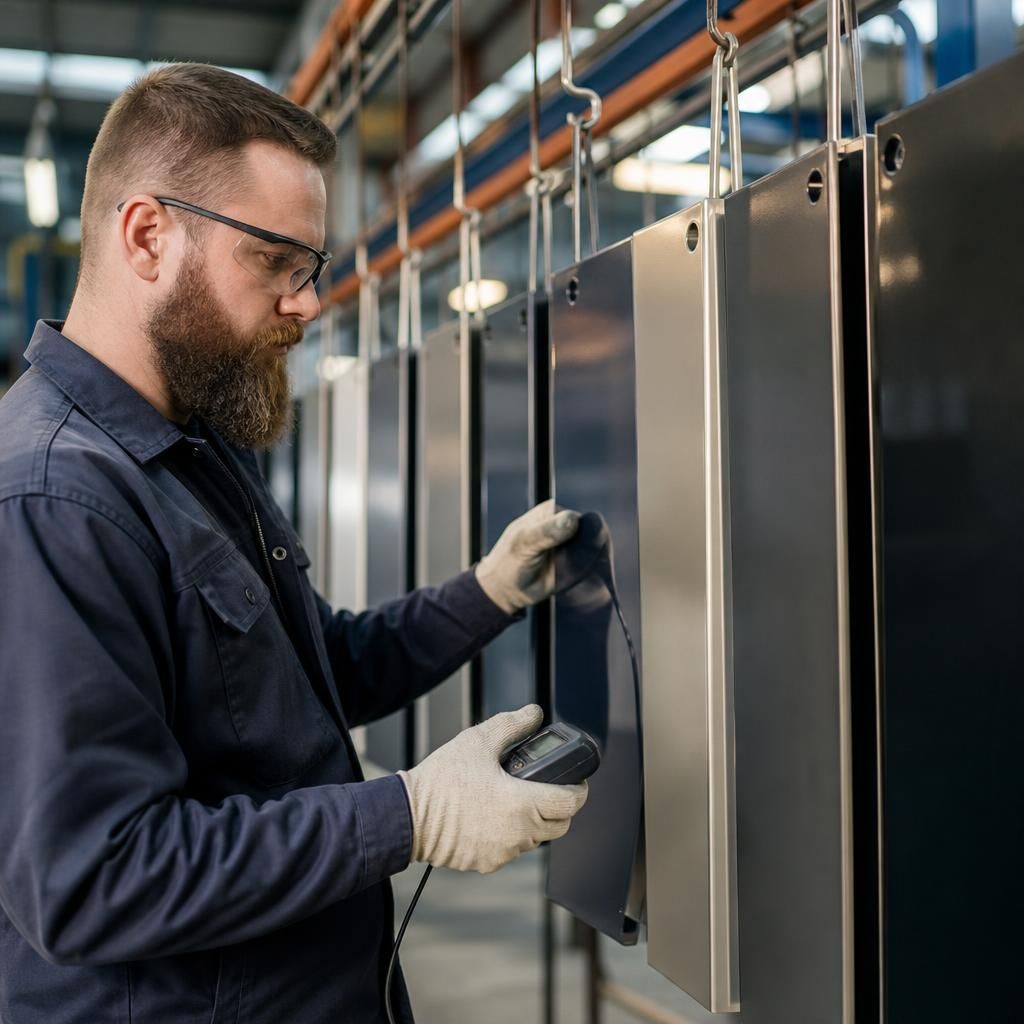
The D2015 and D2525 designations describe expected weathering performance, not a guarantee that every finished component will perform identically in service. During inspection, appearance and coating integrity should be considered separately. Colour and gloss are relevant to the visual specification, while continuity of coverage, adhesion and freedom from coating damage relate to the protective function of the finish.
This distinction matters when comparing samples or completed batches. A D2525 finish may offer the more suitable weathering class for a demanding project, but visible defects, inconsistent coverage or damage incurred during handling still require attention under the agreed inspection and repair requirements. The product class should therefore be assessed alongside the quality of the applied coating system.
Discuss the right Interpon D2015 or D2525 finish for your project
Discuss your aluminium components, exposure conditions and project specification with a powder-coating specialist to assess whether Interpon D2015 or D2525 is the more suitable finish. Share drawings or sample parts where geometry and appearance requirements need closer review.