

How do Interpon D2015 and D2525 coatings affect the longevity and maintenance of aluminium surfaces in various industrial applications?
Interpon D2015 and D2525 powder coatings help extend the service life of aluminium by providing a durable, protective finish that resists environmental exposure and reduces the risk of surface deterioration. In industrial applications, longevity depends on the selected system, aluminium preparation and exposure conditions, while maintenance generally involves regular inspection and cleaning with suitable, non-abrasive methods.
Interpon D2015 and D2525 coatings can extend the usable life of aluminium by separating the substrate from moisture, pollutants, chemicals and mechanical contact. The principal difference in practice is the level of durability required: D2015 is suited to applications with established exposure demands, while D2525 is selected where a higher-performance finish is appropriate for more demanding or longer-term architectural and industrial use. Neither coating creates a fixed service life on its own; the result depends on specification, preparation, application quality and the environment.
How the coating protects aluminium
Aluminium naturally forms an oxide layer, but untreated or poorly protected areas can still suffer from staining, surface contamination and localised corrosion, particularly where deposits remain trapped against the metal. A correctly applied powder coating provides a continuous barrier across the accessible surface. It also helps preserve the specified colour and gloss by limiting direct exposure to ultraviolet radiation, airborne pollutants and moisture.
The coating is most effective when the aluminium has been appropriately cleaned and pre-treated before powder application. Contamination, inadequate preparation, sharp uncoated edges, insufficient coverage or incorrect curing can create weak points. These defects may allow corrosion to develop beneath the coating or cause premature loss of adhesion. For that reason, the coating grade should be considered alongside the preparation and application specification rather than treated as a standalone solution.
Effect of choosing D2015 or D2525
- Interpon D2015: appropriate where the project requires a durable architectural powder-coated finish and the exposure conditions are within the system’s intended performance range.
- Interpon D2525: appropriate where the project places greater emphasis on extended coating performance and resistance to demanding environmental exposure, subject to the system specification and approved application process.
The choice should reflect the component’s location, expected exposure, appearance requirements, access for future maintenance and the consequences of recoating or replacement. A sheltered internal component, a façade element exposed to weather and a metal part used in an industrial setting may not justify the same coating specification. Coastal air, industrial pollutants, persistent condensation, road contamination and contact with cleaning chemicals can all increase the demands placed on the finish.
Longevity in different industrial applications
For architectural aluminium, including panels, framing and other visible building elements, long-term performance depends heavily on exposure to sunlight, rainfall, airborne deposits and the design of joints or recesses. Drainage and ventilation should prevent water from being retained against the coated surface. Where aluminium interfaces with other materials, the design should also reduce crevices and avoid conditions that concentrate moisture at the coating edge.
In manufacturing and fabrication, coated aluminium may be handled, stacked, assembled or transported after application. Abrasion at contact points, impact from tools and damage during installation can reduce the protective benefit even when the original finish was correctly applied. Components should therefore be packed, stored and installed in a way that avoids scraping or compressing the coating. Any damage should be assessed and repaired using a method compatible with the specified system.
Automotive and engineering components can face additional contact with oils, process residues, fuels, cleaning agents or other chemicals. Resistance should be checked against the actual substances and concentrations involved rather than assumed from the coating name alone. A finish that performs well in a sheltered fabrication environment may require a different specification where components are repeatedly exposed to chemicals, heat or abrasion.
Maintenance considerations over the coating’s service life
Maintenance is primarily intended to remove substances that could gradually attack, stain or obscure the finish. The cleaning method should match the coating manufacturer’s guidance and the level of contamination. Neutral or otherwise approved cleaning solutions, soft equipment and clean water are generally preferable to aggressive chemicals, abrasive pads, metal scrapers or unapproved solvents. Strong alkaline or acidic products can alter the appearance or reduce the integrity of the coating.
Areas that deserve particular attention include lower edges, horizontal ledges, joints, fixings, drainage points and sheltered recesses. These locations can retain dirt and moisture for longer than exposed faces. Maintenance should also include checking for blistering, flaking, cracking, unusual colour change, loss of gloss, corrosion staining or impact damage. A small defect is easier to investigate before moisture reaches a larger area beneath the film.
Where damage is found, the cause should be identified before applying a touch-up material. For example, recurring abrasion, trapped water, incompatible sealant or galvanic contact may continue to affect the component after a cosmetic repair. Repairs should be specified for the particular coating, substrate and exposure, and larger areas of deterioration may require professional assessment rather than repeated local painting.
How to protect long-term performance
- Define the exposure environment before selecting D2015 or D2525, including sunlight, moisture, pollutants, salts, chemicals and abrasion.
- Specify suitable aluminium preparation and pre-treatment, with attention to edges, joints, recesses and areas that are difficult to coat uniformly.
- Control handling, packaging and installation so that the cured surface is not damaged after application.
- Use compatible sealants, fixings and adjacent materials to avoid staining, crevice corrosion or chemical attack at interfaces.
- Record the cleaning products and repair materials used so that future maintenance does not introduce incompatible substances.
In practical terms, D2015 and D2525 should be viewed as parts of a complete aluminium protection system. D2525 may be the more suitable choice where the exposure or expected durability requirement is demanding, but selecting it cannot compensate for poor substrate preparation, unsuitable design or inadequate care. A sound specification links the coating grade to the application’s environment, the required appearance and the maintenance access available throughout the component’s intended use.
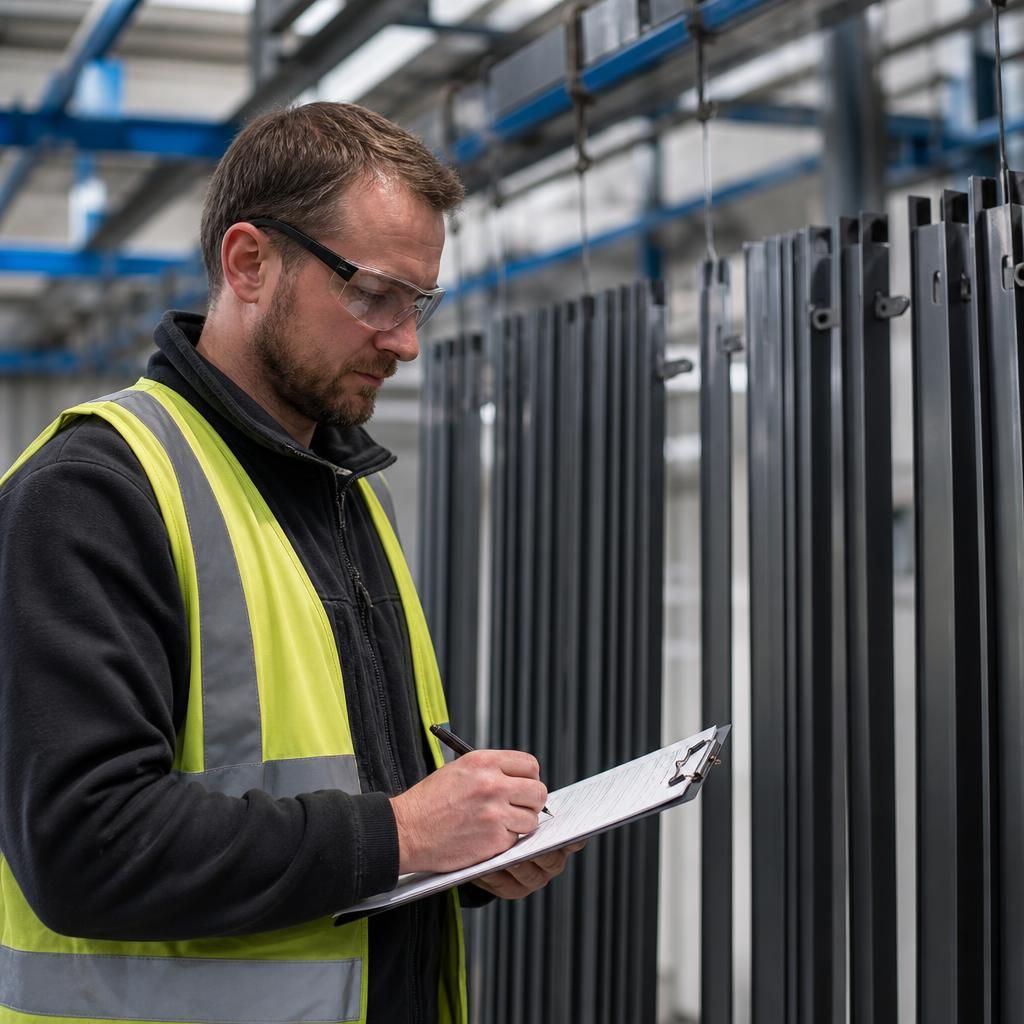
Maintenance records help distinguish temporary soiling from progressive coating deterioration on aluminium surfaces finished with Interpon D2015 or D2525. Recording the location and appearance of marks, changes in gloss or colour, and any recurring damage creates a reference for assessing whether a defect is isolated or developing across a component or installation.
For industrial assets, records should also note the substances encountered, cleaning methods used and any repair materials applied. This information supports more consistent future inspections and helps identify whether deterioration is linked to the exposure, component design, handling or an incompatible maintenance product. The coating specification can then be reviewed against the actual conditions rather than relying on appearance alone.