

How does the choice of powder coat colour affect the overall cost and maintenance of aluminium components in various sectors?
Powder coat colour can affect the overall cost of aluminium components through pigment availability, finish specification, batch size and production changeovers, while the chosen colour also influences how readily dirt, fading or surface marks are noticed. Maintenance is generally determined more by the coating system, exposure conditions and cleaning method than by colour alone, although lighter and darker shades can have different appearance-retention requirements in demanding sectors.
The colour of a powder-coated aluminium component usually has a secondary effect on its total cost. The larger financial decisions are the required coating performance, pre-treatment, component geometry, preparation standard, inspection requirements and exposure environment. Colour becomes more significant where a project requires a close visual match, a particular level of gloss, consistent appearance across separate production runs or long-term retention of a defined finish.
Initial specification costs can increase when the colour is part of a tightly controlled design or branding requirement. A standard, readily available colour is generally simpler to specify than a bespoke shade requiring approval samples, colour matching or additional inspection. The apparent colour can also vary with gloss level, surface texture, film thickness and the underlying aluminium preparation, so the specification should identify the complete finish rather than colour alone.
For architectural aluminium, façades, windows, doors, curtain walling and similar components, the cost assessment should include how the finished parts will be viewed together. A small difference between profiles may be more noticeable on a continuous elevation than on separate engineering parts. Agreeing an approved sample and defining acceptable variation before production can help prevent avoidable rework, although the required inspection standard itself may add to the project’s processing requirements.
Sector and exposure affect the financial impact of colour. Aluminium used internally in machinery, equipment or fabricated assemblies may face limited ultraviolet exposure and less demanding cleaning conditions. External construction components, transport parts and equipment used in industrial environments may be exposed to sunlight, moisture, pollutants, abrasion or repeated washing. In these applications, the coating formulation and pre-treatment need to be selected for the environment; choosing a colour without considering those conditions can lead to higher maintenance or earlier refurbishment costs.
Colour can also influence the temperature reached by an exposed surface. Darker finishes generally absorb more solar energy than lighter ones, which can contribute to higher surface temperatures. For aluminium profiles, panels or enclosures exposed to strong sunlight, the designer should consider thermal expansion, joint movement, seal compatibility and the operating limits of any materials fitted to the coated component. This is not solely a colour issue, but colour can form part of the thermal assessment where dimensional stability matters.
Maintenance is governed primarily by the coating system and environment. A suitable powder coating with appropriate pre-treatment can protect the aluminium from routine exposure, but it still needs inspection and cleaning. Maintenance planning should account for the component’s location, access, airborne contamination, contact with chemicals and the likelihood of mechanical damage. Industrial parts may require more frequent checks than protected internal components, regardless of whether the finish is light or dark.
Cleaning should use methods compatible with the coating and aluminium. Remove deposits using a soft cloth, sponge or other non-abrasive method, with a mild cleaning solution where appropriate, followed by thorough rinsing and drying. Avoid aggressive solvents, strongly alkaline or acidic products, abrasive pads and uncontrolled pressure washing unless the coating supplier’s guidance specifically permits them. Residues left on the surface can affect appearance and may become more difficult to remove over time.
Different colours can make particular defects easier or harder to identify, but visual inspection should not be the only maintenance control. Check for loss of adhesion, cracking, blistering, corrosion at damaged areas, sharp scratches and deterioration around fixings or cut edges. A small impact should be assessed promptly because exposed aluminium or a damaged pre-treatment layer may create a local repair requirement even when the surrounding colour still appears sound.
Whole-life cost should include repair and replacement considerations. A component that is difficult to remove, located at height or integrated into a larger assembly may be expensive to access for re-coating. In such cases, selecting a coating system appropriate to the exposure and defining a practical inspection regime can matter more than choosing the cheapest initial colour option. If future replacement parts must match existing aluminium, retain the original colour reference, gloss description, texture and coating specification as part of the asset records.
Manufacturers and fabricators should also consider how colour affects production control. Parts assembled from different aluminium sections need consistent preparation and coating conditions so that the finished items appear coherent. Colour approval, identification of batches, protection during transport and careful handling after coating can reduce the risk of cosmetic damage and rejected components. These controls are especially relevant to visible architectural work and automotive or equipment parts where finish consistency forms part of the quality requirement.
For a reliable decision, compare colours against four criteria: the required appearance, the exposure environment, the cleaning and inspection regime, and the consequences of repair or replacement. The most economical choice is not necessarily the lowest-cost colour at the coating stage; it is the colour and coating specification that meets the visual requirement while remaining practical to manufacture, maintain and match throughout the component’s service life. A Midlands powder coating specialist can assess the aluminium parts, intended sector and collection or delivery requirements before confirming the appropriate process.
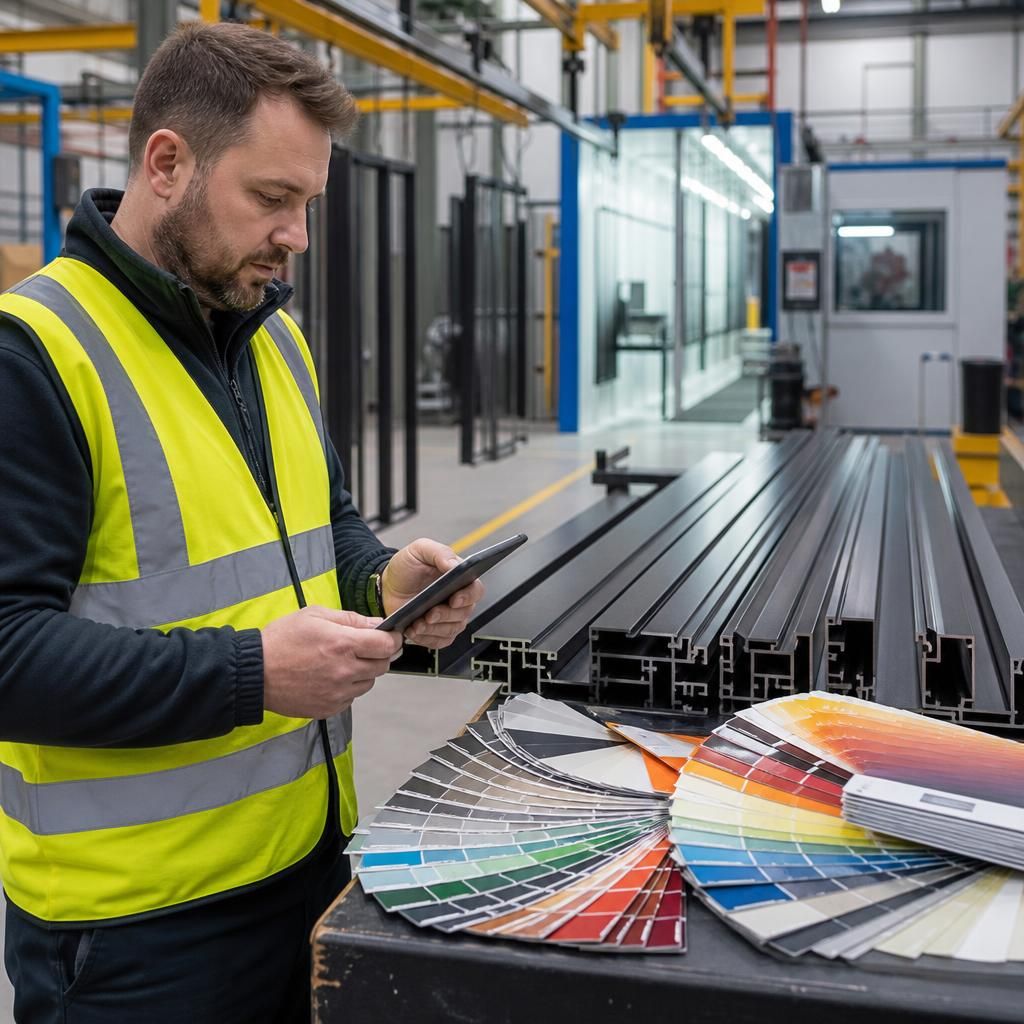
Colour should be specified separately from the performance requirements of the powder coating. The same visual shade may be available with different levels of resistance to ultraviolet exposure, chemicals, abrasion or weathering, so a colour code alone does not define how an aluminium component will perform. For components used in construction, transport or industrial settings, the specification should therefore state the required colour, gloss and texture alongside the appropriate coating system and pre-treatment. This prevents a lower-cost colour selection from being mistaken for a complete durability specification and helps keep future maintenance decisions aligned with the component’s actual exposure.