

How do different powder coat finishes affect the appearance and protection of aluminium surfaces?
Powder coat finishes alter aluminium’s visual character through differences in colour, gloss level and texture, while the coating system and surface preparation determine how effectively it resists weathering, abrasion and corrosion. Gloss finishes provide a smoother, more reflective appearance, whereas matt and textured finishes reduce reflection and can help disguise minor surface marks.
Powder coat finish affects aluminium in two separate ways: its visual effect is determined mainly by colour, sheen and surface texture, while protection depends more heavily on the powder formulation, coating thickness, pretreatment and curing process. A carefully specified finish therefore needs to meet both the required appearance and the environmental demands placed on the component.
Gloss level influences how a finished component is perceived and used. Higher-sheen surfaces give a clean, reflective appearance that can suit architectural trims, equipment panels and visible fabricated parts. Lower-sheen finishes create a softer appearance and generally draw less attention to reflections. The choice should take account of surrounding materials, lighting and the likelihood of handling, cleaning or contact with other components.
Texture changes both the visual character and the practical behaviour of the surface. Fine-textured coatings can provide a more tactile, low-reflection finish, while heavier textures give a pronounced decorative effect. Textured surfaces may help make minor handling marks less noticeable, but their profile can also retain more dust or make detailed cleaning more difficult. This matters for aluminium used in machinery, enclosures, furniture, transport components and other applications where appearance is inspected regularly.
The powder chemistry should be selected according to the exposure conditions, not colour alone. Aluminium installed outdoors may experience sunlight, moisture, temperature changes and atmospheric pollutants, so the coating must be suitable for the expected level of weathering. Components used indoors may instead require resistance to abrasion, impact, oils, cleaning agents or industrial contaminants. A decorative finish intended for a mild indoor environment should not automatically be treated as equivalent to a system specified for demanding exterior use.
Surface preparation is essential because powder coating protects the aluminium only when it forms a sound, continuous bond. The substrate should be cleaned to remove oil, dirt and residues, with suitable pretreatment used to support adhesion and help limit corrosion at defects or exposed edges. Welds, sharp corners, drilled areas and joints deserve particular attention because uneven geometry can affect coverage and create vulnerable points. Contamination or unsuitable preparation can lead to poor adhesion, blistering, premature peeling or visible defects regardless of the selected finish.
Film build and curing also affect the final result. Insufficient coverage can reduce the coating’s ability to withstand service conditions, whereas excessive or uneven build may affect fit, edge definition and consistency. The powder must be cured in accordance with its technical requirements so that the coating develops the intended hardness, adhesion and chemical resistance. Components with tight tolerances, threaded areas or mating faces may need masking or allowance in the design before coating.
For aluminium assemblies, the most appropriate finish is usually selected by considering:
- the required colour, gloss and texture;
- whether the component is used indoors or outdoors;
- exposure to sunlight, moisture, salt, chemicals, abrasion and impact;
- the visibility of the part and the importance of colour consistency between batches;
- cleaning methods and the risk of dirt retention;
- component geometry, edges, joints, fixings and dimensional tolerances; and
- the required pretreatment, powder type, film build and curing specification.
Colour and finish consistency should be agreed before production, particularly where separate aluminium parts will be viewed together. Metallic, textured or low-sheen effects can appear different under changing light and may be more sensitive to application direction and batch variation than a simple uniform finish. A representative sample or approved reference can help establish the expected appearance before a larger batch is processed.
Maintenance should match the finish rather than relying on abrasive methods. Regular removal of dirt and deposits with a suitable non-abrasive cleaning process helps preserve the coating’s appearance. Harsh solvents, aggressive scouring and unsuitable pressure-washing practices can damage the surface or reduce its visual quality. If the coating is chipped or cut through, the exposed aluminium should be assessed and repaired using a compatible method appropriate to the service environment.
For a B2B project, the specification should therefore describe more than a RAL colour or a general request for powder coating. It should identify the intended finish, service environment, required appearance, substrate condition, performance expectations and any dimensional limitations. This gives the coating specialist enough information to select and apply a system that balances the appearance of the aluminium with the protection required during its working life.
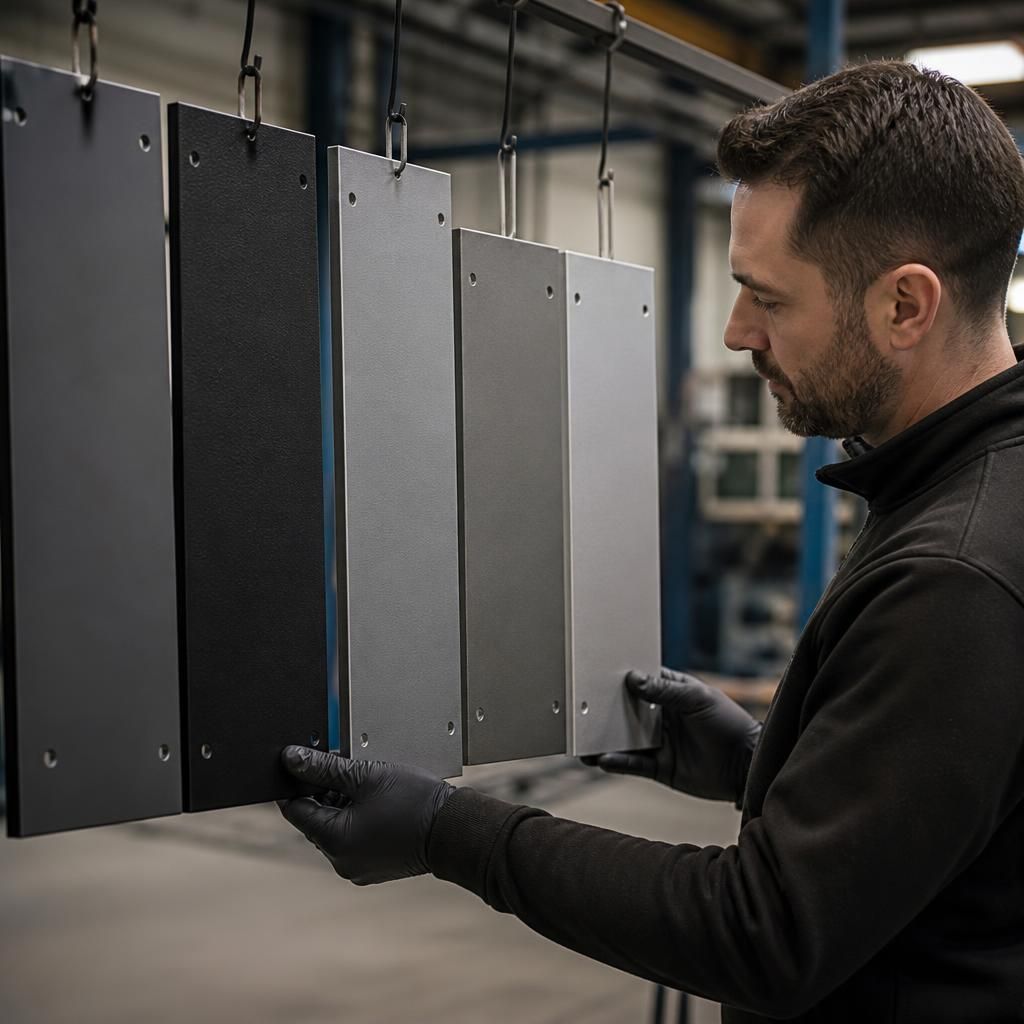
The resin system behind a powder coat can change aluminium’s protection even when two finishes look similar. Polyester powders are generally selected for external components because they offer better resistance to ultraviolet exposure and weathering. Epoxy-based powders provide strong resistance to chemicals and abrasion in many indoor applications, but prolonged sunlight can cause chalking and loss of appearance. Hybrid epoxy-polyester systems are commonly used where indoor durability is required without the full exterior weathering demands of a polyester system.
This distinction matters when comparing finish samples. A smooth black or matt grey appearance does not, by itself, indicate how the coating will perform in service. The specification should identify the resin chemistry alongside the colour, gloss and texture, taking account of whether the aluminium will face sunlight, cleaning chemicals, oils, handling or industrial contamination. Selecting the appropriate system helps ensure that the chosen appearance remains suitable for the component’s actual environment.
Discuss your aluminium powder coat finish requirements
Share your aluminium components, intended environment and required appearance with the powder-coating.co.uk team to discuss a suitable finish specification. Collection and delivery options can also be considered for projects across the Midlands and surrounding areas.