

What factors should be considered when selecting high gloss silver powder coating for aluminium projects?
Selecting high gloss silver powder coating for aluminium projects requires assessing the required appearance, service environment, durability, component design and surface-preparation needs. The specification should also confirm the appropriate powder formulation and application method, so the finish suits the aluminium substrate and intended use.
The right high gloss silver powder coating for an aluminium project is selected by balancing the required visual effect with colour consistency, production controls, component tolerances and the conditions in which the finished parts will be assessed. A suitable specification should define not only “silver” and “high gloss”, but also how the finish will be measured, approved, reproduced and inspected across the order.
Define the appearance precisely. Silver powders can vary from bright, reflective finishes to softer metallic shades. Agree the target shade, gloss level, surface texture and acceptable visual variation before production. A physical sample or approved reference panel is more useful than a colour name alone, particularly where the coated parts will sit alongside existing aluminium, glass, signage or painted components.
- Gloss: confirm whether the requirement is a strong reflective appearance or simply a smooth, bright finish. Gloss perception can change with viewing angle, lighting and surrounding surfaces.
- Metallic effect: metallic powders may display differences in flake orientation or reflectivity between panels. The specification should state whether close visual matching between separate components is essential.
- Surface appearance: decide whether minor texture, edge build-up or visual variation is acceptable on less visible faces and profiles.
Consider how the parts will be manufactured and handled. Aluminium sections, castings, sheet components and machined parts can present different coating challenges. Complex profiles, recesses, sharp transitions, holes and overlapping faces may affect how consistently the finish is deposited and inspected. Parts should therefore be reviewed as a complete design rather than judged only by their largest flat face.
Dimensional tolerances are also important. Powder coating adds a layer to the surface, which can affect close-fitting assemblies, threaded holes, bearing seats, sliding interfaces and areas that must remain electrically or mechanically connected. Identify these locations on the drawing and specify masking, clearance or post-coating treatment where required. Masking requirements should be agreed before manufacture because they can influence racking, handling and the finished appearance.
Assess the production quantity and repeatability requirement. One-off components and large batches may need different controls. For batch work, consider whether parts will be coated together, whether they must match previous production, and whether different aluminium alloys or component shapes will appear in the same visual assembly. Keeping an approved reference sample and recording the agreed powder specification helps reduce ambiguity when repeat orders are placed.
Ask how colour and gloss will be checked. A robust inspection plan may include visual comparison under controlled lighting, measurement of gloss, checks for pinholes or contamination, and confirmation that masked areas and fixing points are correctly positioned. Acceptance criteria should distinguish between a genuine coating defect and a difference caused by the geometry, reflectivity or viewing angle of a metallic finish.
Check compatibility with the finished assembly. High gloss silver aluminium may be combined with other coated metals, anodised components, stainless steel or plastics. These materials can reflect light differently even when their nominal colour appears similar. If parts are intended to form one visible elevation or enclosure, assess representative samples together rather than approving each material in isolation.
Review technical documentation and traceability. The powder supplier’s technical data should confirm suitability for aluminium, the required curing conditions, recommended film characteristics and relevant exposure limitations. The coating specification should record the selected product, colour reference, gloss requirement, substrate, masking details and inspection method. This information supports consistent production and makes it easier to investigate any variation.
Finally, obtain approval on representative aluminium components before committing to the full project. A sample can reveal differences caused by profile geometry, alloy, edge detail and assembly context that are not apparent from a powder swatch. For a specialist coater, providing accurate drawings, quantities, masking instructions and reference samples at quotation stage allows the finish to be assessed against the practical requirements of the project rather than selected on colour alone.
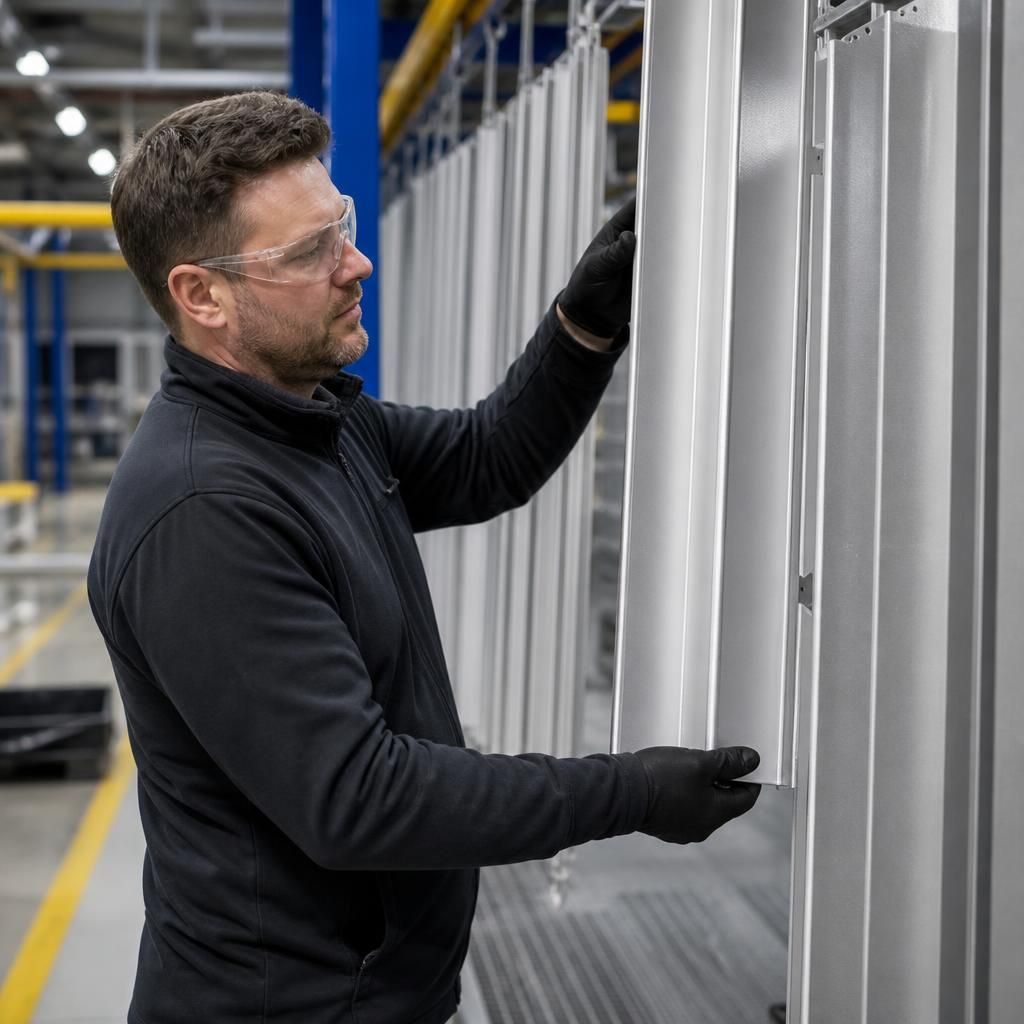
The condition and preparation of the aluminium substrate are critical factors when selecting a high gloss silver powder coating. A highly reflective finish can make scratches, dents, sanding marks, weld discolouration and surface irregularities more noticeable than a textured or low-sheen coating, so the required level of pre-treatment should be agreed before the powder is chosen.
Check whether the components carry machining oils, handling residues, oxidation or previous finishes, and establish how these will be removed without affecting the profile or critical dimensions. The preparation system should be suitable for aluminium and compatible with the selected powder formulation, supporting adhesion and helping to reduce defects such as pinholes, blistering or premature loss of finish. Castings and recycled aluminium may also require closer assessment because porosity or variable surface condition can influence the final appearance.
Where the appearance is important, assess a prepared and coated sample made from the same alloy and manufactured using comparable processes. This shows whether the proposed preparation produces the smooth, uniform base needed for a consistent high gloss silver result, rather than relying solely on the appearance of an uncoated sample or powder card.
Discuss your high gloss silver aluminium powder coating requirements
Discuss your aluminium component requirements with Powder-coatings.co.uk and provide the relevant drawings, quantities and service conditions for assessment. The coating team can help determine whether the proposed high gloss silver finish is suitable for the project.