

What are the key differences between high gloss silver powder coating and traditional paint finishes?
High gloss silver powder coating is a dry, heat-cured finish that typically provides a harder, more uniform and more durable surface than traditional liquid paint, with a consistent metallic appearance. Traditional paint offers easier touch-ups and greater flexibility for site application, while powder coating can offer better long-term value for suitably prepared aluminium components because it is applied as a controlled factory finish.
High gloss silver powder coating and traditional paint differ mainly in how the finish is formed, how the metal must be prepared, how easily the surface can be altered or repaired, and how the finished component is handled. Powder coating uses electrically charged dry particles that are deposited on the aluminium and then heated until they flow and cure into a continuous film. Traditional paint uses liquid resin and pigment, applied by spray, brush or roller, with the coating forming as its carrier evaporates or reacts during drying.
Application method and production control: Powder coating is normally carried out in a controlled coating facility. Components must be suitable for an oven process, correctly racked and electrically connected so the powder can be attracted to the surface. This makes the method well suited to repeat production, batches and components that can be transported for processing. Liquid paint is more adaptable to large fixed structures, assembled items and work that cannot be placed in an oven. It can also be applied on site, although achieving the same control over dust, humidity, spray conditions and film build may be more difficult.
Aluminium preparation is important with both finishes, but the preparation sequence is not identical. The surface may need cleaning, degreasing and removal of oxidation, followed by a suitable pre-treatment to support adhesion and corrosion resistance. Any oil, fabrication residue, sharp burrs or embedded contamination can affect the result. Powder coating also requires the component to be free from substances that could release gases during curing. Traditional paint may use primers or multiple coating layers to deal with particular substrates and can be selected around a wider range of site conditions.
Appearance and surface texture: A high gloss silver powder finish gives the component a reflective, metallic appearance, but the final result depends on the powder formulation, application settings, curing conditions and the condition of the aluminium beneath it. Gloss finishes tend to show scratches, dents, weld marks and uneven preparation more readily than lower-sheen finishes. Powder can also develop a slight textured effect or orange-peel appearance if the film build or curing conditions are unsuitable.
Traditional paint provides more options for modifying the visual result during application. The operator can adjust colour, sheen, shading and the number of coats, and specialist paint systems can create effects such as fine metallic, satin or textured finishes. However, metallic liquid paint can be sensitive to spray direction, overlap and drying conditions. Changes in application technique may produce visible variation in the orientation of metallic particles, particularly across large panels.
Film build and component design: Powder coating can form a substantial protective layer in a single coating cycle, but corners, recesses, threaded sections and enclosed areas need careful consideration. Faraday-cage effects can make it harder for powder to reach deep recesses or internal corners. Racking points and areas that must remain uncoated should be identified before processing. Liquid paint can be applied in several thinner layers and may offer more control around intricate details, masking boundaries and areas requiring a gradual transition.
The heat used for powder curing also affects material selection. Aluminium components must tolerate the curing cycle without unacceptable distortion, loss of temper, movement of inserts or damage to attached parts. Rubber, plastic, adhesive-backed labels and some seals may need to be removed or protected. Traditional paint generally avoids this oven requirement, which can make it more suitable for heat-sensitive assemblies or components that cannot be dismantled.
Repair and future alterations: Liquid paint is usually easier to modify after installation. A damaged area can be cleaned, primed and recoated locally, and a new colour can be introduced without processing the entire component. A repaired high gloss silver powder-coated surface may require careful preparation and a compatible liquid repair coating, while achieving an exact match to an aged or weathered metallic finish can be difficult. For that reason, the likely repair environment and the availability of replacement parts should be considered before specifying the finish.
Environmental and handling considerations: Powder coating does not rely on a liquid solvent carrier during application, and unused powder may often be collected within a suitable production system. This can simplify material handling compared with solvent-based paint, although the coating process still requires preparation chemicals, controlled equipment and energy for curing. Liquid paint systems vary considerably: some are water-based, while others contain solvents and require managed ventilation, storage and waste procedures. The relevant comparison therefore depends on the particular paint system rather than on the word “paint” alone.
Cost and suitability: The lower-cost option is not determined by the coating material alone. Powder coating may involve preparation, masking, transport, racking and set-up costs, making the specification especially relevant to batch size, component dimensions and colour requirements. Traditional paint may require primer, several application stages and drying or rework time, but can be practical for one-off work, on-site application or components that cannot be oven cured. A fair assessment should compare the complete process, including preparation, handling, expected repairs and whether the finish needs to be renewed during the component’s service life.
For aluminium components that can be removed, prepared correctly and cured without damage, high gloss silver powder coating is generally selected when a factory-applied metallic finish and consistent production process are priorities. Traditional paint remains more appropriate where on-site application, heat sensitivity, frequent colour changes, local repair or highly flexible application methods matter more than the characteristics of a cured powder finish.
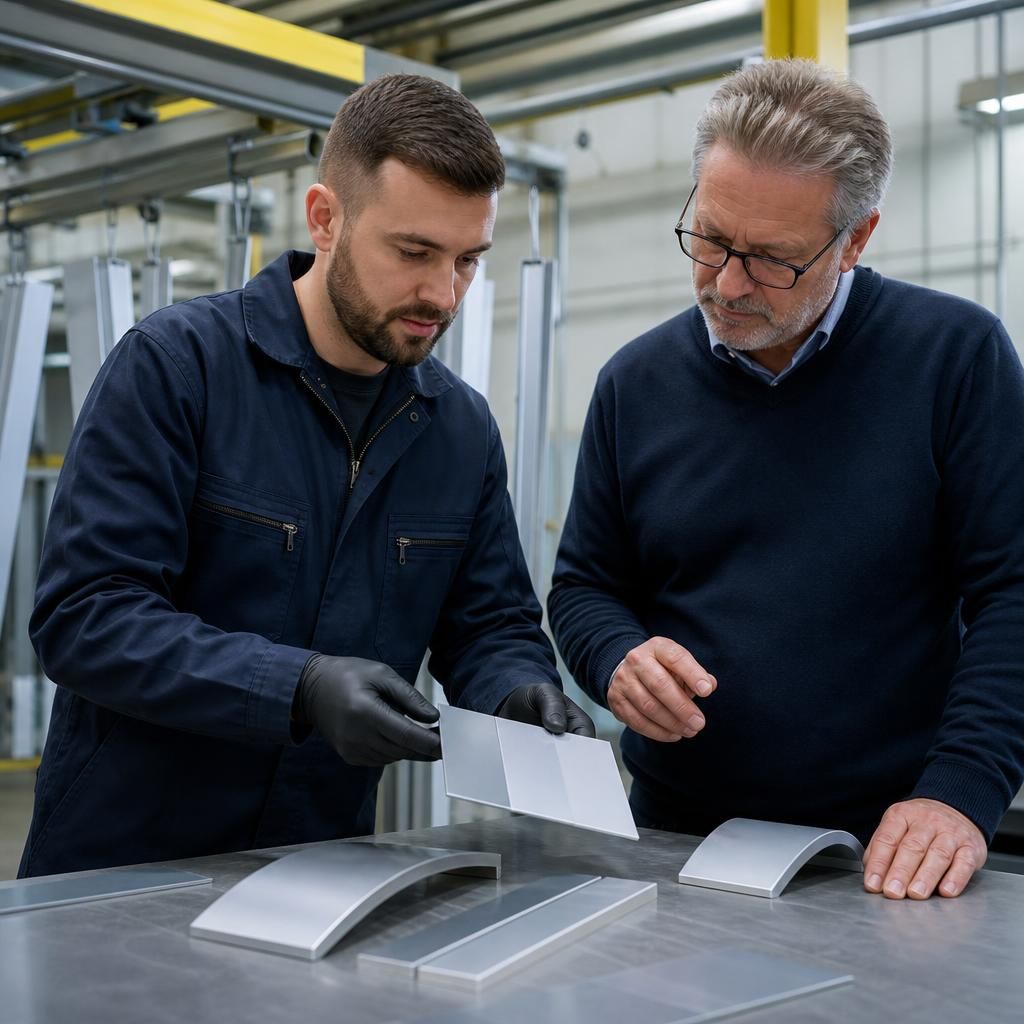
A key difference between high gloss silver powder coating and traditional paint is how the finished appearance is specified and checked. For powder coating, the required silver shade, gloss level, surface condition and acceptable variation should be agreed before production rather than judged only after the component has been coated.
A reference sample or approved control panel can provide a practical basis for inspection. Components should be assessed for visible contamination, coating defects and consistency under suitable lighting, with particular attention to areas that will be viewed together. This is important for repeat orders, as a metallic finish may appear different if the powder formulation, substrate condition or curing conditions change.
Traditional paint can often be adjusted during application by changing the mix or adding another coat. Powder coating is less flexible once cured, so clear acceptance criteria and an agreed finish sample are valuable when colour continuity matters across batches or replacement components.