

What maintenance and cleaning considerations should be taken into account for black powder coated aluminium to ensure long-term performance?
Black powder coated aluminium should be cleaned with clean water, a pH-neutral detergent and a soft cloth or sponge, then rinsed and dried to prevent residue and water marks. Avoid abrasive pads, harsh chemicals, pressure washing at close range and contact with aggressive contaminants, while inspecting periodically for scratches, chips or corrosion so damaged areas can be addressed before deterioration spreads.
Long-term performance of black powder coated aluminium depends on managing environmental exposure, removing contamination before it becomes firmly bonded, and dealing correctly with any coating damage. The black finish can make surface changes more noticeable, particularly where deposits, loss of gloss or uneven weathering develop, so maintenance should be planned around the component’s location and use rather than treated as a one-off task.
Assess the exposure conditions. Aluminium used indoors in a clean, dry environment generally requires less frequent attention than components exposed to coastal air, road spray, industrial emissions, building-site dust or persistent condensation. Salt deposits and airborne pollutants can remain on the coating and create a more aggressive surface environment when combined with moisture. Areas beneath ledges, around fixings, inside profiles and near drainage points may retain contamination for longer and deserve particular attention during routine maintenance.
Use a controlled cleaning method. Maintenance staff should follow a consistent process rather than applying increasingly strong chemicals when marks do not disappear immediately. Remove loose deposits without dragging grit across the surface, work in manageable sections, and use a separate clean cloth or sponge for final drying. Cleaning materials should be free from particles that could scratch the coating. New detergents, degreasers or specialist products should first be tested on a small, concealed area and assessed after drying.
Control chemical exposure. Powder coated aluminium can be affected by prolonged contact with substances such as cement residue, mortar, concrete splashes, strong solvents, concentrated acids, alkalis, cutting fluids and some sealants. These materials should not be allowed to dry onto the finish. If accidental contamination occurs, follow the chemical manufacturer’s handling guidance and the coating supplier’s recommendations rather than attempting to neutralise it with another unverified product. Chemical compatibility is also important when adjoining materials, joint sealants or cleaning systems are specified.
Pay attention to heat and sunlight. Black surfaces absorb more solar radiation than lighter finishes, which can increase surface temperature and make thermal movement more relevant on large panels, covers and assemblies. Maintenance should therefore include checking that drainage paths remain clear and that dirt or organic growth is not holding moisture against joints. Where components are installed as part of an assembly, movement points, gaskets and sealants should be maintained in accordance with the system designer’s instructions so that movement does not place unnecessary stress on the coating.
Deal with damage according to its severity. A small mark should not automatically be covered with an incompatible household paint or an unapproved aerosol. The correct repair depends on the depth and size of the damage, the surrounding environment and whether the aluminium substrate is exposed. Obtain a compatible repair specification for minor defects, and use a qualified refinishing or coating specialist where the affected area is extensive, corrosion is present or the component has a critical industrial function. Local repair may improve protection, but it will not always reproduce the original colour, gloss or texture exactly.
Keep maintenance records. For business-critical components, record the installation environment, cleaning products used, areas treated and any changes in appearance or coating condition. This creates a useful history when deciding whether a recurring deposit is caused by the surrounding installation, whether a sealant or process chemical is incompatible, or whether a component needs refinishing rather than further cleaning. Follow the coating applicator’s care instructions where they are available, as the approved method may vary according to the powder system and required finish.
Routine care should preserve the coating’s appearance and protective role, but maintenance cannot compensate for unsuitable installation conditions or severe chemical exposure. Where black powder coated aluminium forms part of a manufactured assembly, the cleaning regime should be agreed between the fabricator, installer and end user so that it does not conflict with other materials, seals or operational requirements.
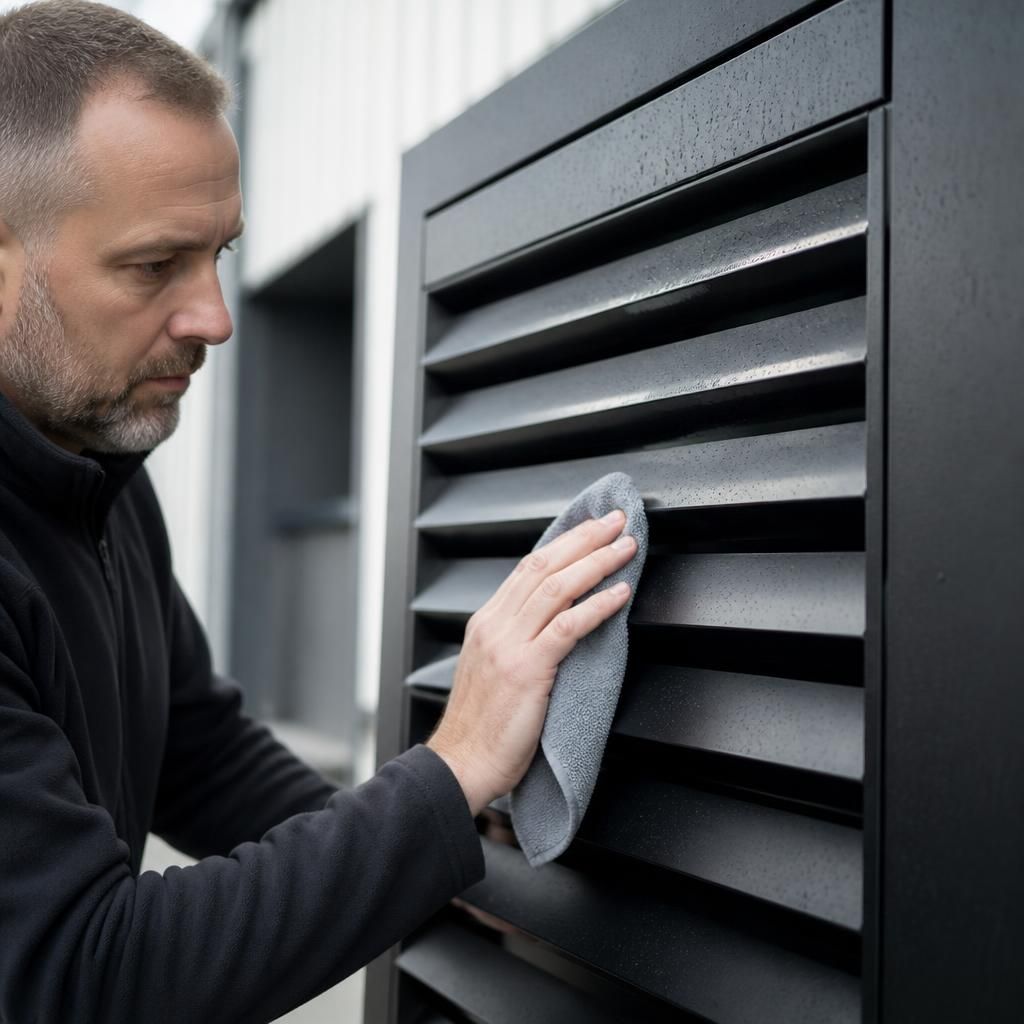
Cleaning should also be used to assess whether a change in appearance is surface contamination or deterioration of the coating itself. Dirt usually reduces the appearance of the finish temporarily and improves after washing, whereas persistent fading, chalking, uneven gloss or colour change after the surface has dried may indicate weathering or coating degradation. Inspect the aluminium in consistent daylight and compare sheltered areas with exposed faces. If the difference remains after careful cleaning, avoid repeated polishing or aggressive treatment, as this can create local variation and further alter the finish. The condition should be assessed before deciding whether the component needs a compatible refinishing process.