

What are the maintenance requirements for black powder coated aluminium to ensure its longevity?
Maintaining black powder coated aluminium involves regular cleaning with a mild detergent, inspecting the coating for damage, and addressing scratches, chips or corrosion before they spread. Avoid abrasive cleaners and harsh chemicals, as they can dull or weaken the finish and reduce its service life.
Maintaining black powder coated aluminium is mainly a matter of controlling the conditions around the coating, preventing mechanical and chemical damage, and repairing defects before the aluminium beneath becomes exposed. The powder coating itself is durable, but its service life also depends on the part’s design, installation, exposure to weather and pollutants, and the materials that come into contact with it.
Manage water and deposits
Aluminium components should be designed and positioned so water can drain away rather than collect in ledges, joints, recesses or behind fittings. Persistent moisture can leave staining and allow contaminants to remain against the coating. Clear blocked drainage paths and remove accumulated leaves, grit, cement dust, salt and other deposits using suitable non-abrasive methods. Particular care is needed on external components exposed to coastal air, de-icing salt, industrial pollution or road spray, because these contaminants can increase the risk of surface deterioration.
Prevent contact damage
Black finishes can show scuffs, rubbing and embedded dirt more readily than lighter colours. Avoid dragging metal parts across one another and use suitable separators during handling, transport and storage. Do not rest sharp-edged tools or abrasive materials against the finished surface. When components are dismantled, protect the visible faces and replace damaged washers, seals or spacers that could allow movement between adjoining parts.
Check that hinges, catches, brackets and fasteners are correctly aligned and secure. Movement or vibration can wear through the coating at contact points. Fasteners should be compatible with the aluminium and the surrounding environment; unsuitable dissimilar metals can contribute to galvanic corrosion when moisture is present. Isolation washers, coatings or sealants may be required where the design creates a risk of direct contact between incompatible materials.
Control chemical exposure
Powder coated aluminium should not be exposed unnecessarily to wet cement, mortar, plaster, concrete residue, concentrated cleaning products, solvents, strong acids or strong alkalis. Construction residues should be removed in accordance with the relevant product guidance rather than being allowed to harden on the coating. If the component is near a process that produces chemicals, fumes or airborne particles, assess the exposure as part of the maintenance plan and confirm that the coating system is suitable for those conditions.
Do not apply adhesive films, sealants, tapes or protective products without checking their compatibility with the powder coating. Some products can leave residues, interfere with future repairs or cause changes in gloss when removed. Any treatment used on the surface should be tested on an inconspicuous area first and applied in line with the coating manufacturer’s instructions.
Allow for colour and gloss changes
Black powder coating absorbs more solar radiation than pale finishes, so components exposed to direct sunlight can become hotter. Repeated heating and cooling may place additional movement on joints, seals and fixings, even where the coating remains intact. Ensure that adjacent materials, gaskets and sealants are suitable for the expected exposure and do not trap moisture against the aluminium.
Ultraviolet exposure can gradually alter colour and gloss, particularly on continuously exposed external work. This is a normal weathering consideration rather than a reason to apply unsuitable polishes or coatings. Where consistent appearance is important, use the same approved coating specification for replacement parts and avoid combining visibly different batches without checking the colour match.
Deal with coating defects correctly
Small areas of damage should be assessed to establish whether the defect is superficial or whether the aluminium and surrounding treatment have been affected. A compatible repair product may be appropriate for minor damage, but touch-in work can differ in colour, texture and gloss from the original finish. It should therefore be used only after confirming compatibility and preparing the area as directed.
Widespread flaking, bubbling, loss of adhesion or corrosion around joints normally requires more than cosmetic touching-in. The component may need to be removed, assessed, stripped and prepared before a new coating system is applied. The preparation method should remove contamination and corrosion without introducing further damage, and the replacement powder coating should be selected for the component’s environment and intended use.
Keep maintenance records
For industrial, commercial and construction applications, record the coating specification, installation conditions, cleaning products, areas exposed to unusual contaminants and any repairs carried out. This makes it easier to identify recurring problems such as water traps, movement at fixings or chemical exposure. Follow the coating supplier’s care instructions where they are more specific than general guidance, particularly for specialist finishes or components operating in aggressive environments.
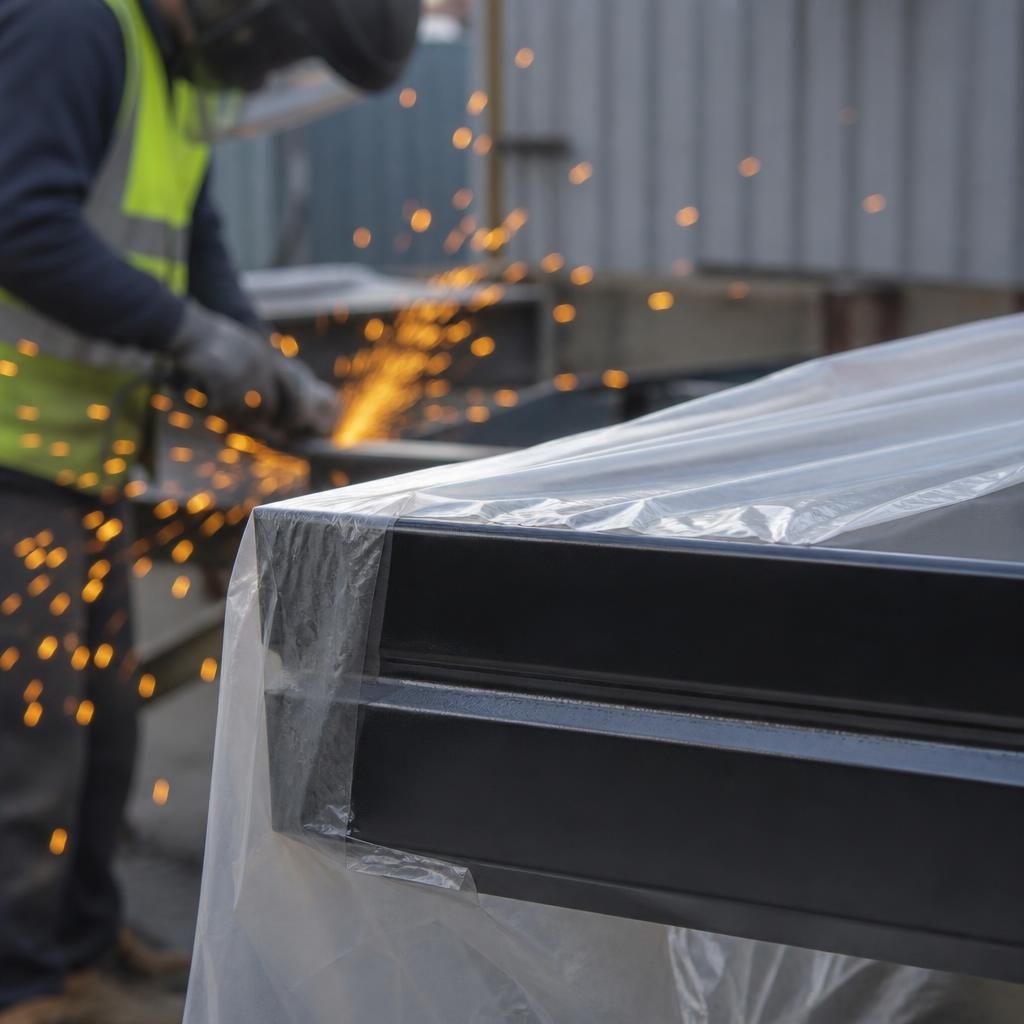
Protect black powder coated aluminium during nearby cutting, grinding, welding or other site work. Hot sparks and metal particles can embed in or burn the coating, while grinding dust may leave permanent marks when it becomes wet. Use suitable, non-abrasive temporary protection and keep it securely separated from the finished surface. Remove protective coverings carefully once the work is complete, then inspect for heat damage, impact marks or embedded debris before the component is put into service.