

What are the cost considerations when choosing aluminium powder coating services, and how can businesses ensure they receive a fair estimate?
Aluminium powder coating costs depend on factors such as component size, surface condition, preparation requirements, coating specification, colour, finish, batch quantity and collection or delivery needs. Businesses can secure a fair estimate by providing accurate drawings or dimensions, material details, quantities and finish requirements, then comparing quotations that clearly separate preparation, coating, handling and transport charges.
The fairest estimate for aluminium powder coating is based on the complete processing requirement rather than a coating rate alone. A useful quotation should show what work is included, identify any assumptions about the components, and distinguish the coating charge from additional preparation, masking, testing, packaging and transport costs.
Check how the quotation is calculated. Coaters may price work by part, batch, surface area, weight, processing time or a combination of these methods. None is automatically the best option. A small component that requires careful handling and extensive masking can take more time than a larger, straightforward item. Ask the provider to explain the pricing basis and whether any minimum charge applies to a small or one-off order.
Establish the scope of preparation. The estimate should state whether it includes removal of existing paint or powder, cleaning, blasting, chemical pre-treatment, repairs and drying. These operations can affect the final result but may be charged separately. If the aluminium has corrosion, dents, contamination, sealant or embedded dirt, provide that information before the quotation is prepared. Otherwise, additional work may be identified only after inspection.
Clarify masking and finishing details. Threaded holes, bearing seats, electrical contact points, machined faces and locating surfaces may need to remain free from coating. Ask whether masking materials, hanging points and removal of masking after curing are included. It is also important to define acceptable coverage in recesses, edges and internal surfaces, particularly where the component has a complex profile. A fair estimate should reflect the labour and materials needed to protect these areas without assuming that every surface will be coated.
Separate specification from appearance. A quotation should record the required coating system, gloss level, texture, colour reference and any performance or compliance requirement. If the work is for an exterior, architectural, automotive or industrial application, explain the service conditions, including exposure to weather, chemicals, abrasion or elevated temperatures. A lower-priced coating may not be an equivalent comparison if it uses a different powder type or has a less demanding preparation and inspection specification.
Consider inspection and documentation. Some projects require checks such as film-thickness measurement, adhesion assessment, colour comparison, cure verification or a formal inspection record. These requirements should be agreed before production because they can add inspection time and administrative work. If a certificate, batch record or other documentation is needed, ask whether it is included in the quoted price or treated as an additional service.
Look beyond the initial coating charge. The total cost may also include:
- collection, delivery and protective packaging;
- loading, unloading and special handling for delicate or awkward components;
- racking, jigging or temporary fixtures;
- stripping or rework where an existing finish is unsuitable;
- re-coating or repair of areas that do not meet the agreed specification;
- storage or return of completed parts; and
- VAT, where applicable.
Ask which of these items are included, excluded or charged only if required. This prevents a low headline price from being compared with an all-inclusive quotation.
Give the coater enough technical information. Drawings, photographs, material grades, part references, quantities per batch, total order quantities and required masking points help the provider assess the work accurately. State whether the parts are new, previously coated, machined or assembled. Where dimensional tolerances matter, identify the surfaces that must remain within tolerance after coating; the coating thickness and masking method may need to be considered in the estimate.
Compare quotations on equivalent terms. Request written quotations that use the same part description, quantity, specification, preparation assumptions and delivery arrangement. Compare the total cost, exclusions, minimum charges, quote validity period, payment terms and treatment of variations—not just the price per component. If one estimate is substantially lower, ask whether it omits preparation, inspection, masking or transport rather than assuming that it represents better value.
Before approving the work, ask the provider to confirm how changes will be handled if the supplied parts differ from the information used for pricing. Agree who authorises extra preparation, how damaged or unsuitable parts will be reported, and what acceptance criteria apply to colour, coverage, adhesion and dimensions. A clearly defined scope and a transparent breakdown give both parties a practical basis for checking the finished work and help businesses obtain an estimate that is genuinely comparable and fair.
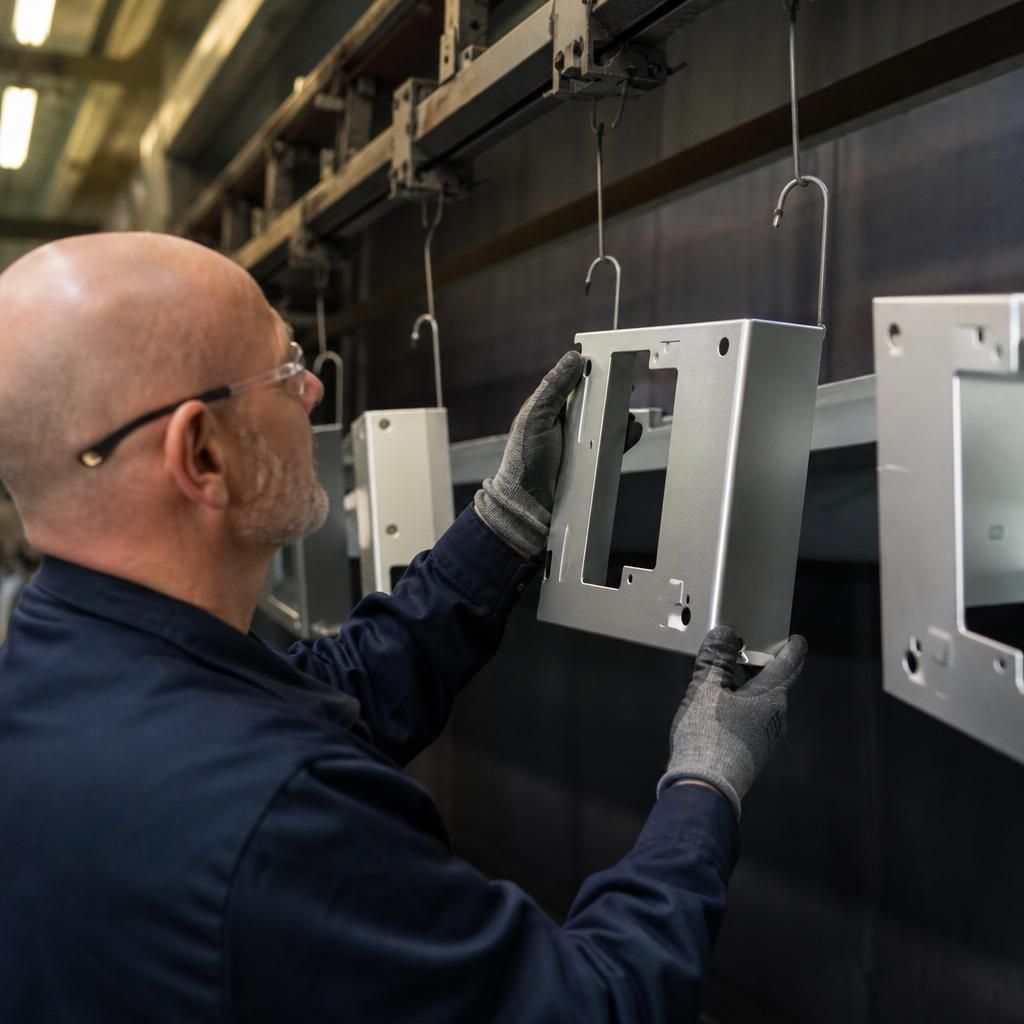
For complex, mixed or previously coated aluminium components, a representative sample or first-off assessment can make the estimate more reliable. It allows the coater to assess how the part hangs, how the powder reaches difficult areas and whether the proposed preparation and masking approach is suitable before a full batch is processed.
Ask whether this preliminary work is priced separately, included in the production estimate or credited against the order. Agree what will be assessed and how any changes to the original estimate will be authorised. This approach can be particularly useful where the component design is unfamiliar or the consequences of an unsuitable coating method would affect a larger production run.