

What advanced coating technologies or methods should be considered for enhancing the performance and longevity of aluminium powder coatings?
Advanced aluminium powder-coating methods to consider include enhanced chemical pretreatment, compatible primer or multi-layer systems, super-durable powder formulations, and tightly controlled electrostatic application and curing. The appropriate combination depends on the component’s environment, required corrosion resistance, UV exposure, mechanical loading and expected service life.
Advanced aluminium powder-coating methods are selected by matching the coating system and production controls to the component’s service environment. The most useful options to consider include low-temperature curing, functional powder formulations, improved edge and cavity coverage, precise film-thickness control, engineered masking and contact methods, and performance testing that reflects the component’s actual risks. No single technology suits every aluminium part, so the specification should begin with exposure, loading, appearance and expected service life.
Low-temperature curing: Aluminium alloys can be affected by excessive or prolonged heat, particularly where the component has been heat-treated or contains bonded, sealed or dimensionally sensitive parts. Low-temperature powder systems and carefully profiled curing cycles can reduce thermal exposure while still achieving the required coating properties. This approach needs to be validated against the powder manufacturer’s cure schedule, the alloy condition and the mass and geometry of the parts. It is not simply a matter of lowering the oven temperature, as insufficient cure can reduce adhesion, hardness and chemical resistance.
Infrared-assisted and zoned oven technology: Modern curing equipment may use controlled infrared energy, convection, or a combination of heating methods. Zoned ovens can provide more consistent heat across parts with different thicknesses and shapes, while monitoring the metal temperature helps prevent under-curing in heavy sections or over-curing on thin edges. The relevant measurement is the temperature reached by the aluminium and the time it remains within the specified cure range, rather than the air temperature alone.
Functional powder formulations: Where appearance is not the only requirement, a coating can be specified for particular operating conditions. Examples include enhanced abrasion resistance for components subject to repeated contact, improved chemical resistance for exposure to cleaning agents or industrial fluids, and increased hardness where scratching is a concern. Anti-slip textures may be appropriate for certain access or handling components, although texture can make cleaning and visual inspection more difficult. Any additive or specialist formulation should be checked for compatibility with the required colour, gloss level, application thickness and curing conditions.
Improved edge and cavity coverage: Aluminium components with sharp edges, recesses, holes or internal channels present a greater coating challenge than simple flat sections. Powder can pull away from sharp edges during application and may be thinner around corners or inside deep recesses. Design changes such as suitable edge radii, drainage paths and accessible internal surfaces can improve coverage before production begins. Application fixtures and hanging positions can also be arranged to reduce Faraday-cage effects in cavities, while masking protects threads, machined faces and electrical contact areas from unwanted build-up.
Film-thickness engineering: More coating is not automatically better. Excessive film thickness can affect fit, interfere with moving interfaces, soften the visual definition of details and increase the risk of sagging or uneven texture. A defined thickness range should therefore be linked to the component’s tolerances and performance requirements. Measuring representative areas, including edges and recessed features, gives a more useful result than checking only a convenient flat face. For assemblies, the specification should identify which surfaces are functional and which are primarily cosmetic.
Advanced masking and fixturing: Reusable silicone plugs, caps, custom masks and purpose-designed hanging fixtures can improve repeatability on batch work. They help keep threads, bores, bearing seats, earth points and mating faces free from powder, reducing the need for post-coating machining. Fixture design also affects electrical contact during spraying and the areas that remain shielded from the powder cloud. For complex aluminium parts, a trial rack or sample loading plan can reveal contact marks, shadowing and access problems before full production.
Process data and traceability: Consistent results depend on controlling more than the powder colour. Useful process records can include the powder identification, substrate preparation route, application settings, metal temperature, cure profile, film-thickness readings and inspection findings. This information helps distinguish a material issue from an application or oven issue if a batch shows defects. It is particularly valuable where components are supplied repeatedly and small changes in geometry, alloy, loading pattern or powder batch could affect the result.
Performance testing: Testing should reproduce the main threats faced in service. Adhesion testing assesses whether the coating is bonded adequately to the aluminium, while impact and abrasion tests indicate how it may tolerate handling or mechanical contact. Gloss and colour measurements are useful where appearance must remain consistent between batches. For external components, accelerated weathering or corrosion testing can help compare systems, but laboratory results should be interpreted alongside the actual environment, including coastal salt, industrial pollutants, moisture retention and sunlight. A test result is meaningful only when the method, coating thickness, substrate and acceptance criteria are clearly defined.
Designing for water management: Coating longevity can be limited by the component design rather than the powder itself. Closed pockets, unsealed joints and horizontal ledges may retain water and contaminants, creating localised corrosion risks at joints, cut edges or damaged areas. Where possible, components should be designed with drainage, ventilation and cleanable surfaces in mind. Fasteners and dissimilar metals also need consideration because galvanic interaction can create problems at interfaces that a powder coating alone cannot eliminate.
Repair and touch-up planning: Even a robust coating may be damaged during transport, assembly or later use. The specification should state how small defects, cut edges and site damage are to be treated. Touch-up materials may not have the same appearance, texture or long-term performance as the original powder coating, so repairs should be assessed for both protection and visual acceptability. If machining or drilling is expected after coating, it is usually better to identify those areas in advance and define the required protection afterwards.
The best advanced approach is therefore a coordinated specification rather than an isolated technology. Confirm the aluminium alloy and component design, identify the dominant exposure and mechanical risks, set acceptable appearance and dimensional limits, then select the powder system, curing method, masking arrangement and inspection plan together. A specialist coating provider can review drawings or representative parts, identify areas that need design adjustment, and recommend a practical combination of methods for batch or larger-scale aluminium work across the Midlands, with collection and delivery options where required.
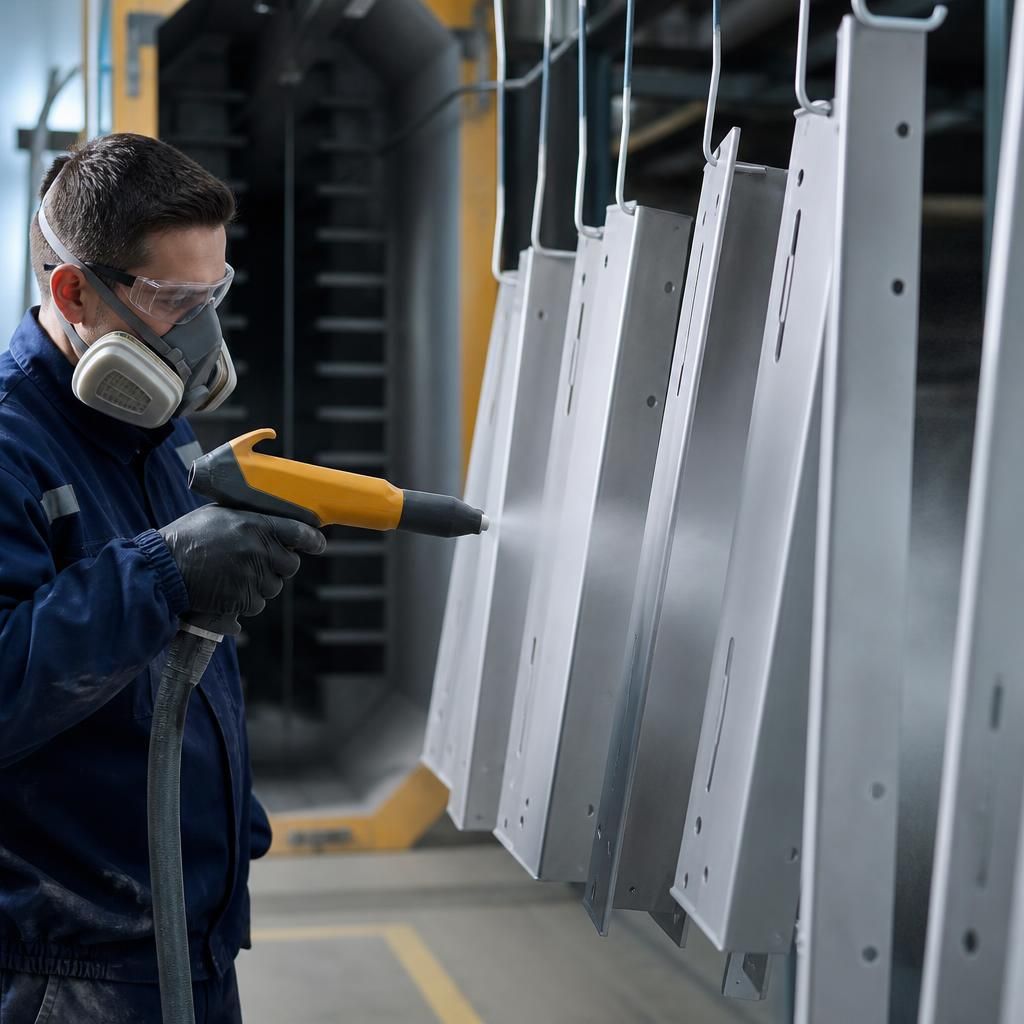
Primer and multi-layer powder systems can enhance aluminium coating performance by adding an additional barrier between the substrate and the environment. They may be appropriate where components face persistent moisture, corrosive contaminants, demanding outdoor exposure or a higher risk of mechanical damage than a single topcoat is intended to withstand.
A suitable system normally combines aluminium pretreatment, a compatible powder primer and a correctly specified topcoat. The primer must bond effectively to the prepared surface and work with the topcoat’s chemistry, film thickness and curing requirements. Incompatible layers can reduce adhesion, alter colour or create defects during curing, so the complete system should be assessed rather than selecting a primer in isolation.
Multi-layer coating can also help separate functions: the primer provides adhesion and additional protection, while the topcoat supplies the required colour, gloss, texture and resistance to weathering or handling. The finished assembly should be checked at representative edges, joints and machined areas, since these locations may remain the most vulnerable even when the visible surface has a robust layered coating.