

What maintenance is required for powder coated aluminium products to ensure their longevity?
Powder coated aluminium products require regular cleaning with water and a mild, non-abrasive detergent, followed by thorough rinsing and drying to remove dirt and contaminants. Inspect surfaces for chips, scratches or corrosion, avoid abrasive tools and harsh solvents, and address any coating damage promptly to prevent deterioration of the underlying aluminium.
Maintaining powder coated aluminium products involves controlling their exposure to moisture, chemicals, heat and mechanical damage, while preserving the coating’s protective continuity. The coating is durable, but it is not immune to impact, abrasion, aggressive substances or poor installation conditions. A planned maintenance routine should therefore cover the product’s environment, fixings, joints, drainage, surface condition and any repairs.
Manage the surrounding environment
- Prevent standing water from remaining against coated aluminium, particularly around joints, channels, folds and horizontal surfaces.
- Keep drainage paths, weep holes and designed run-off routes unobstructed so moisture does not become trapped behind or beneath components.
- Assess exposure to salt, cement dust, mortar, welding residues, oils, solvents and industrial chemicals. These contaminants can attack the finish or hold moisture against the coating if they are allowed to remain in contact with it.
- Where products are used in coastal, industrial or high-pollution environments, use the coating specification and the coater’s maintenance guidance to determine whether more frequent checks or additional protection are appropriate.
Protect the coating during use and adjacent work
Powder coated aluminium should not be used as a convenient support, cutting surface or fixing point unless it has been designed for that purpose. Impacts from tools, pallets, machinery and unsecured loads can fracture the coating or expose the metal beneath it. During building, fabrication or maintenance work nearby, shield finished components from sparks, plaster, concrete, sealants, adhesive residues and swarf. Remove temporary protective films in accordance with the product or coating guidance, since leaving them exposed for too long can make removal more difficult and may leave adhesive deposits.
Take particular care when moving or stacking components. Use clean, non-abrasive separators and avoid dragging one coated part across another. Ensure packaging does not retain moisture against the finish during storage or transport. Components should be supported so that pressure is not concentrated on edges, corners or decorative profiles.
Check fixings, interfaces and dissimilar materials
Maintenance should include the areas where aluminium meets other materials. Loose fixings can allow movement and fretting, while failed seals can let water enter joints. Check that fasteners, brackets, gaskets and sealants remain suitable for the environment and have not created staining, abrasion or water traps. Where aluminium is in contact with dissimilar metals, inspect the interface for signs of galvanic corrosion and confirm that suitable separation or compatible fixings have been retained.
Do not drill, cut or grind a coated component unnecessarily. If modification is unavoidable, protect the exposed aluminium and newly formed edges using a repair system suitable for the coating and service environment. A repair should not simply conceal damage; it must prevent moisture and contaminants reaching the substrate.
Deal with coating damage correctly
Minor damage should be recorded and assessed rather than covered with an unverified household paint. The correct repair method depends on the coating type, the size and depth of the defect, the product’s location and the likely exposure. Surface preparation, compatible primers and matching topcoats may be required. For extensive loss of adhesion, repeated corrosion or widespread impact damage, the component may need professional stripping, preparation and recoating rather than local touch-up work.
Repairs should also be reviewed after completion to confirm that the surrounding coating has not been damaged and that the repaired area is not collecting water or dirt. Keep records of the product specification, installation conditions, inspections, repairs and substances used nearby. This creates a useful maintenance history and helps identify recurring problems such as a leaking joint, unsuitable sealant or repeated mechanical contact.
Use a risk-based inspection routine
The appropriate inspection interval depends on the product’s location, exposure and function. Components in sheltered internal settings may require less frequent checks than those exposed to marine air, industrial emissions, traffic pollution or continual handling. Inspect after unusual events such as construction work, chemical spills, impact or prolonged exposure to contaminated water. Give extra attention to edges, corners, fixings, joints, concealed faces and areas where water or debris can collect.
Where powder coated aluminium forms part of a larger industrial installation, include it in the site’s planned maintenance system. Assign responsibility for inspections, define what constitutes reportable damage and ensure that any defect is traced to its cause before repair. This approach helps preserve both the appearance and the protective function of the coating without treating routine maintenance as a substitute for correct material selection and installation.
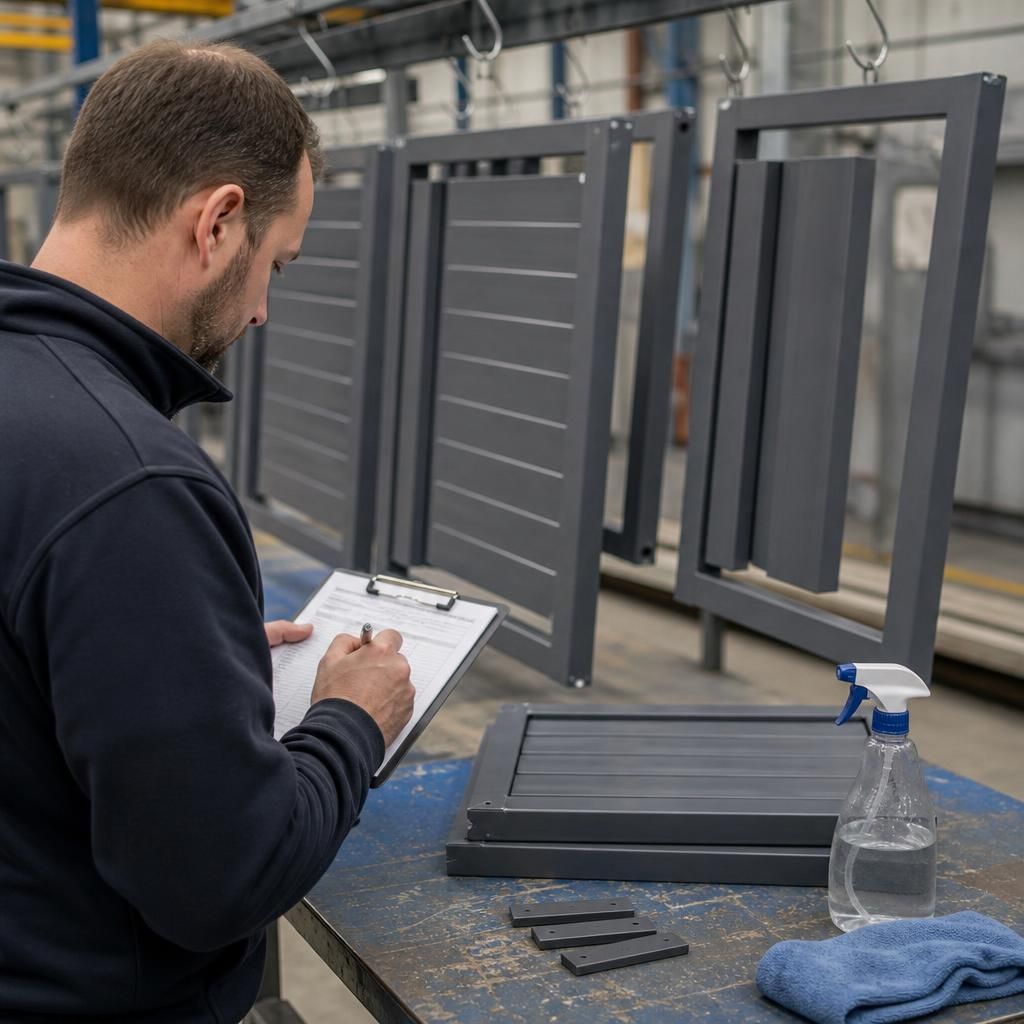
Maintenance should follow the specification for the particular powder coating rather than relying on a generic care routine. Keep the coating identification, finish description and installation guidance with the product records, as different coating systems may have different limits for cleaning agents, solvents, sealants and repair materials.
- Check that any proposed cleaning or repair product is compatible with the coating system before applying it across the whole component.
- Test unfamiliar products on a small, inconspicuous area first and check for changes in gloss, colour, adhesion or surface texture.
- Use the original coating details when arranging repairs so that the replacement material is suitable for the exposure and provides a close finish match.
- Record products that have been approved for future maintenance, avoiding accidental use of stronger chemicals or unsuitable touch-up materials.
This documentation-based approach reduces the risk of maintenance work causing premature dulling, staining or loss of adhesion, particularly where coated aluminium is exposed to industrial substances or frequent cleaning.
Discuss Maintenance for Your Powder Coated Aluminium Products
If you need to confirm a suitable maintenance approach for powder coated aluminium products, discuss the coating specification, service environment and any existing damage with our Midlands powder coating specialists. This helps identify appropriate cleaning, repair or recoating requirements before maintenance work begins.