

What are the customization options available for powder coated aluminium products in terms of colours and textures?
Powder coated aluminium can be customised with standard RAL colours, carefully matched shades and selected gloss levels, including matt, satin and gloss finishes. Texture options range from smooth surfaces to fine-textured, metallic and specialist effects, subject to the coating system and project requirements.
Powder coated aluminium can be customised by defining the required colour reference, surface appearance, texture, coverage and masking details before production. The right specification depends not only on the desired look, but also on the aluminium component’s profile, intended environment, handling requirements and whether it must match other coated or finished parts.
Colour selection is normally based on an established reference so that the required shade can be recorded accurately for repeat orders. Where a standard reference is not suitable, a physical sample or an agreed colour target can be used for assessment. This is particularly useful when aluminium components need to coordinate with branding, architectural finishes, machinery panels or other metalwork.
Colour can appear different depending on lighting, viewing angle, surface size and the surrounding materials. A small coated sample may therefore look different from a large panel or a component with formed sections. For important visual applications, the specification should identify the acceptable colour reference and include a sample approval stage where appropriate.
Surface appearance can be selected to control how much light the coating reflects and how prominent minor surface variation appears. A lower-reflective appearance is often chosen where glare should be limited, while a more reflective finish may be preferred for a sharper decorative effect. The selected appearance should be considered alongside the component’s shape, because bends, edges and broad flat areas can show the finish differently.
Texture adds a tactile and visual characteristic to the coating. Fine or more pronounced textures can alter how the aluminium catches light and may help reduce the visibility of minor marks arising during handling. Textured coatings should still be assessed for the application, as texture can affect cleaning, contact surfaces, masking lines and the fit of parts assembled together.
Specialist appearances, including metallic or other effect finishes, require particular care when specifying and processing components. The orientation of parts, coating coverage and positioning during application can influence how an effect is perceived. Components that must appear consistent should be processed under the same agreed specification wherever practical, rather than relying only on a general description such as “metallic” or “dark grey”.
Customisation can also include practical details that are not visible in a colour chart:
- areas to remain uncoated for earthing, welding, bonding or assembly;
- masking requirements for holes, threads, machined faces and mating surfaces;
- the faces or edges that require particular visual attention;
- the required coating build and finish tolerances where these affect fit;
- identification of parts that must be kept together as a matched group; and
- packaging or handling requirements intended to protect the finished appearance.
These details are important because powder coating adds a solid layer to the prepared aluminium. Threads, close-fitting interfaces and precision features may need clearance or masking to prevent assembly problems. Drawings, photographs or marked-up samples can make these requirements clearer than a colour description alone.
The aluminium grade, surface condition and component design may also influence the final result. Castings, extrusions, welded areas, repairs and changes in profile can reflect light differently even when they receive the same coating. A sound specification should therefore distinguish between the required visual result and features that arise from the underlying metal.
For repeat production, the colour reference, appearance, texture, masking arrangement and approval sample should be retained as part of the job specification. This gives future batches a defined basis for comparison and helps prevent changes being introduced through informal descriptions. Where several components form one assembly, specifying them together can also reduce visible variation between separately coated parts.
Before coating, the proposed finish should be checked against its service conditions. Exposure to weather, chemicals, abrasion, heat, frequent handling or cleaning can affect which coating system and surface specification are suitable. The most attractive finish is not automatically the most appropriate if the component will face demanding industrial conditions, so appearance choices should be reviewed alongside performance requirements.
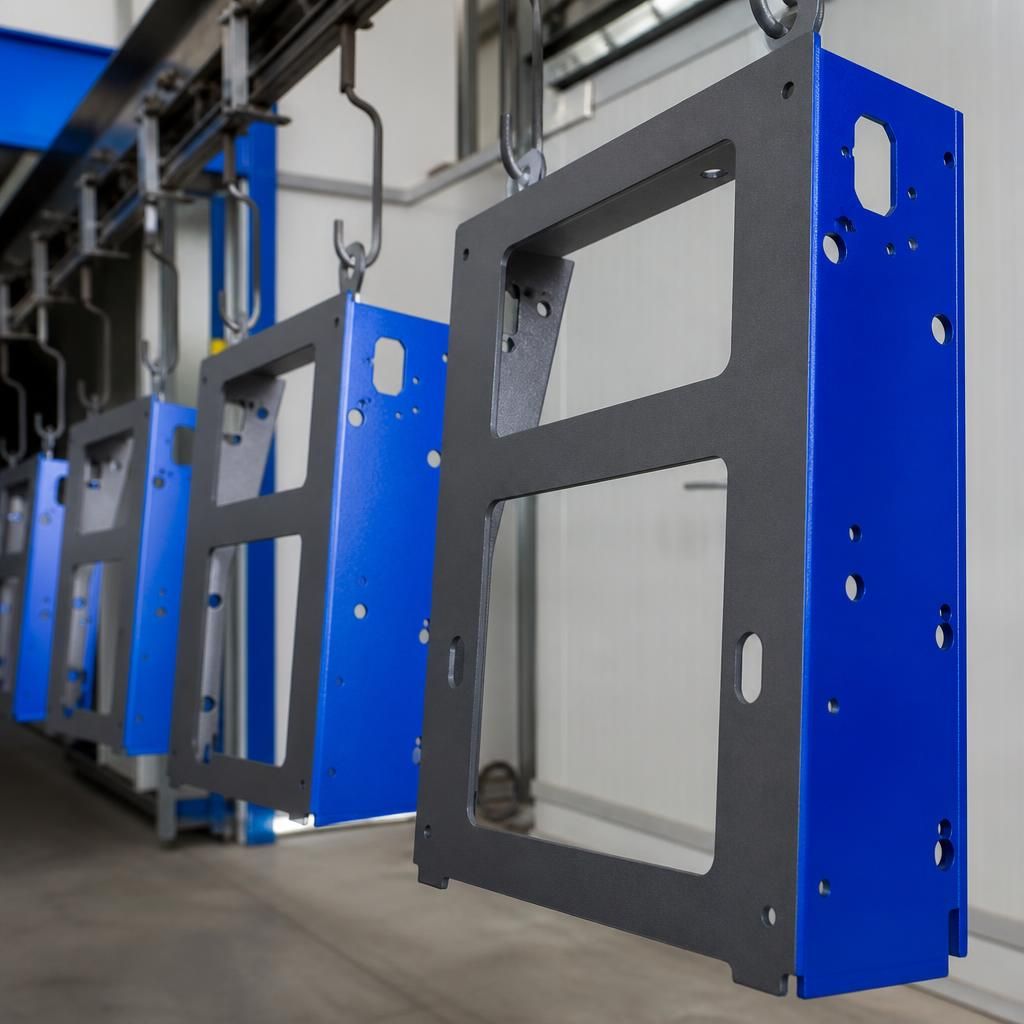
Two-colour and zoned finishes are another way to customise powder coated aluminium. Different colours can be assigned to separate faces, sections or components, which may support visual identification, brand presentation or the separation of functional areas within an assembly.
This type of finish needs a clear drawing showing the colour boundaries, along with details of any areas that must remain uncoated. The position of joins, edges and masking lines should be agreed before production, as these features can affect the final appearance. Where several parts form one visible assembly, specifying the colour arrangement together helps maintain a consistent design across the finished components.