

What are the best practices for maintaining the longevity and appearance of powder coated aluminium products in industrial settings?
Maintain powder coated aluminium products by cleaning them with a mild, non-abrasive detergent, inspecting the coating regularly and removing contaminants before they cause staining or corrosion. Prevent impact, abrasion and contact with incompatible chemicals, and address chips or other coating damage promptly to preserve the finish and extend service life.
The longevity and appearance of powder coated aluminium in industrial settings depend on more than the coating itself. The most effective approach combines an appropriate coating specification with sound component design, careful handling, suitable installation, controlled operating conditions and a documented maintenance plan.
Specify the coating for the exposure. Aluminium used indoors in a dry production area will experience different conditions from components installed outdoors, near the coast or in an atmosphere containing industrial pollutants. Before coating, identify the likely exposure to moisture, salt, chemicals, ultraviolet radiation, heat and airborne deposits. The coating system, pretreatment and finish should then be selected for that environment rather than chosen solely for colour or initial appearance.
Where appearance is important, record the required colour, gloss level, texture and any areas that must remain uncoated. A clear specification helps prevent variations between production batches and makes future repairs or replacement parts easier to match. It should also identify the service conditions and any substances that may come into contact with the aluminium.
Use designs that allow water and deposits to leave the component. Powder coating protects the aluminium surface, but poor component design can create localised problems. Avoid recesses, overlaps and horizontal ledges that retain water, process residue or dirt. Provide suitable drainage and ventilation where hollow sections are used, and ensure that drain holes remain open after coating and installation. Joints should be arranged to reduce crevices, particularly in locations exposed to persistent moisture or corrosive deposits.
Where dissimilar metals meet, assess the risk of galvanic corrosion. Appropriate separation, compatible fixings and good joint detailing can reduce the likelihood of corrosion developing at interfaces. Fasteners, brackets, seals and washers should also be suitable for the operating environment and should not damage the coating during assembly.
Protect the finish during storage and installation. Coated aluminium should be stored in a clean, dry and well-ventilated location, supported so that components do not distort or rub against one another. Trapped moisture between stacked items can cause marking and may affect the finish. Protective wrapping can help during transport, but it should not be allowed to retain condensation against the coating.
Use padded supports and clean lifting equipment when moving finished parts. Avoid dragging components across benches, floors or other metalwork. During installation, protect finished faces from drilling swarf, cutting debris, wet cement, sealant residue and other construction materials. Remove temporary protective coverings in accordance with the coating supplier’s instructions, since leaving adhesive films in place for too long can make them difficult to remove and may leave residue.
Control contact with process materials. In manufacturing environments, powder coated aluminium may be exposed to lubricants, cutting fluids, detergents, solvents, hydraulic fluids or airborne powders. Establish which substances are compatible with the coating before they are introduced into the work area. Store chemicals away from coated components and prevent leaks from remaining in contact with the surface. If a process change introduces a new chemical, review its compatibility rather than assuming that an existing maintenance routine remains adequate.
Keep a planned maintenance record. A useful record should identify the component, coating specification, installation location, exposure conditions and date of each maintenance activity. Include notes on changes in gloss or colour, blistering, flaking, corrosion at edges or fixings, seal failure and any area where the coating has been disturbed. Photographs can help compare gradual changes and distinguish normal weathering from a developing defect.
Maintenance intervals should reflect the environment and the consequences of coating failure. Components in sheltered internal locations may need less attention than those exposed to marine air, heavy traffic, abrasive dust or chemical vapours. High-risk areas such as joints, edges, drainage points and fixing locations deserve particular attention because defects often develop there before they become visible across the main surface.
Deal with damage according to its extent. A minor local defect may be suitable for a compatible repair system, but the damaged area should first be assessed to determine whether the aluminium or surrounding coating has been affected. Repairs should follow the coating manufacturer’s instructions and use materials compatible with the original finish. A touch-up product may not reproduce the original texture, gloss or weathering exactly, so repaired areas can remain visible even when they provide functional protection.
Widespread loss of adhesion, extensive corrosion, repeated chemical attack or significant colour change may require removal and recoating rather than isolated touch-up work. Recoating decisions should consider the condition of the existing layer, the preparation needed, access, dimensional tolerances and whether the component can be treated without affecting adjacent parts.
Review the system after changes. Alterations to the plant, cleaning regime, production chemicals, storage arrangements or installation environment can change the demands placed on the finish. Include powder coated aluminium in site inspections and update the maintenance plan when its operating conditions change. This preventative approach helps preserve both the protective function and the intended appearance of the coating throughout the component’s service life.
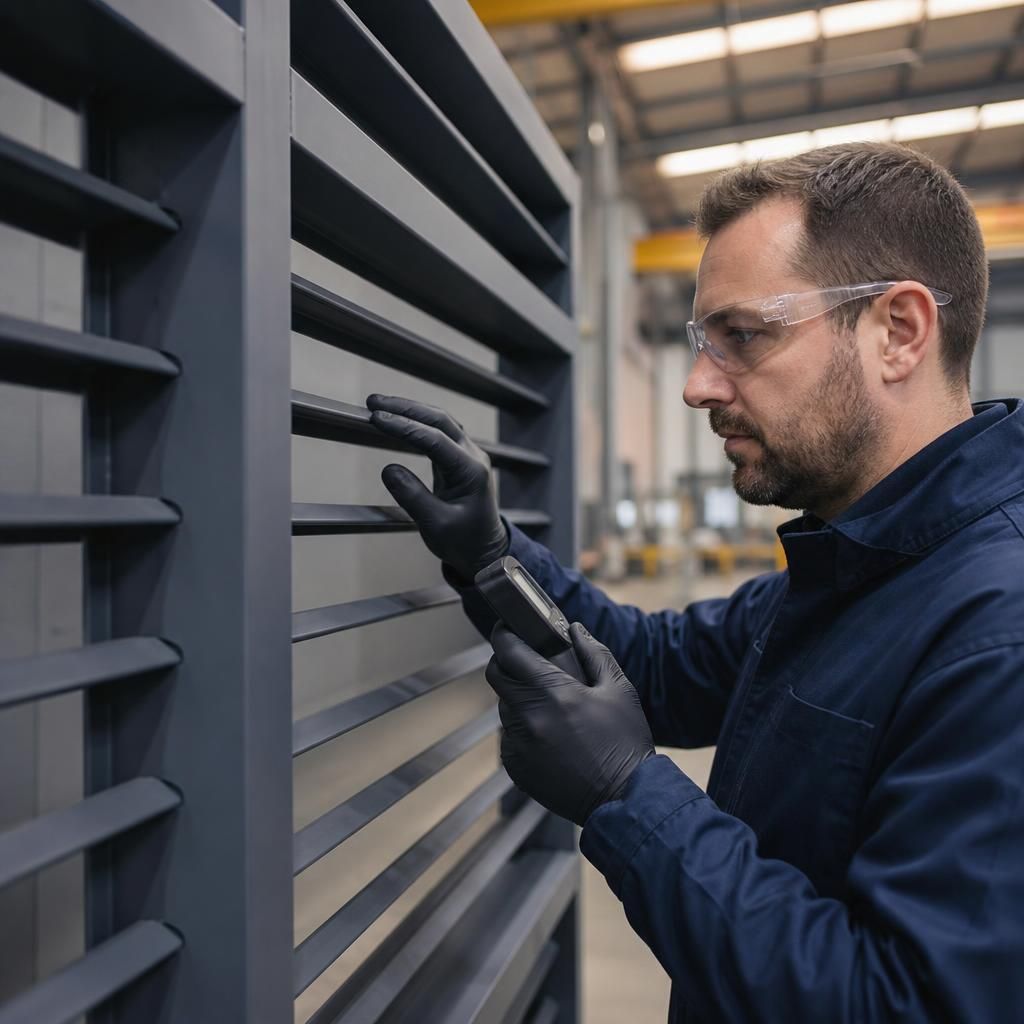
Assess changes in appearance carefully before treating them as coating failure. A dull or faded surface may be caused by deposited dirt, while chalking produces a fine, powdery residue as the coating binder weathers, particularly where aluminium is exposed to ultraviolet radiation. Clean a small representative area first and compare it with the surrounding surface under consistent lighting. This helps distinguish removable contamination from genuine loss of gloss or colour.
Where chalking, fading or gloss variation is widespread, assess the finish against the original specification rather than relying on visual judgement alone. Consider the exposure conditions, the age of the coating and whether the change affects protection as well as appearance. This evidence supports a proportionate decision between continued monitoring, local treatment and a full recoating assessment.
Discuss your powder coated aluminium maintenance requirements
Discuss your powder coated aluminium maintenance requirements with the team, including the component’s exposure conditions, finish specification and any recurring defects. This information can help identify suitable coating and maintenance considerations for your application.