

How does the quality of powder coated aluminium frames and tubes impact their lifespan and maintenance requirements in comparison to untreated options?
The quality of a powder coating on aluminium frames and tubes depends on suitable pretreatment, correctly specified powder, even application and complete curing; these factors determine how well the finish resists weathering, abrasion, corrosion and fading. Compared with untreated aluminium, a high-quality coating generally provides a more durable surface that needs less frequent cleaning and refinishing, while poor-quality work can deteriorate prematurely and require additional maintenance.
The quality of a powder-coated aluminium frame or tube affects how long its surface remains protective, attractive and serviceable. A well-specified and properly applied finish can reduce surface deterioration and routine remedial work compared with untreated aluminium, whereas defects, unsuitable coating selection or poor handling can shorten the practical service life of the component.
What changes over the service life? Aluminium is not normally left completely unprotected: it forms a thin oxide layer when exposed to air. This layer offers some resistance to further corrosion, but it does not provide the same controlled barrier or appearance as a sound powder-coated finish. Untreated aluminium can gradually develop dulling, staining, water marks, localised pitting or uneven weathering. The effect is influenced by moisture, pollutants, salts, cleaning chemicals and contact with other metals.
Powder coating adds a continuous polymer film that separates the aluminium from many of these influences. Its value is not limited to initial appearance. By limiting direct contact with moisture and contaminants, the coating can help preserve the surface of the frame or tube and reduce the need for repeated cosmetic treatment. The improvement is greatest where the coating specification matches the environment and the component is designed, transported and installed without damaging the finish.
Quality affects more than colour retention. A finish that remains evenly bonded and free from significant porosity is better able to resist:
- abrasion from handling, assembly and normal use;
- impact from tools, adjacent components or transported materials;
- surface marking caused by dirt, oils and industrial residues;
- moisture retention around joints, fixings and concealed edges; and
- degradation caused by outdoor exposure or the chemicals present in the operating environment.
These factors determine whether maintenance is limited to cleaning and inspection or develops into localised repair, stripping and recoating. A small blemish may be manageable, but damage that exposes aluminium can allow moisture and contaminants to reach the substrate. On assembled sections, water held at a joint or beneath a damaged area can make the problem harder to identify and correct.
Untreated and coated aluminium require different maintenance approaches. Untreated frames and tubes may need more frequent attention when appearance is important, particularly where oxidation, staining or uneven colour is unacceptable. Cleaning can remove deposits, but it does not restore a uniformly finished surface once weathering or pitting has developed. Polishing or other remedial treatments may also produce an inconsistent appearance across a larger assembly.
A powder-coated component is generally maintained by removing dirt before deposits become firmly bonded. Washing with a suitable mild cleaning solution, clean water and non-abrasive equipment is normally preferable to aggressive scouring. Strong solvents, abrasive pads, highly alkaline products and unsuitable pressure-washing practices can soften, scratch or discolour the coating. The cleaning method should therefore reflect the coating supplier’s guidance and the substances likely to contact the component.
Inspection should focus on vulnerable areas. A visual check is useful after installation, handling or modification, and during planned equipment inspections. Particular attention should be paid to cut ends, drilled holes, corners, edges, weld-adjacent areas, fixing points and locations where water or debris can collect. Check for blistering, cracking, flaking, chalking, unusual colour change, exposed metal and corrosion around fasteners. Early identification allows a local repair or a review of the installation before deterioration spreads.
Quality also affects how predictable maintenance will be. Consistent film coverage gives designers and maintenance teams a more uniform surface to clean and inspect. Poorly coated areas may show premature edge breakdown or visible variation, making it difficult to distinguish normal ageing from a coating failure. Components that are scratched during storage or assembly can similarly require attention regardless of the original coating quality, so protective packaging, careful lifting and suitable separation between parts remain important.
Service conditions must be considered when comparing lifespan. Indoor frames in a clean, dry setting are exposed to different risks from outdoor tubes, components near road salt, or equipment subject to industrial chemicals and repeated washing. A coating suitable for one application may not offer equivalent performance in another. Exposure to ultraviolet light can affect gloss and colour over time, while chemicals can attack the film even when there is no visible mechanical damage. Where the environment is demanding, the coating type, colour, gloss level and preparation requirements should be selected against the actual exposure rather than treated as standard choices.
Aluminium design can also influence the result. Profiles that drain effectively and avoid narrow moisture traps are easier to keep clean and less likely to experience concealed deterioration. Isolating aluminium from incompatible metals can reduce the risk of galvanic effects at fixings or connections. Careful detailing at joints and penetrations helps protect the coating’s continuity after assembly.
In practical terms, a high-quality powder-coated frame or tube normally offers a longer interval before appearance-related refurbishment than untreated aluminium, provided it is correctly specified for its setting and maintained appropriately. It is not maintenance-free, and powder coating cannot prevent impact damage, poor drainage, chemical attack or corrosion arising from an unprotected cut edge. The appropriate comparison is therefore not “coated versus maintenance-free”, but a controlled, inspectable protective finish versus the more variable oxidation and weathering of untreated metal.
For an industrial specification, assess the expected exposure, handling conditions, cleaning regime, joint design and consequences of surface failure. These considerations provide a more reliable basis for estimating service life and maintenance requirements than finish colour or initial appearance alone.
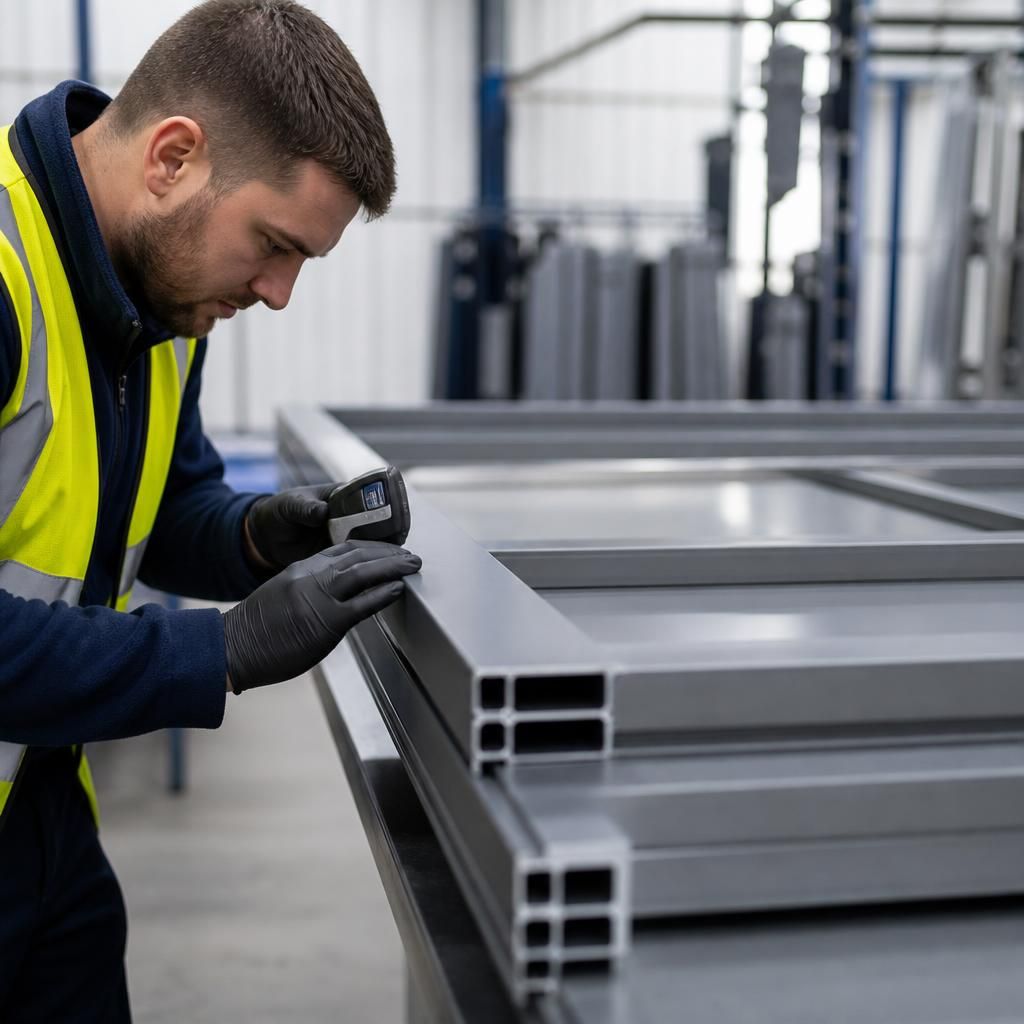
Quality should be assessed before installation, not judged solely by the finished colour or gloss. For a batch of aluminium frames or tubes, review the coating specification against the intended environment and confirm that the supplier’s process controls cover surface preparation, powder selection, application and curing. A retained sample or agreed finish standard can also help identify variation between components before they are assembled.
This type of verification is particularly useful for projects where parts will be fitted together or maintained as one system. Consistent coverage and appearance make later inspections more meaningful, while unexplained variation may indicate differences in preparation, handling or curing. Establishing acceptance criteria at the ordering stage therefore helps prevent premature remedial work and makes the expected maintenance requirement more predictable than relying on appearance alone.