

What industries benefit most from polyester powder coated aluminium applications?
Polyester powder coated aluminium is particularly valuable in construction, manufacturing, fabrication and automotive applications, where components require a durable, consistent and visually appealing finish. It suits aluminium frames, panels, trims, housings and other parts exposed to regular handling, weather or demanding working environments.
Polyester powder coated aluminium is most beneficial in industries that need a hard-wearing, uniform and decorative finish on aluminium components, particularly where parts face outdoor exposure, frequent handling or demanding presentation standards. Its strongest applications are found in architectural and construction-related products, industrial equipment, electrical enclosures, heating and ventilation systems, retail fixtures, transport components and specialist fabricated assemblies.
- Architectural products and building systems: Aluminium window frames, doors, curtain wall sections, façade elements, balustrades, roofline products and screening systems often require a finish that supports both appearance and service performance. Polyester powder coating allows profiles and panels to be specified in a controlled colour, gloss level and texture, helping different aluminium parts form a consistent visual scheme. For external architectural use, the selected coating system must be suitable for the expected exposure and supported by appropriate aluminium preparation.
- Industrial machinery and equipment: Manufacturers of housings, guards, access panels, frames and machine enclosures can use coated aluminium where bare metal would not provide the required appearance or surface protection. A powder-coated finish can also make components easier to identify within an assembled product through colour coding or a defined finish specification. This is particularly useful when the parts are repeatedly handled during installation, servicing or production.
- Electrical and electronic equipment: Cabinets, control-panel covers, instrument housings and cable-management components can benefit from a consistent coating that protects visible surfaces and gives finished equipment a professional appearance. The coating specification should take account of operating temperature, contact points, earthing requirements and any areas that must remain uncoated for assembly or electrical continuity.
- Heating, ventilation and air-conditioning: Aluminium grilles, covers, louvres, casings and other visible HVAC components are often installed in places where appearance matters as well as function. Polyester powder coating can provide a repeatable finish across individual parts and production batches, while the chosen grade should reflect whether the component is indoors, externally mounted or exposed to moisture and cleaning regimes.
- Retail, commercial interiors and display manufacture: Shopfitting systems, shelving, display frames, counters and branded interior components use coated aluminium when a precise colour and clean finish are part of the specification. This sector may place greater emphasis on colour matching, texture and resistance to marks from assembly and everyday contact than on long-term external weathering. Clear drawings and agreed samples are useful where several components must be finished to the same standard.
- Transport and vehicle-related manufacturing: Aluminium trims, housings, brackets and other non-structural components can use polyester powder coating where a durable, uniform finish is required. The suitability of the coating depends on the component’s location, exposure to road contaminants, cleaning methods, temperature range and interaction with adjoining materials. Parts subject to movement, impact or high heat need to be assessed separately rather than treated as standard decorative work.
- Fabricated products and specialist metal assemblies: Businesses producing made-to-order frames, covers, panels, brackets and enclosures can benefit from powder coating when several aluminium parts need a consistent finish before final assembly. The process is well suited to planned batches, provided that drawings identify masking points, threaded areas, contact faces and tolerances that the coating must not interfere with.
The best industry fit is therefore determined by the component’s environment and specification, not simply by the fact that it is made from aluminium. External exposure calls for consideration of ultraviolet light, moisture, pollutants and temperature changes. Internal components may instead be judged on resistance to handling, cleaning, abrasion and visual consistency. A polyester system selected for an indoor enclosure should not automatically be specified for an exposed façade or outdoor housing.
Aluminium also requires suitable preparation before powder is applied. Surface condition, contamination, oxide layers, sharp edges and contact with dissimilar materials can all affect the finished result. Industry requirements should therefore be discussed alongside the coating colour and gloss level, including the intended service environment, part dimensions, masking requirements, batch size and inspection expectations.
For manufacturers and fabricators, the practical value lies in matching the coating specification to the use of the finished product. Architectural and commercial applications commonly prioritise colour retention and appearance; industrial and electrical products may place more emphasis on consistent coverage and assembly requirements; HVAC and external equipment require closer attention to moisture and environmental exposure. When these factors are defined at the design stage, polyester powder coated aluminium can be used effectively across a broad range of engineered, commercial and building-related applications.
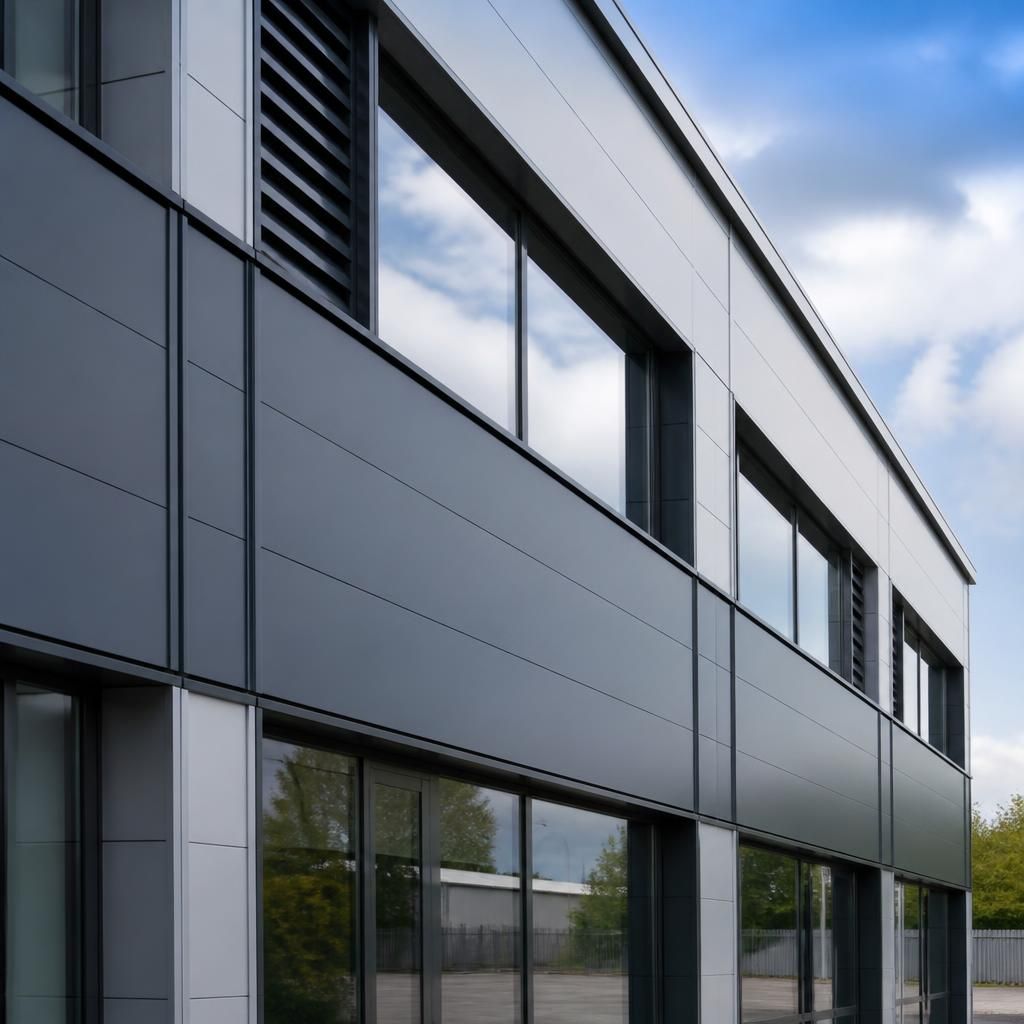
The industries that benefit most are those where the aluminium finish forms part of the finished product specification, rather than being an incidental protective layer. For manufacturers and fabricators, polyester powder coating can help turn standard aluminium sections, sheets or formed parts into a defined product range with repeatable colour and surface character.
This is particularly relevant where customers select products by appearance as well as function. A controlled finish can support product differentiation across architectural components, equipment housings, commercial fittings and fabricated assemblies, while allowing the coating requirement to be recorded alongside dimensions, assembly details and performance conditions. The coating should therefore be considered during product design, not added as an afterthought, so the chosen finish is compatible with the component’s use and the expectations of its end market.
Discuss your polyester powder coated aluminium application
Discuss your polyester powder coated aluminium application with our team, providing the component details, intended environment and finish requirements. This helps establish whether the proposed coating specification is suitable for the finished product.