

What are the advantages of using polyester powder coating on aluminium components?
Polyester powder coating gives aluminium components a durable, even finish that helps protect against corrosion, weathering and UV exposure. It also provides a wide choice of consistent colours and textures, making it suitable for components that require both long-term surface protection and a defined appearance.
Polyester powder coating is advantageous for aluminium components because it combines a controlled, hard-wearing surface treatment with efficient application, reliable adhesion and design flexibility. It is particularly suitable where aluminium parts must retain their intended appearance while coping with handling, installation and exposure to the surrounding environment.
Key advantages include:
- Strong adhesion when correctly prepared: Aluminium develops a surface oxide layer that can affect coating adhesion. Degreasing, suitable chemical pretreatment and controlled drying create a better foundation for the polyester powder. This reduces the risk of peeling, blistering or premature coating failure.
- Resistance to routine handling: A correctly cured polyester film can withstand the scuffing, knocks and general contact associated with fabrication, transport and installation more effectively than many unprotected aluminium surfaces. The appropriate specification still depends on the component’s use, handling method and exposure conditions.
- Efficient application to shaped components: Powder is applied electrostatically, allowing charged particles to be attracted to the earthed aluminium component before curing. This can help coat profiles, brackets, housings and other formed parts without the sagging or runs associated with an incorrectly applied liquid coating.
- Controlled film formation: The powder melts and cures in an oven to form a continuous coating. With suitable pretreatment, application settings and curing, this provides a more controlled finish than a process affected by solvent evaporation. Coating thickness, coverage and cure should be checked against the required specification rather than assumed from appearance alone.
- Reduced use of liquid solvents: Powder is supplied as a dry material and does not require a conventional solvent carrier during application. This can reduce solvent-related emissions and the handling of solvent-containing liquid waste. Powder application still requires appropriate extraction, housekeeping and waste controls.
- Potentially efficient material use: Overspray can sometimes be collected and reused in a controlled system, depending on the equipment, colour, powder type and quality requirements. Recovery is not suitable for every application, so reclaim procedures must prevent contamination and maintain finish consistency.
- Suitable for exterior-grade specifications: Polyester formulations are commonly selected for aluminium used outdoors, including fabricated panels, trims, frames and architectural or industrial components. The resin grade, pretreatment and colour specification should be matched to the expected exposure, since not every polyester powder is intended for the same conditions.
- Useful design freedom: Powder coating can support smooth, fine-textured and other specified surface effects without changing the underlying aluminium component. This allows designers and fabricators to coordinate metalwork with surrounding assemblies while retaining the functional benefits of a coated surface.
- Repeatable production processing: Once the component design, pretreatment, powder specification and curing conditions have been established, the process can be documented and repeated across batches. This is useful for manufacturers that need parts to meet a defined finish requirement rather than relying on site-applied touch-up work.
- Compatibility with efficient batch work: Aluminium parts can be grouped and processed according to size, geometry and coating requirement. This supports planned production for brackets, panels, frames and other repeat components, although racking, masking and oven capacity must be considered before the job is specified.
There are practical limitations. Powder coating is not a substitute for good aluminium design or preparation: sharp edges, trapped moisture, weld contamination, unsuitable alloys and inaccessible recesses can all affect the result. Components must also tolerate the curing cycle, and threaded areas, close-fitting faces, electrical contact points and machined tolerances may need masking or other protection.
For industrial work, the most useful comparison is therefore not simply powder coating versus uncoated aluminium. The coating should be selected by considering exposure, required appearance, mechanical contact, component dimensions, pretreatment, curing requirements and inspection criteria. When those factors are aligned, polyester powder coating provides aluminium components with a practical combination of surface protection, process control and finish flexibility.
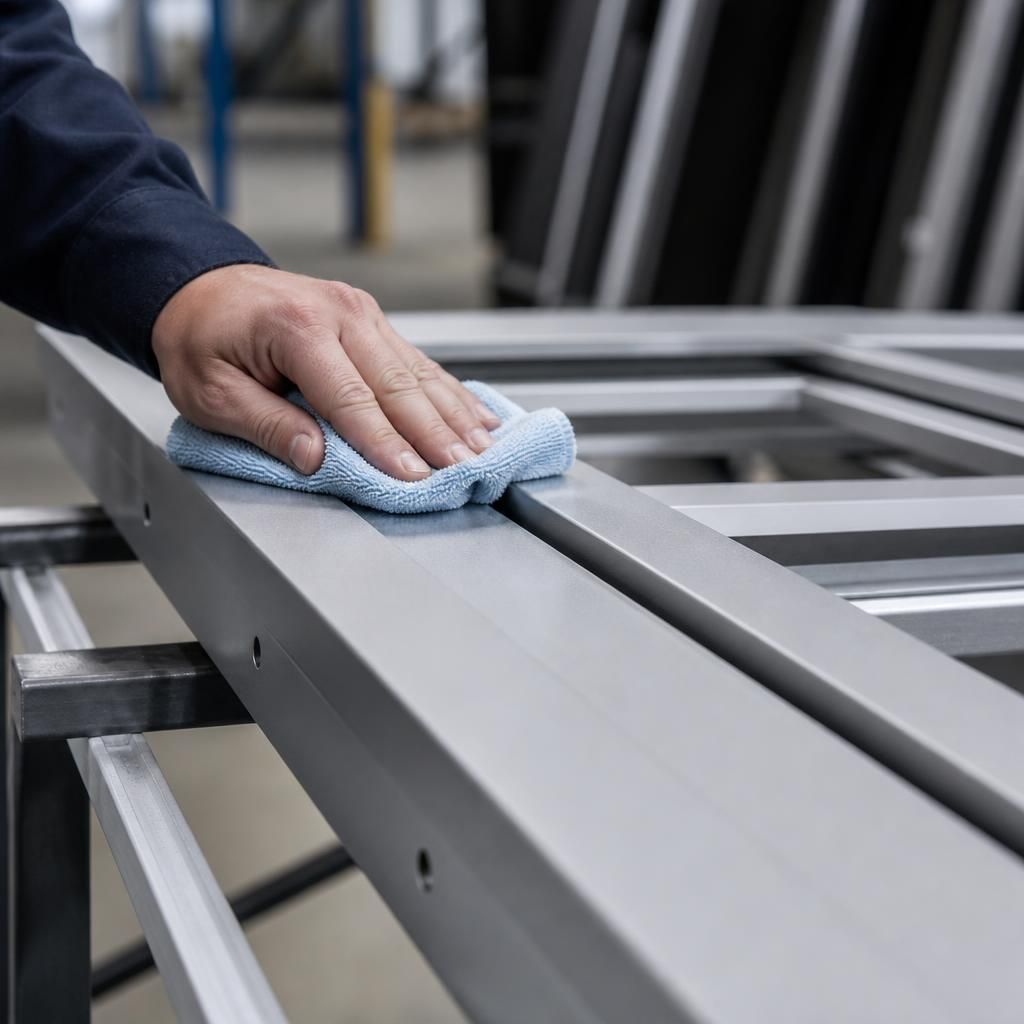
A polyester powder-coated surface is generally easier to clean than unfinished aluminium because the cured film forms a sealed surface over the component. Dust, handling marks and ordinary surface dirt can usually be removed without contacting the aluminium directly, helping the part maintain a more uniform appearance during routine use.
Cleanability depends on the specified finish: smooth coatings are typically more straightforward to wipe than heavily textured surfaces, while aggressive cleaning chemicals or abrasive tools may damage the film. Cleaning requirements should therefore be considered when choosing the coating texture and finish for aluminium components used in visible or frequently handled locations.
Discuss polyester powder coating for your aluminium components
Discuss your aluminium components with Powder-coatings.co.uk to review the required exposure resistance, finish, component dimensions and processing requirements. This helps establish whether polyester powder coating is suitable for the intended application and specification.