

What preparation is needed before applying nylon or special coatings to aluminium components?
Aluminium components should be thoroughly cleaned and degreased, with oil, dirt, oxidation, old finishes and other contaminants removed before coating. The surface should then be inspected for damage or defects, prepared to provide a suitable key, and any areas that must remain uncoated should be masked before nylon or special coating is applied.
Preparation for nylon or other specialist coatings on aluminium is a controlled process that covers the component’s specification, design, surface condition, chemical pre-treatment, masking, fixturing and handling. The exact sequence depends on the aluminium alloy, the component’s manufacturing method, the required coating performance and the application process selected.
Before work begins, the coating requirements should be agreed in practical terms. This includes the coating type, colour, texture, target film build, areas requiring coverage, areas that must remain free of coating and the conditions the finished component will face. Outdoor exposure, contact with chemicals, abrasion, electrical requirements, dimensional tolerances and repeated handling can all affect the preparation route. Nylon coatings and other specialist finishes are not interchangeable, so the pre-treatment must be suitable for the specified material rather than selected as a general-purpose powder coating process.
The aluminium’s construction and manufacturing history also need to be considered. Extrusions, sheet parts, castings, machined items and welded fabrications can each present different preparation issues. Cast aluminium may contain pores or surface irregularities, while machining can leave lubricants, smeared areas or sharp edges. Welded assemblies may have heat-affected zones, weld spatter or residues from fabrication. These conditions should be identified before coating because a coating can reproduce, rather than conceal, significant surface defects.
Edges, holes and transitions deserve particular attention. Sharp external edges can reduce coating coverage at the edge, whereas deep recesses and narrow internal spaces may be difficult to coat evenly. Designers and fabricators should identify threaded holes, bearing seats, mating faces, sliding surfaces, electrical contact points and close-tolerance locations in advance. These features may need controlled masking, temporary plugs or a coating allowance so that the finished component remains fit for assembly.
Aluminium can also require a conversion or other chemical pre-treatment after the initial surface preparation. Its purpose is to create a more suitable interface between the metal and the coating, supporting adhesion and helping protect the substrate where the coating system requires it. The selected treatment should be compatible with aluminium and with the nylon or special coating being applied. Environmental, regulatory and end-use requirements may influence whether a particular chemistry is appropriate.
Where blasting or another mechanical treatment is used, the process must be controlled for the component rather than applied indiscriminately. Excessive treatment can alter dimensions, soften fine details or damage thin sections, while insufficient treatment may leave an unsuitable surface for the chosen system. The preparation method should therefore account for alloy hardness, wall thickness, machined surfaces and any areas with a specified finish.
Repairs and fabrication residues should be dealt with before the final pre-treatment stage. For example, welds may need to be dressed where the design permits, and pinholes, burrs or sharp projections may need correction. Any filler or repair material must be compatible with the coating temperature and intended service conditions. Silicone-based products, marking compounds and some workshop chemicals can interfere with coating adhesion, so they should not be used on surfaces intended for coating unless their compatibility is known.
Parts should be designed or presented so that they can be supported during coating without creating unacceptable uncoated marks. Contact points for hanging or racking need to be agreed, particularly where full coverage is required. The location of these points can affect access to internal faces and may leave small areas that require later treatment. Large or unusually shaped components may also need a handling plan to prevent contact damage between preparation, coating and packing.
Masking should be based on function, not simply appearance. Threads, precision bores, earth points, sealing faces and assembly interfaces may require different levels of protection. Masking materials must withstand the process conditions and should be applied consistently so that coating does not creep into protected areas. A drawing or marked-up component is useful where several faces have different requirements.
For critical components, a trial piece or representative test panel can help confirm the preparation route before a production batch is processed. Checks may include the appearance of the finish, coverage of difficult features, adhesion, dimensional effects and the condition of masked areas. Batch identification and agreed acceptance criteria are also valuable where components are supplied into a wider manufacturing or inspection process.
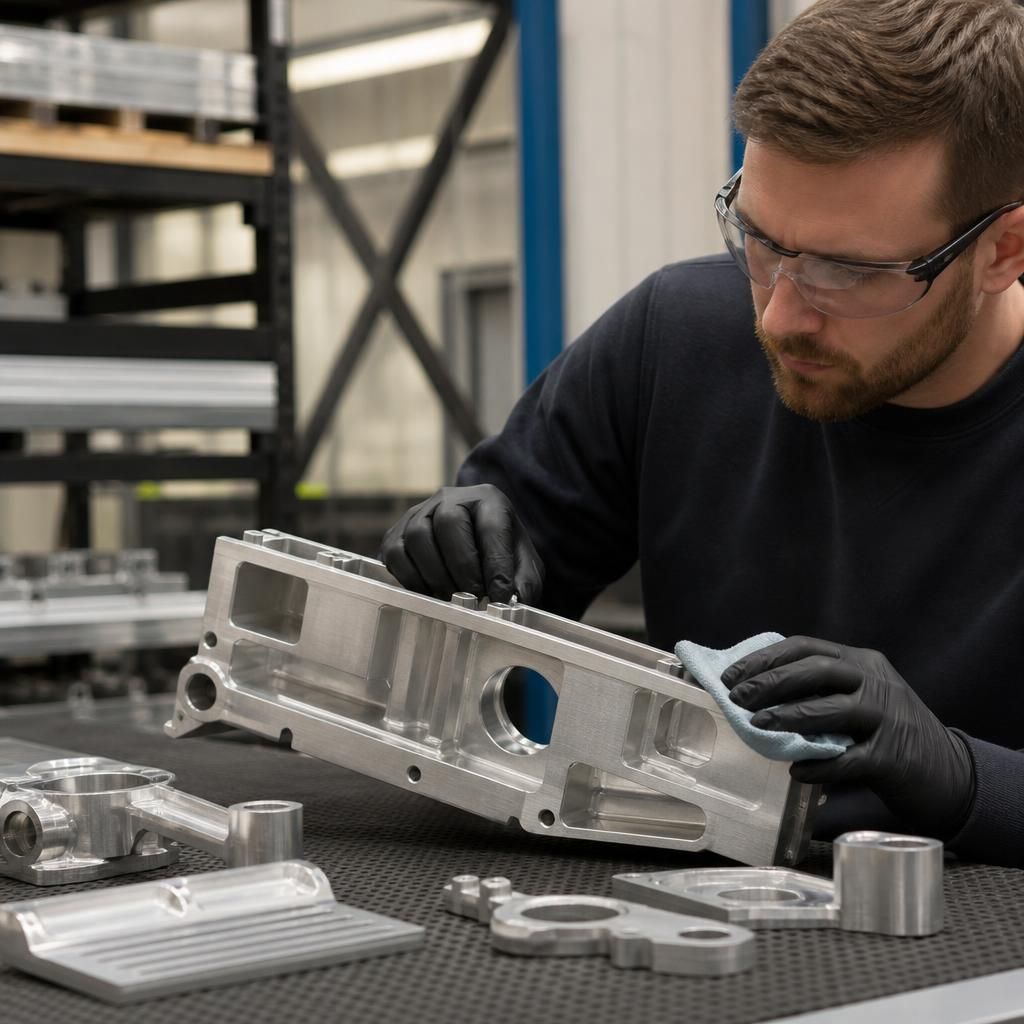
Finally, prepared aluminium should be handled in a way that avoids recontamination before coating. Clean gloves, suitable packaging and controlled contact points can prevent fingerprints, workshop dust or transport residues from compromising the prepared surface. Providing clear drawings, alloy information, service conditions and masking instructions to the coating team allows the preparation process to be matched to the component instead of relying on assumptions.
Aluminium components must be completely dry before nylon or special coating is applied. Moisture trapped in hollow sections, blind holes, joints or folded areas can cause surface defects and interfere with coating adhesion when the part is heated. Components should therefore have suitable drain and vent paths where necessary, with particular attention paid to water retained after cleaning or chemical pre-treatment.
Before coating, the prepared parts should be checked for visible moisture, residue and contamination in recessed areas. This is especially important for fabricated assemblies and enclosed profiles, where fluid can remain hidden after the outer surfaces appear dry.